This past Wednesday, the United States government took its most decisive action yet against far-left terrorism by imposing sanctions on three international networks. This move, coordinated between the Department of the Treasury and the Department of State, represents an unprecedented escalation in the Trump administration's counterterrorism policy.
The Treasury's Office of Foreign Assets Control (OFAC) targeted Autistici/Inventati, an Italian tech collective; Palestine Action, a UK-based organization; and the transnational group Masar Badil, which has connections to the Popular Front for the Liberation of Palestine.
Additionally, two leaders from Masar Badil, Zaid Abdulnasser based in Germany and Rawa Alsagheer in Brazil, were individually sanctioned.
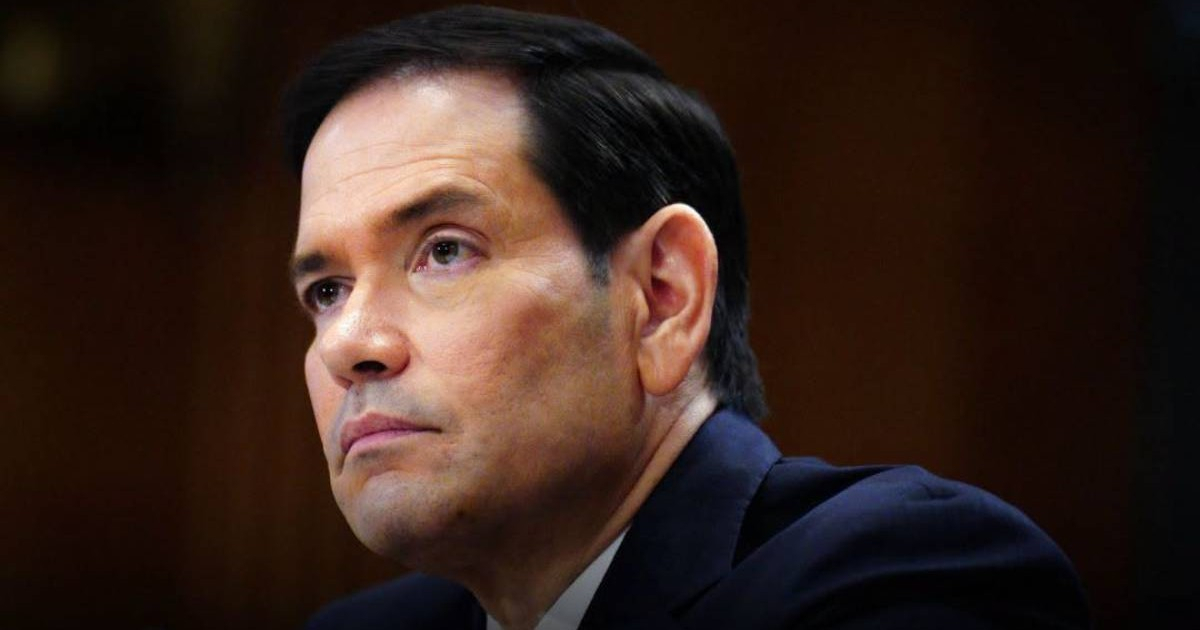
Secretary of State Marco Rubio announced the measures on social media with a clear message: "Far-left terrorism poses a significant threat to the United States and the West at large. Violent extremists who wage war against our civilization and plot to destroy critical infrastructure, attack political opponents, or hide their crimes will find no safe haven."
Similarly, Treasury Secretary Scott Bessent warned, "Far-left extremists, their fronts, and their accomplices are on notice: we will apply the full force of our economic tools. Political terrorism has no place in our society, and we will continue to disrupt these groups' financial networks until they are eradicated."
Targeted Organizations and Their Connections
Autistici/Inventati, which describes itself as an "antifascist" and "anti-militarist" organization opposed to capitalism, provides extremist groups with web hosting services on foreign servers, encrypted email accounts, video conferencing, and digital architecture through its "Noblogs" platform. Their clientele includes Antifa cells and the Kurdistan Workers' Party (PKK), a group designated as a terrorist organization by the United States, the United Kingdom, and the European Union, responsible for numerous deaths in Turkey, Iraq, and Syria since 1984.
Palestine Action was outlawed as a terrorist group by the British government in July 2025 under the Terrorism Act 2000, following a series of break-ins at military and defense installations causing millions in damages. The UK's Court of Appeals upheld this ban in June 2026 after a lower court had initially declared it illegal in February of the same year.
Masar Badil operates as a front for the Samidoun Palestinian Prisoner Solidarity Network, which the United States and Canada jointly sanctioned in October 2024 for being affiliated with the Popular Front for the Liberation of Palestine, designated as a Foreign Terrorist Organization since 1997.
Legal Implications and Historical Context
The sanctions are issued under Executive Order 13224, the counterterrorism authority originally signed after the September 11, 2001, attacks. Consequently, all assets and interests of the designated entities and individuals within U.S. territory or controlled by U.S. citizens are instantly frozen. Violations can result in civil or criminal penalties.
This action is part of a sustained escalation against far-left terrorism that began in 2025, when the State Department designated four European groups linked to Antifa as Foreign Terrorist Organizations: Antifa Ost (Germany), the Informal Anarchist Federation/International Revolutionary Front (Italy), Armed Proletarian Justice, and Revolutionary Class Self-Defense (Greece).
In July 2026, Bessent led a ministerial conference with representatives from over 60 countries to address the resurgence of political terrorism, describing it as "transnational in design and far-left in doctrine."
That same month, the State Department released the report "Cuba: The Capital of 21st Century Communism," accusing the Cuban regime of being the main sponsor of radical leftism in the United States for more than six decades, with documented links to movements like Antifa and Black Lives Matter.
The 2026 U.S. Counterterrorism Strategy identifies violent far-left groups as one of the top three terrorist threats facing the country, alongside jihadist terrorism and other forms of extremism.
Understanding Far-Left Terrorism and Sanctions
What are the implications of the U.S. sanctions on these groups?
The sanctions result in the immediate freezing of all assets and interests of the designated entities and individuals within the United States or controlled by U.S. citizens. Violations can lead to civil or criminal penalties.
Why is the U.S. targeting far-left terrorism now?
The U.S. has escalated its actions against far-left terrorism due to its growing threat to national security, as outlined in the 2026 Counterterrorism Strategy, which identifies these groups as one of the top three terrorist threats.
What organizations have been targeted by the U.S. in relation to Antifa?
The U.S. has targeted several European groups linked to Antifa, including Antifa Ost in Germany, the Informal Anarchist Federation in Italy, and other associated groups in Greece.