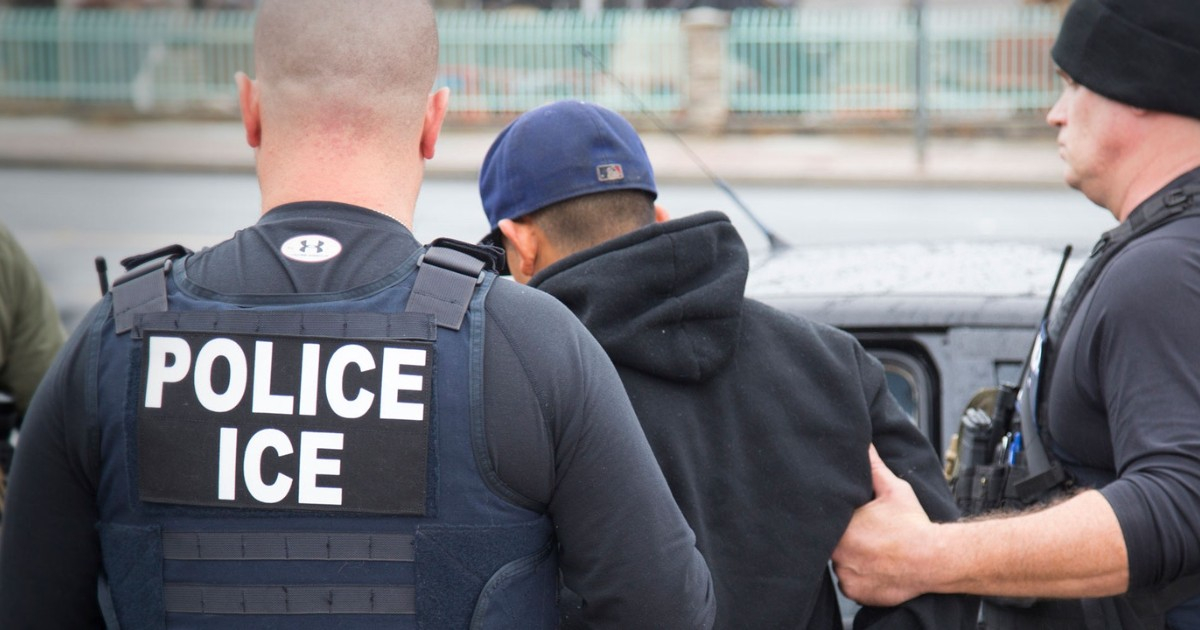
The United States Immigration and Customs Enforcement (ICE) recorded a staggering 49,571 arrests in July 2026, marking the highest monthly figure since the beginning of Donald Trump's second term. This data, meticulously analyzed by the Associated Press from information supplied to the Deportation Data Project—a collaborative academic effort between UC Berkeley and UCLA—highlights a significant shift in immigration enforcement tactics.
Strategic Shift in Immigration Enforcement
July's figures reflect a 15% increase from June's 43,021 arrests and a dramatic 70% surge compared to February's 29,241, a period when operations had slowed following two fatal shootings in Minnesota that sparked protests and strong Democratic legislative backlash. Rather than scaling back its immigration agenda, the Trump administration opted for a strategic pivot. Gone are the high-profile raids of the early months of the term—complete with agents rappelling from helicopters and social media-documented chases in Chicago, Los Angeles, and Minneapolis. The new focus is on quieter yet equally expansive arrests.
This revised approach involves traffic stops, enhanced cooperation with state and local law enforcement through 287(g) agreements, and the targeting of new deportation categories, such as Haitians who have lost deportation protection. Mark Krikorian from the Center for Immigration Studies commended the shift, noting, "They didn't halt law enforcement. They changed tactics and, if anything, are being more effective."
Texas and Florida: Hotbeds of ICE Activity
Texas and Florida have emerged as pivotal in this mass deportation agenda, with nearly 20,000 arrests in July alone, underscoring their critical roles. Their deepened collaboration with ICE through 287(g) agreements allows local law enforcement to act as extensions of the federal agency. In July, state and local police departments accounted for 6,500 arrests—13% of the total—compared to less than 5% a year earlier.
An emblematic case occurred in Key West: a 36-year-old Haitian asylum seeker, in the U.S. since 2017 after fleeing death threats, was arrested by local police and handed over to ICE in the week of August 18. Employed as a cook and supervisor at Half Shell Raw Bar, he was his family's primary breadwinner. "He was an excellent worker, learned quickly, and had never been in trouble with the law. A good guy, a family man," said his manager, Bobby Kuchinsky.
Questioning the Target of Arrests
Despite the administration's claims that operations focus on individuals with criminal records, data tells a different story: over half of July's arrestees had no criminal convictions or pending charges, and less than a quarter had been convicted of any crime. Additionally, half of the arrests were "non-custodial," occurring in communities rather than jails or prior police custody, affecting individuals with valid work permits and pending asylum applications.
Patricia Quiñonez, a journalist with Utahzolanos, a media outlet covering the Venezuelan immigrant community in Utah, elaborated on traffic stop practices: "They stop you for any reason; for example, not having a driver's license, expired vehicle registration, or overly tinted windows. From there, they exploit the situation and inquire about immigration status."
The Cuban Community Faces Intense Scrutiny
The Cuban community has been particularly impacted by the tightened immigration measures. According to a Cato Institute analysis, ICE arrests of Cubans surged by 463% between late 2024 and early 2026. The ICE office in Miami, overseeing Florida, Puerto Rico, and the Virgin Islands, logged over 41,000 arrests since January 2025, averaging 120 detentions daily.
The economic ramifications of these mass deportations are also raising concerns among analysts. A recent study warns of consumer cost increases, with lettuce prices up by 32.1% and new housing in the Northeast by 15.4%, linked to the dwindling immigrant workforce.
The Deportation Data Project stands as a rare independent source tracking the true scale of operations, following the Department of Homeland Security's cessation of immigration enforcement data publication at the start of Trump's second term.
Understanding ICE's Record Arrests and Their Impact
What contributed to the increase in ICE arrests in July 2026?
The rise in ICE arrests in July 2026 is attributed to a shift in enforcement strategy, focusing on less visible but large-scale arrests and increased collaboration with local law enforcement through 287(g) agreements.
How have the new ICE strategies affected the Cuban community?
The Cuban community has faced intensified scrutiny, with ICE arrests increasing by 463% from late 2024 to early 2026, significantly impacting individuals and families.
What economic impacts are associated with the mass deportations?
Mass deportations have led to economic repercussions, including increased consumer prices for goods such as lettuce and new housing, due to a reduced immigrant labor force.