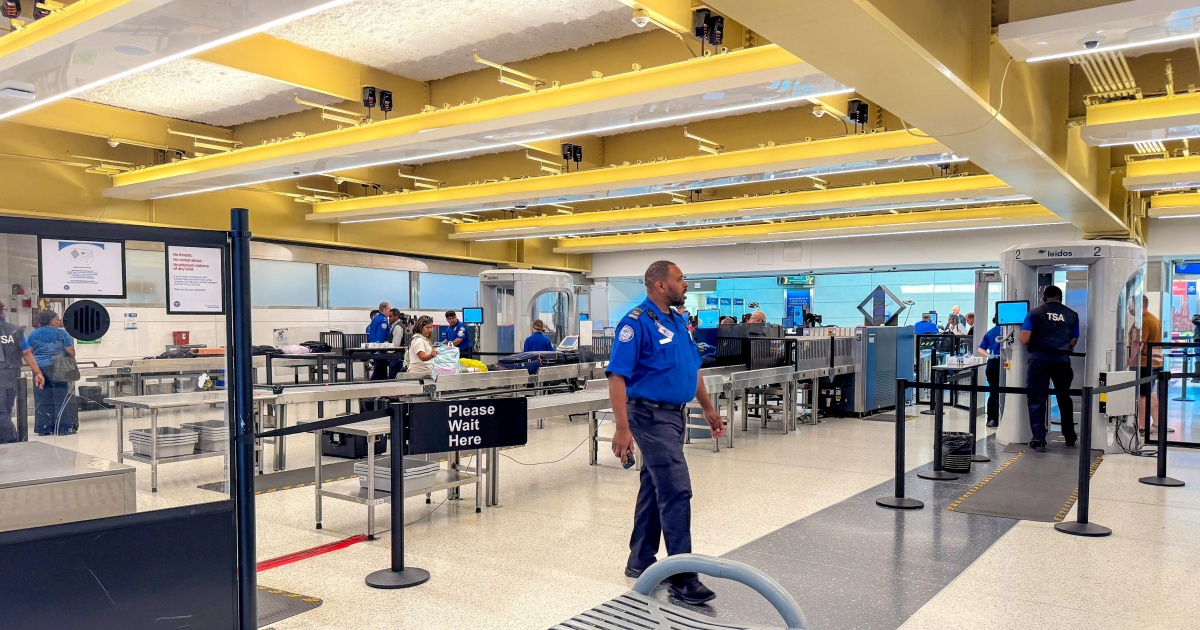
The Transportation Security Administration (TSA) in the United States unveiled its latest strategic plan on Monday, aimed at revolutionizing security protocols across more than 430 airports nationwide.
Named Horizon 25, this initiative was introduced by the newly appointed agency administrator, David P. Cummins, as the TSA approaches its 25th anniversary on November 19.
Vision of a "Fail-Safe" Mission
Horizon 25 outlines three primary goals:
- Revamp security checkpoints.
- Enhance the traveler experience.
- Strengthen security across various transportation modes, extending beyond commercial aviation.
The plan's reach is expansive, covering railway networks, mass transit systems, highways, pipelines, and maritime infrastructure, all under the agency's declared "fail-safe mission."
In the official announcement, Cummins emphasized the core philosophy of the strategy.
"TSA doesn't have to choose between a secure checkpoint, an efficient checkpoint, and an elevated passenger experience. Through Horizon 25, TSA can and will deliver all three simultaneously," states the document.
Tangible Changes for Passengers
Among the most noticeable changes, Horizon 25 includes an overhaul and expansion of the TSA PreCheck program, which allows pre-enrolled passengers to access expedited screening lanes.
The strategy also plans to introduce new technology to replace current scanners in boarding areas and implement analytical tools to reduce processing times for carry-on luggage and passenger identification.
Another key focus is building capabilities to counter drone threats, given the increasing presence of unmanned aerial systems in the airspace.
To advance implementation, Cummins has scheduled a meeting in September with innovators and operational staff from terminals and headquarters.
Cummins stepped into the role in early August, following a narrow Senate confirmation with a 51 to 47 vote, after being nominated by former President Donald Trump in May.
He brings with him private sector transportation experience and a clear mandate to modernize an agency overseeing approximately 60,000 employees.
"Looking towards the next 25 years, we must continually work to anticipate evolving threats and usher in a 'Golden Age' of travel. Through the Horizon 25 Strategy, we will build a nimble, resilient TSA ready for tomorrow's challenges," Cummins stated in the official release.
End of TSA Gold+ and Shift Towards Privatization
One of the most contentious aspects of Horizon 25 is the discontinuation of the TSA Gold+ program, initially intended to increase the use of private contractors for airport security checks.
Nevertheless, the TSA clarifies that privatization remains on the table.
According to the official statement, "a renewed Partnership Screening Program will replace TSA Gold+, aiming to better leverage the private sector's role in creating a more secure and efficient aviation system."
Currently, 20 airports—including the largest, San Francisco International Airport—operate with private inspection overseen by the TSA.
The benefits of this model became evident during partial government shutdowns in March 2026, when many federal agents did not report to work, leading to long lines, while terminals with private contractors functioned smoothly.
The push for privatizing airport security has been met with significant union resistance.
The federal employees' union AFGE, representing about 47,000 TSA officers, has filed a lawsuit against the agency and strongly opposes any moves in that direction.
"The administration's actions should concern all Americans, and AFGE will continue to speak out against any proposal that threatens our members' jobs and jeopardizes public flying safety," declared Everett Kelley, the union's national president. The TSA was established on November 19, 2001, when President George W. Bush signed the Aviation and Transportation Security Act in direct response to the September 11 attacks, which revealed significant airport security lapses.
Understanding the TSA's Horizon 25 Strategy
What is the primary aim of the Horizon 25 initiative?
Horizon 25 aims to modernize security checkpoints, enhance traveler experiences, and strengthen security across various transportation modes beyond commercial aviation.
How does Horizon 25 address drone threats?
The initiative prioritizes expanding capabilities to counter drone threats, acknowledging the proliferation of unmanned aerial systems in the airspace.
Why is the TSA Gold+ program being discontinued?
The TSA Gold+ program is being replaced by a renewed Partnership Screening Program to better utilize the private sector's role in enhancing aviation security.
What challenges does the TSA face with privatization?
Privatization efforts have been met with strong opposition from the federal employees' union AFGE, which is concerned about job security and public safety.