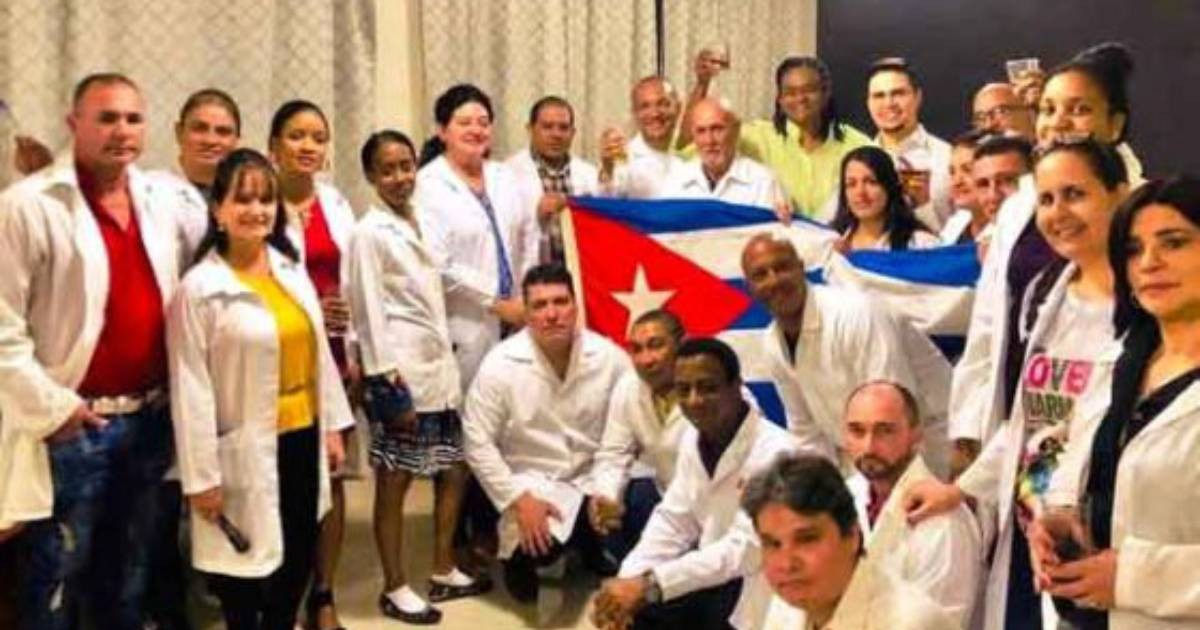
According to a report by Prisoners Defenders, the Cuban government rakes in more than $4.2 million each year from around 90 doctors and healthcare professionals deployed in Botswana, while these workers receive less than a quarter of the earnings paid by the African nation for their services.
The investigation, released this Tuesday, disclosed that Botswana compensates each Cuban specialist with 3,500 euros a month, approximately $4,095, yet the professionals themselves receive a mere $1,000.
The remaining $3,095, which comprises 75.58% of the payment, is redirected to the Cuban state apparatus via the Comercializadora de Servicios Médicos Cubanos S.A. (CSMC). With about 90 professionals currently stationed there, this arrangement yields the Cuban State around $350,500 monthly, translating to an annual total exceeding $4.2 million, according to the organization's analysis.
Awareness of Botswana's Financial Contributions
Prisoners Defenders claims that the Botswana government, led by Duma Boko, is fully aware of the financial distribution. The agreement mandates that the Cuban side provides monthly invoices distinguishing the amount allocated to the professionals from the sum transferred to Havana. Furthermore, administrative documents from the Princess Marina Hospital, with copies sent to Botswana's Ministry of Finance, have recorded the payments to the doctors since at least 2020.
The organization argues that these records clearly demonstrate that the African nation's authorities are cognizant of the economic terms of the program. "The current government under Duma Boko materially supports and is fully aware of the economic framework enabling a form of modern slavery," Prisoners Defenders alleges.
Strict Limitations on Personal Freedom
The investigation also highlights an internal regulation, signed on July 3, 2026, in Gaborone by the head of the Cuban medical mission in Botswana, Pablo Ricardo Betancourt Álvarez, which imposes severe restrictions on the lives of the Cuban collaborators.
The document specifies that collaborators may only leave their designated districts for professional or health-related reasons, and only with prior consultation with the Chief of the Cuban Medical Brigade in Botswana. Additional rules limit receiving visitors outside the brigade, sleeping away from assigned housing, visiting non-contingent Cubans, acquiring or driving vehicles, and going out late at night without permission.
Moreover, the regulation considers "the generation, distortion, manipulation, or dissemination of sensitive information" about the brigade a serious offense and implements "surprise inspections."
Interviews conducted by Prisoners Defenders reveal an even more draconian situation. None of the interviewed doctors willingly participated in the mission or received copies of their contracts. All reported having their passports confiscated and being warned that leaving the mission would result in an eight-year ban from returning to Cuba. Documented workweeks ranged from 56 to 64 hours, averaging 57.6 hours.
The Cuban Penal Code adds another layer of coercion. Article 176.1 stipulates prison sentences ranging from three to eight years for certain public officials who abandon missions abroad or refuse to return to Cuba.
Growing Scrutiny of Cuban Medical Missions
The conditions of these programs have come under increasing international scrutiny. In April, the Inter-American Commission on Human Rights published a 199-page report highlighting severe indications of forced labor in Cuban medical missions and advised American countries to withdraw from the program until labor guarantees are established.
In July, the United States sanctioned the Cuban Minister of Public Health, José Ángel Portal Miranda, as well as Gretza Sánchez Padrón, the director of the Central Medical Cooperation Unit, and the entities UCCM and CSMC S.A.
Prisoners Defenders sums up the Botswana agreement with a stark conclusion: "Botswana doesn't pay the professionals for their work in its hospitals; it pays the Cuban state structure that decides their wages, retains part of their earnings, and determines the personal penalties they must endure if they break the labor bond."
Key Questions on Cuban Medical Missions in Botswana
How much do Cuban doctors in Botswana receive?
Cuban doctors in Botswana receive approximately $1,000 per month, despite Botswana paying around $4,095 per specialist.
What percentage of the payment do Cuban medical professionals receive?
Cuban medical professionals receive only about 24.42% of the payment, with the remaining 75.58% being retained by the Cuban state.
What are the working conditions for Cuban doctors in Botswana?
Cuban doctors face strict limitations on their personal freedom, including restrictions on movement, receiving visitors, and working long hours averaging 57.6 hours per week.