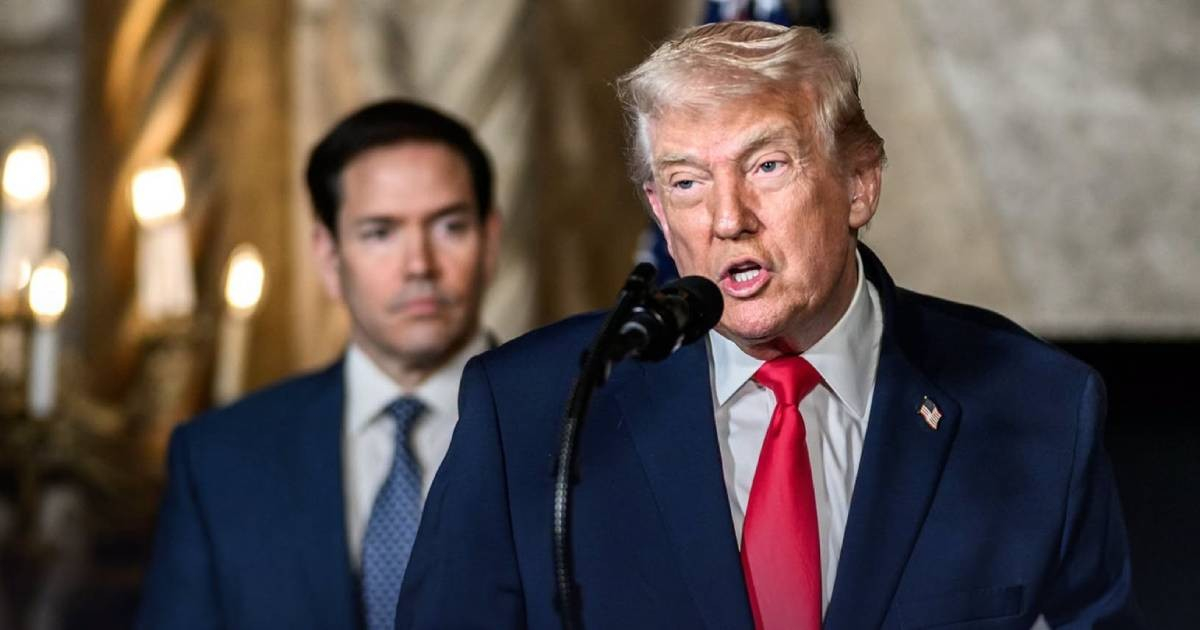
U.S. President Donald Trump has extended the authority of the Trading With the Enemy Act (TWEA) as it pertains to Cuba for another year. This continuation upholds one of the main legal frameworks for the United States' economic sanctions against the island nation.
On August 20, Trump signed Presidential Determination No. 2026-21, which was published in the Federal Register this Tuesday. This document extends the authorities until September 14, 2027.
The notice, addressed to the Secretary of State and the Secretary of the Treasury, states that "the continued exercise of these authorities with respect to Cuba for one year is in the national interest of the United States."
This decision does not introduce any new sanctions or alter existing restrictions. It is a renewal that U.S. presidents undertake annually to prevent the expiration of the authorities that support the Cuban Assets Control Regulations (31 C.F.R. Part 515).
Historical Context of TWEA
Currently, Cuba is the only nation subject to restrictions under the TWEA, which was enacted in 1917. In 1977, the U.S. Congress limited its application during peacetime but preserved existing measures against Cuba, which since then, have required annual renewal.
Both Republican and Democratic presidents, such as Bill Clinton, George W. Bush, Barack Obama, Joe Biden, and Trump himself during his first term, have maintained this renewal.
The Layers of the Cuban Embargo
The U.S. embargo on Cuba is embedded in multiple legal layers. In February 1962, President John F. Kennedy formalized the embargo through Presidential Proclamation 3447, following commercial restrictions adopted by Washington in response to the nationalizations by Fidel Castro's regime.
Decades later, the Cuban Democracy Act of 1992 and the Helms-Burton Act of 1996 reinforced and codified many of these sanctions, restricting the president's ability to unilaterally lift the embargo entirely.
Current Political Tensions
Although renewing the TWEA is a routine procedure, this year it comes amid a significant offensive by the Trump administration against the Cuban regime's financial sources.
In May, Washington blocked assets linked to the military-corporate conglomerate GAESA under U.S. jurisdiction. That same month, shipping companies Hapag-Lloyd and CMA CGM halted operations with Cuba, and in July, the U.S. expanded sanctions on the Cuban oil sector.
Cuban Foreign Minister Bruno Rodríguez Parrilla responded on X, describing the decision as part of a "genocidal policy that has been maintained against our people for more than six decades."
Rodríguez also dismissed the notion that the renewal is merely procedural: "The extension of the so-called Trading With the Enemy Act until September 2027 is not a minor administrative act but confirmation that Washington persists in its aim to suffocate an entire nation."
The previous extension had been signed by Trump on August 29, 2025, and maintained these authorities until September 14, 2026. The new determination now ensures their continuation for another year.
Key Questions About U.S. Sanctions on Cuba
What is the Trading With the Enemy Act (TWEA)?
The Trading With the Enemy Act (TWEA) is a federal law passed in 1917 that gives the President the power to restrict trade with countries considered hostile to the United States. Cuba is currently the only country under such restrictions.
Why is the renewal of the TWEA significant?
Renewing the TWEA is crucial as it keeps in place the legal authority for existing U.S. sanctions against Cuba. This annual renewal ensures that the Cuban Assets Control Regulations remain effective.
How do these sanctions impact the Cuban economy?
The sanctions significantly limit Cuba's ability to engage in international trade and access foreign investment, which affects the country's economic development and contributes to its financial difficulties.