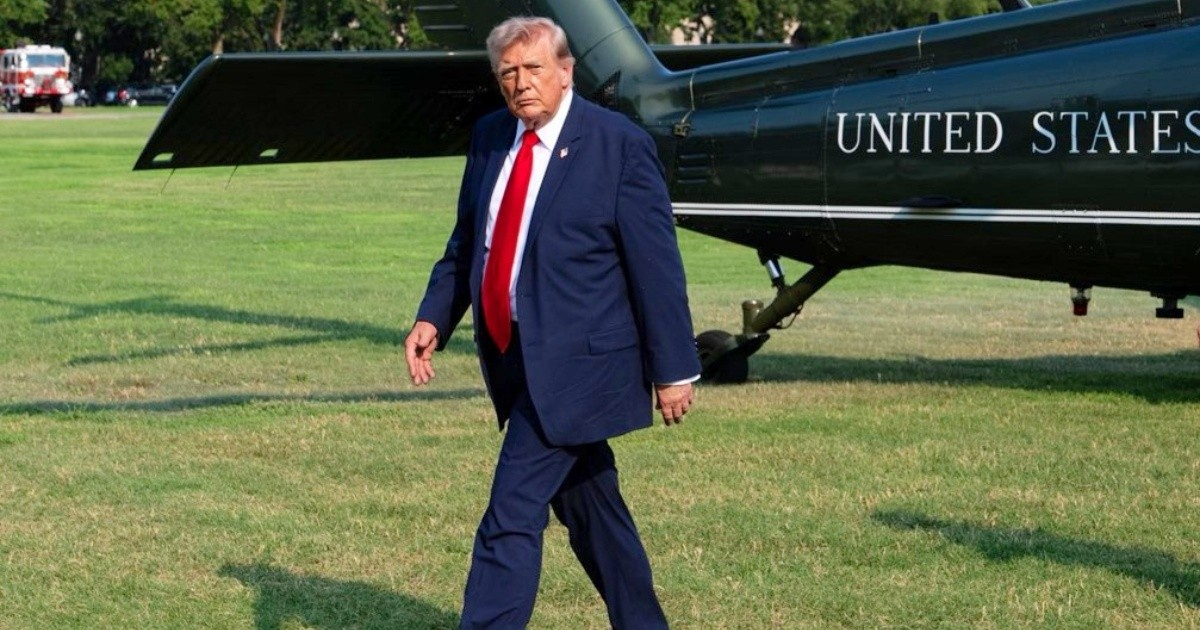
Former President Donald Trump is exhibiting several physical signs that have sparked concern among healthcare professionals: bruises on his hands, ankle swelling, apparent drowsiness during official events, and a noticeable weight gain placing him on the brink of clinical obesity.
This information comes from a detailed report by the Washington Post released on Sunday, highlighting warnings from several doctors about the significant health risks his weight gain poses.
Medical Concerns Over Weight
A medical report released by the White House in May reveals that Trump weighs 238 pounds (around 108 kilograms) and stands 1.90 meters tall, resulting in a body mass index (BMI) of 29.7, just 1.6 pounds shy of the obesity threshold.
This figure contrasts with the 215 pounds listed in his police record from August 2023. The administration itself acknowledged a 6.35-kilogram weight increase between his last two annual medical checkups.
"We understand that obesity is a major risk factor for numerous health problems, disability, and premature mortality," stated Scott Kahan, director of the National Center for Weight and Wellness and a physician at George Washington University. "Addressing the president's obesity should be a priority, much like ensuring the Secret Service's protection for his life," he added.
David Kessler, former head of the Food and Drug Administration, pointed out a specific risk: "That fat accumulating around the waist, the visceral adiposity, is the fat that surrounds the liver, pancreas, and heart, where it should not be."
Not all experts share the same level of concern. Obesity specialist Gitanjali Srivastava noted that at 80 years old, "it's not so much about a number, but rather what the body fat percentage is," adding that BMI "is an excellent screening tool, but it's not everything."
Examining Trump's Weight History
Trump's weight has been a topic of interest for years. During his first term, he went from 239 pounds in January 2018 to 243 pounds in February 2019, at which point he was technically classified as obese. By June 2020, he reached 244 pounds, and four months later, he contracted a severe case of COVID-19, a condition linked to obesity severity.
Visible Signs: Bruises and Swelling
Weight isn't the only physical sign raising eyebrows. Recurrent bruises on the back of his hands have been noticed during numerous public appearances. The White House physician, Captain Sean P. Barbabella, attributed them in May to "minor soft tissue irritation related to frequent handshakes in the context of aspirin use for cardiovascular prevention."
Swelling in his ankles was officially explained in July 2025 when Trump was diagnosed with chronic venous insufficiency, a common benign condition in older adults. Barbabella also recommended more physical activity, dietary guidance, and continued weight loss, although the White House did not respond to inquiries about whether Trump has followed these suggestions.
Trump and the White House Respond
The former president has addressed the issue with a mix of humor and resignation. "Maybe junk food is good and other food isn't," he remarked in the Oval Office in May. "I know many people who only worry about their weight, this and that, and they ended up passing away, and here we are. I feel great," he said at the time.
In a recent podcast with the second lady, Usha Vance, Trump referenced former President William Howard Taft: "He was our most corpulent president, and I have to be careful because I don't want to surpass his record. And something like that could happen if I allowed it."
The White House avoided directly addressing the weight issue. Spokesperson Davis Ingle opted to compare Trump with his predecessor: "President Trump's mental sharpness, boundless energy, tireless work ethic, and historic accessibility stand in stark contrast to what we saw during the previous administration."
The administration also did not confirm whether Trump has ever taken GLP-1 medications for weight loss, though the former president has denied doing so.
Trump turned 80 in June, becoming the oldest serving president in U.S. history, a fact that amplifies the debate over his physical condition and the transparency of medical information released to the public.
FAQs on Trump's Health Concerns
What health risks are associated with Trump's weight?
Increased weight places Trump at the risk of obesity, which is a significant factor for numerous health problems, disability, and premature death. Visceral fat, in particular, poses risks to the liver, pancreas, and heart.
Have there been any changes in Trump's weight over the years?
Yes, during his first term, Trump's weight increased from 239 pounds in January 2018 to 243 pounds in February 2019, and further to 244 pounds in June 2020. His recent weight is noted at 238 pounds.
What other physical signs have raised concern about Trump's health?
In addition to weight, bruises on Trump's hands and swelling in his ankles have been observed. These are attributed to frequent handshakes and chronic venous insufficiency, respectively.