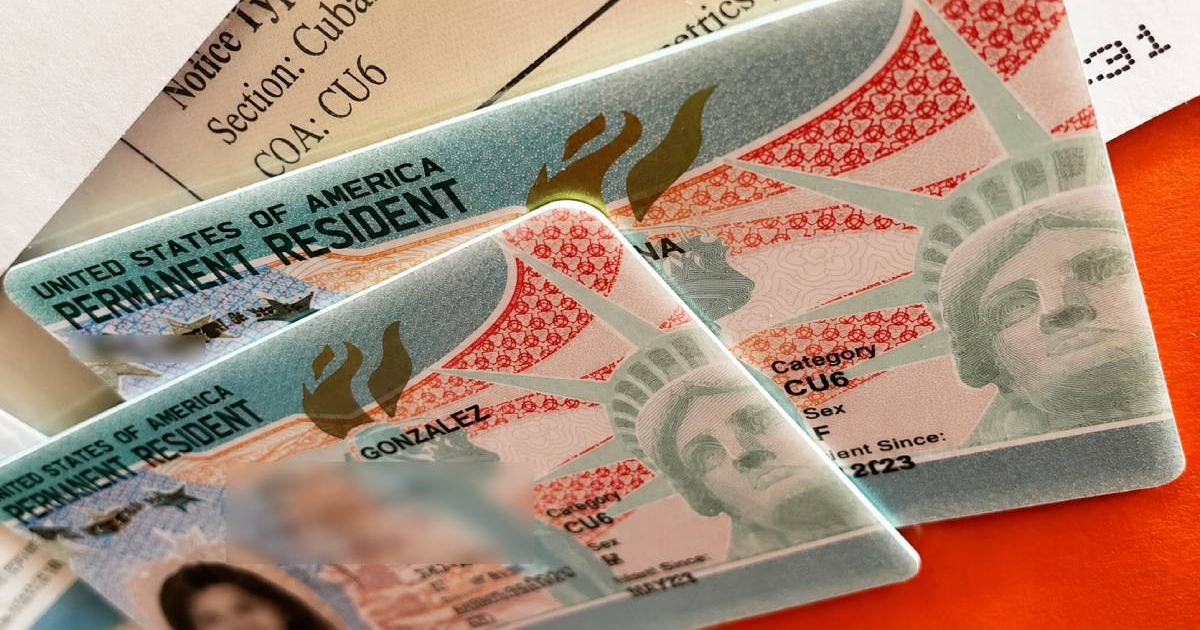
The United States Citizenship and Immigration Services (USCIS) has unveiled updated guidelines altering how its officers will assess permanent residency applicants concerning inadmissibility due to being a "public charge." These changes are set to take effect on September 18, 2026.
According to reports from Telemundo 51, these guidelines, released on August 18, will replace the 2022 regulations put in place during the Biden administration. The Department of Homeland Security (DHS) rescinded these through a final rule published in the Federal Register on July 20, 2026. This new framework reinstates a broader and more discretionary evaluation on a case-by-case basis.
Modifications will pertain only to Form I-485 submissions postmarked or filed electronically starting September 18. Applications submitted before this date will continue to be assessed under the prior regulations.
Simultaneously, USCIS will release a new version of Form I-485 dated 09/18/26. From this date forward, any older editions will be automatically rejected.
Evaluation Criteria for USCIS Officers
Congress has outlined five factors that officers must weigh when determining an applicant's potential as a public charge: age, health, family status, assets and financial situation, as well as education and skills.
The updated guidelines broaden this analysis. As per the official document, "USCIS officers will take into account the five statutory factors and any other relevant aspects when assessing the likelihood of the applicant becoming a public charge, including the receipt of public benefits that are subject to resource testing."
Such benefits may include cash aid for income maintenance, housing assistance, popular food stamps, all forms of financial aid for college education, or any similar benefits.
Exemptions from Public Charge Evaluation
Not all permanent residency applicants are subject to this scrutiny. Exempt categories include refugees, asylees, victims of trafficking (T visas), crime victims (U visas), and minors with special immigrant status.
Notably for the Cuban community, applicants under the Cuban Adjustment Act are specifically exempt from inadmissibility due to public charge concerns, as confirmed by the USCIS official announcement.
Categories subject to evaluation include spouses, children, and parents of U.S. citizens, siblings of citizens, fiancés, priority workers, professionals with advanced degrees, investors, and diversity visa holders, among others.
Consequences of Being Deemed a Public Charge
If an officer concludes that an applicant is inadmissible solely on public charge grounds, they may be invited to submit a public charge bond using Form I-945.
This bond acts as a financial assurance that the applicant will not rely on government assistance. The minimum amount is $1,000, calculated based on potential assistance the applicant might receive over the next five years.
Voluntary submission of the bond is not permitted; it becomes an option only after a Notice of Intent to Deny is issued by USCIS. If the applicant complies with the instructions, the officer may approve the status adjustment.
In addition to these USCIS changes, the Department of State launched a pilot program in August for public charge bonds for immigrant visa applicants abroad. These bonds can be as high as $250,000 and are distinct from the status adjustment process within the United States.
Understanding USCIS Public Charge Guidelines
What are the new criteria for evaluating green card applicants?
USCIS will evaluate applicants based on age, health, family status, financial assets, and education and skills, along with any other relevant factors that might indicate the likelihood of becoming a public charge.
Who is exempt from the public charge evaluation?
Exemptions apply to refugees, asylees, trafficking victims (T visas), crime victims (U visas), minors with special immigrant status, and those under the Cuban Adjustment Act.
What happens if an applicant is deemed a public charge?
Applicants found to be a public charge may be required to submit a public charge bond, which serves as a guarantee against relying on government aid. The bond is activated only after a Notice of Intent to Deny is issued by USCIS.