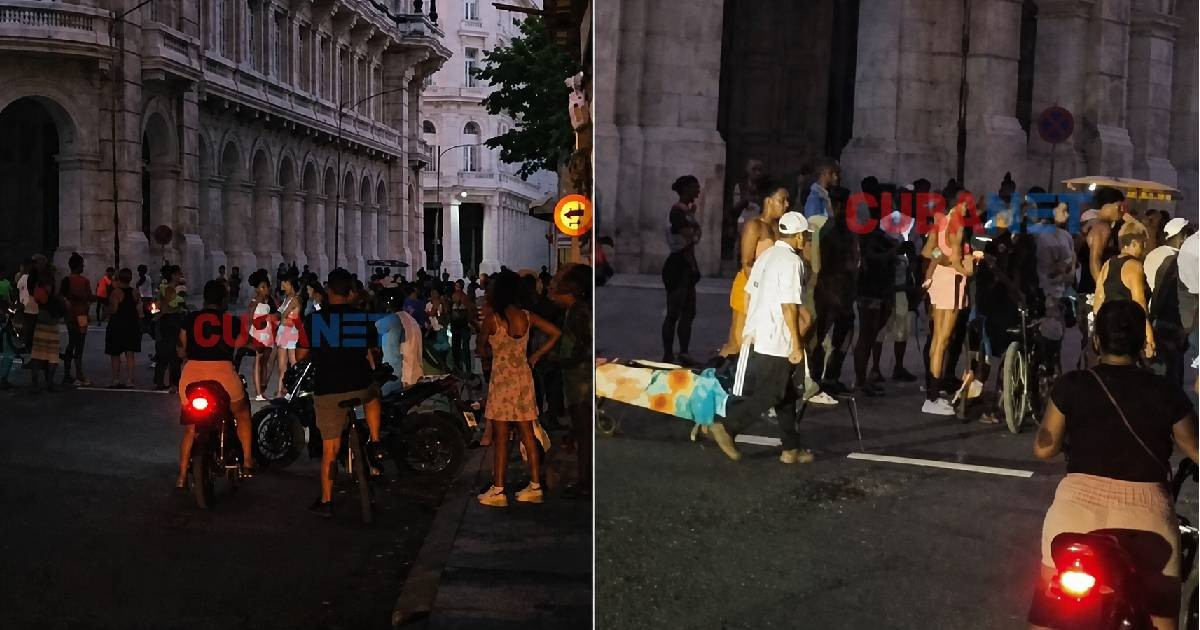
Residents living around Monserrate and Obrapía streets in Old Havana took to the streets to demand the restoration of potable water and electricity. This demonstration was captured on video and shared by CubaNet Noticias on social media platforms.
Law enforcement authorities arrived at the scene and removed the items used by protesters to block the roads.
Witnesses at the site reported that officials pledged to restore both services, though they failed to provide a concrete timeline for when this would occur.
Growing Discontent Among Old Havana Residents
This protest is not an isolated incident. On Monday, residents of Villegas 409, situated between Teniente Rey and Muralla, blocked the street due to repeated power outages and the inaction of local authorities.
Earlier in August, the Belén neighborhood saw a similar outburst, with residents on Inquisidor street banging pots and pans in protest against blackouts, water shortages, and food scarcity, as reported by Cuba Herald.
Recurring Patterns of Public Unrest
In July, the same municipality was the backdrop to several similar events: loud pot-banging protests erupted during an extended blackout on the 28th, and a demonstration in San Isidro on the 17th, where neighbors had endured four days without electricity and five without water.
Back on June 28, Old Havana residents shouted "Freedom!" after enduring over 40 hours without electricity.
The link between blackouts and water shortages is systemic: 87% of Cuban water systems rely on electric pumps, thus any prolonged power cuts also disrupt water supplies.
Infrastructure Failures Compounding the Crisis
On Monday, Aguas de La Habana announced a major breakdown in the South Basin's hydraulic infrastructure: a rupture in a 78-inch pipeline and three additional leaks have left Old Havana, Plaza de la Revolución, Diez de Octubre, Cerro, Centro Habana, and parts of Boyeros without water, with no clear timeline for repair.
The number of people affected in the capital continues to rise: in April, 200,000 Havana residents lacked regular access to water; by May, this number reached 376,055, and by July, it had exceeded half a million.
The pattern in each episode is consistent: residents block streets or stage pot-banging protests, the Police intervene, and authorities promise immediate solutions that fail to materialize.
On a national scale, July 2026 set a historic record for protests: the Cuban Conflict Observatory recorded 1,415 events in a single month, according to data released by Infobae.
Cubalex reported 766 street actions in 141 municipalities during the first half of the year, with 410 arbitrary detentions in that period.
"The crisis in basic services continues to drive Cubans to protest against the regime," summarized CubaNet Noticias when they released footage of the demonstration on Monserrate and Obrapía.
Understanding Cuba's Basic Service Crisis
Why are Old Havana residents protesting?
Residents are protesting due to the lack of potable water and electricity, compounded by the authorities' failure to address these critical issues.
What is causing the water and electricity shortages in Havana?
The shortages are primarily due to systemic infrastructure failures, where a significant percentage of water systems rely on electric pumps, making them vulnerable during power outages.
How have residents reacted to the ongoing shortages?
Residents have organized protests, blocked streets, and conducted pot-banging demonstrations to express their frustration and demand action from the authorities.
What has been the response of the Cuban authorities?
Authorities have typically intervened in protests, promising to resolve the issues but often without providing clear timelines or effective solutions.