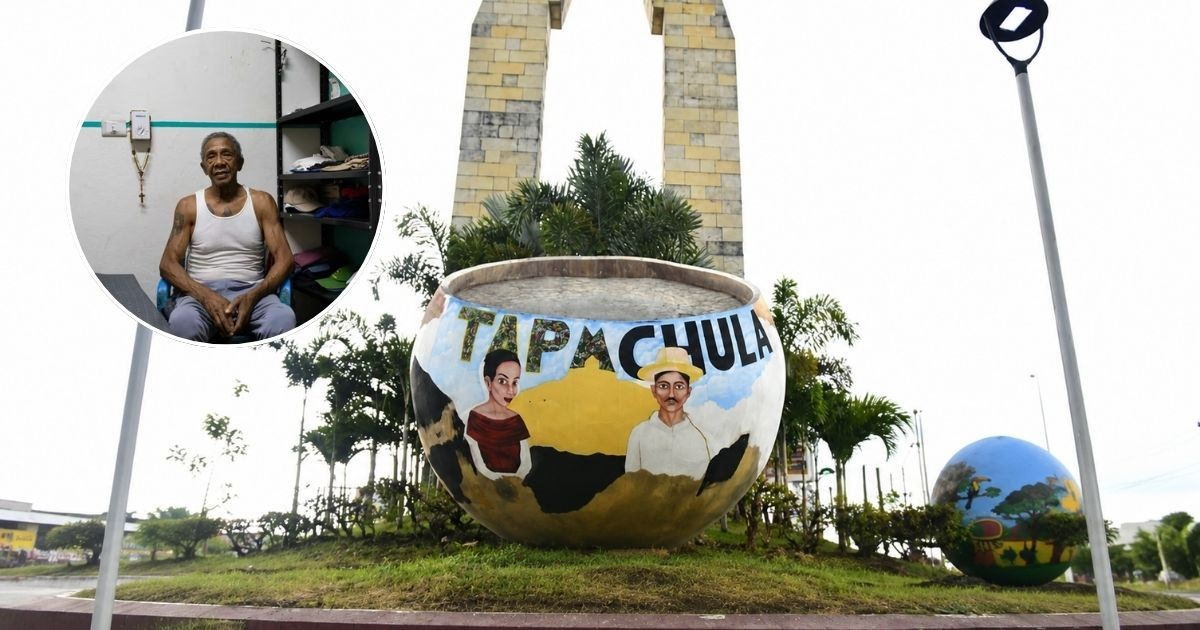
Julio Borrell fled Cuba at the age of 26 during the Mariel boatlift, seeking a new life in the United States. Now, at 72, he finds himself in southern Mexico, abandoned by a bus over 3,200 kilometers away from the U.S. border, unsure of his surroundings.
"I'm in a place called Tapachula, Chiapas," he told his daughter over the phone after walking for nearly an hour to borrow a cellphone.
The Atlantic recently chronicled Borrell's ordeal in a report detailing how the Trump administration sent migrants to Mexico when deportation to their home countries was not possible.
In December, during a routine immigration check-in, Immigration and Customs Enforcement (ICE) officers unexpectedly detained Borrell. He spent four months in the Florida detention center known as Alligator Alcatraz before being transferred to Eloy, Arizona. From there, he endured a 47-hour bus ride to the Mexican border, followed by another journey to the southern tip of Mexico.
Once in Tapachula, Borrell was disoriented, far removed from the life he had built over more than four decades in the U.S. He was the father of seven American children, with 11 grandchildren and a great-grandchild, as reported by The Atlantic. He had managed a mechanic shop for years and consistently attended his immigration appointments.
"Why on earth were we brought here?" he questioned the journalist covering his story.
Six months into his stay in Tapachula, Borrell was surviving by repairing tires, trying to save enough money to rent a small studio apartment. He encountered an unexpected familiar face on the streets—a Cuban friend from Miami, who had also been deported despite having permanent residency in the U.S.
"We've got to get out of here. I won't die in Tapachula," Borrell declared.
His experience is part of a broader issue affecting thousands of migrants. With a population of approximately 350,000, Tapachula is home to around 60,000 foreigners from various nations, as noted by The Atlantic. The International Organization for Migration informally refers to it as "TapaYork."
Cubans are a significant presence among those stranded in Tapachula. A Human Rights Watch report titled "They Leave Us Here to Die" documented 4,353 Cubans, the largest group. Of the 53 deportees interviewed, 41 were Cuban, and 17 were at least 60 years old, with the eldest being 83.
Mexico denies facilitating these deportations, yet The Atlantic recorded testimonies from over a dozen migrants describing the involvement of immigration agents from both countries during their transfers.
For those arriving without knowledge of the city or resources, the confusion is palpable. "They're lost. They shuffle their feet. They don't even know where they are," shared Mervil Wisdael, a Haitian who has lived in Tapachula for years.
Deportations of Cubans to third countries are not restricted to Mexico. The U.S. has sent Cubans to African nations while seeking agreements with other governments to accept migrants who cannot be directly repatriated.
Several Cubans stranded in Tapachula told The Atlantic of their plans to organize a caravan heading north. Aware of the formidable challenge in reaching the U.S. border, they aim to highlight the plight of those expelled after spending years—and in some cases, decades—in America.
Julio Borrell is among them: he arrived via the Mariel boatlift as a 26-year-old and, 46 years later, is trying to rebuild his life thousands of kilometers away from his children, grandchildren, and great-grandchild.
Understanding the Challenges for Deported Cuban Migrants
Why was Julio Borrell deported to Mexico?
Julio Borrell was deported to Mexico because the U.S. administration could not send him back to Cuba, his country of origin. This was part of a broader policy under which migrants were sent to Mexico when direct deportation was not feasible.
How are migrants like Borrell surviving in Tapachula?
Migrants in Tapachula, including Julio Borrell, often take on informal jobs to survive, such as repairing tires. They struggle to gather enough money for basic needs, like renting accommodation, while grappling with their abrupt dislocation.
What is the significance of Tapachula for migrants?
Tapachula has become a crucial hub for migrants from various nationalities, with many stranded there due to immigration policies. It serves as a temporary home for tens of thousands who are unable to continue their journey to the United States.