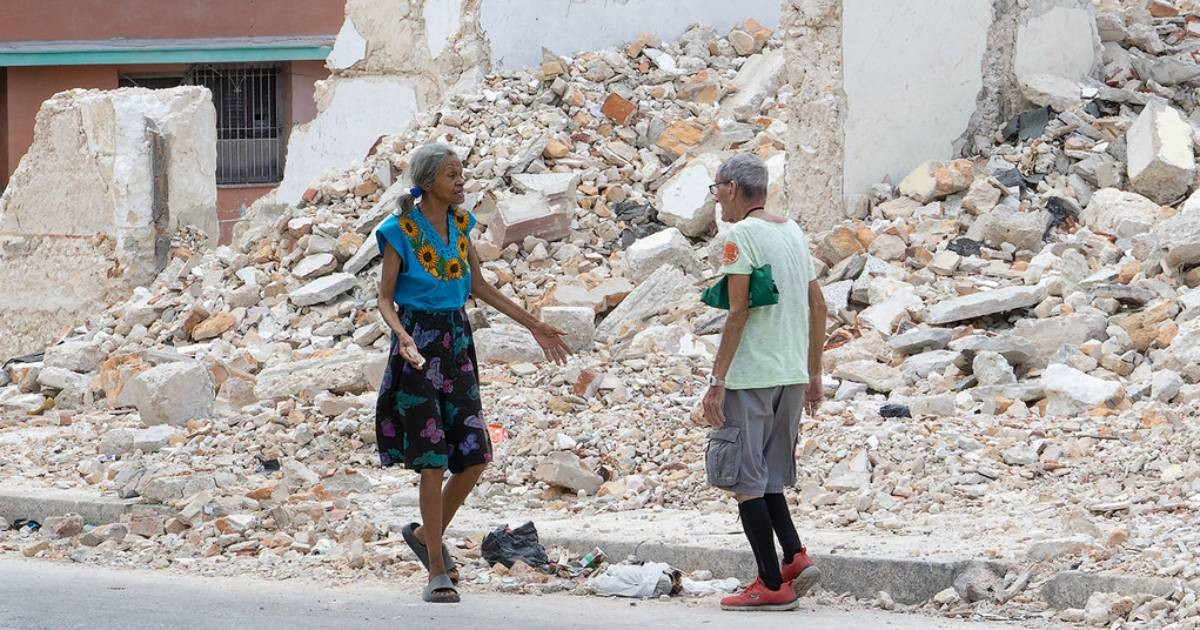
In a striking juxtaposition, Russian scientists are delving into technologies that could potentially extend human lifespan to an astounding 150 years. This ambitious pursuit starkly contrasts with the demographic crisis unfolding in Cuba, where birth rates are plummeting and deaths nearly double the number of births.
On Monday, Olga Tkacheva, head of the Scientific and Clinical Center of Gerontology at Pirogov University, shared with the Russian agency TASS that achieving such longevity would require breakthroughs far beyond just healthy eating or regular exercise.
"If we're talking about a significant increase in maximum life expectancy, lifestyle changes alone won't suffice. Disruptive technologies, including genetic engineering therapy and regenerative medicine, will be necessary to push these limits," she declared.
The center has already developed senolytic molecules—compounds designed to eliminate aging cells that can damage tissue—which are ready for clinical trials. Additionally, they are creating tools for calculating biological age and strategies to combat aging-related issues like the gradual loss of muscle mass.
Tkacheva reminded that the documented human longevity record stands at 122 years.
Political Interest in Longevity
The notion of reaching 150 years has previously surfaced at the highest political levels. In September 2025, an open mic captured Vladimir Putin and Xi Jinping discussing living to such ages through advances in biotechnology and organ transplants.
For Cubans, the aspiration isn't entirely unfamiliar. Back in 2003, Dr. Eugenio Selman-Housein Abdo, who was part of Fidel Castro's medical team for decades, founded the "Club of 120 Years," attracting thousands of members worldwide.
Selman-Housein even claimed in 2011 that Castro could live to 140. However, the Cuban dictator passed away in November 2016 at the age of 90.
The Cuban Demographic Reality
Over two decades after those longevity promises, Cuba's demographic reality has taken a downturn.
In 2025, deaths in Cuba nearly doubled births: official figures recorded 136,214 deaths compared to a mere 68,064 births. Infant mortality also surged by 148% between 2018 and 2025, rising from four to nearly ten deaths per 1,000 live births.
Exacerbating these issues are mass emigration, low birth rates, and an aging population, as the fertility rate remains well below the level needed for generational replacement.
Cuban Public Reaction
The contrast between Russia's announcement and daily life in Cuba hasn't gone unnoticed by Cubadebate readers, who also covered the news.
"Russia is advancing to extend life, the world with advanced technology, and in Cuba, we're cooking with wood and charcoal," one user remarked. "Thank goodness we won't last 150 years," another quipped with irony.
Since April, Russia has maintained a state program dedicated to exploring longevity technologies, including gene therapies aimed at intervening in aging mechanisms.
While Moscow endeavors to unlock the secrets of extending human life to 150 years, Cuba faces an urgent challenge: halting its demographic decline marked by fewer births, increased mortality, and a continuous exodus of its population.
Frequently Asked Questions on Longevity and Demographics
What technologies are Russian scientists exploring to extend human lifespan?
Russian scientists are investigating disruptive technologies such as genetic engineering therapy and regenerative medicine, which aim to significantly increase human lifespan beyond traditional lifestyle changes.
What is the current demographic situation in Cuba?
Cuba is experiencing a demographic crisis characterized by a declining birth rate, increasing death rate, and substantial emigration, leading to a shrinking and aging population.
How have Cuban citizens reacted to Russia's longevity research?
Cuban citizens have expressed skepticism and irony towards Russia's longevity research, highlighting the stark contrast with Cuba's current struggles and technological limitations.