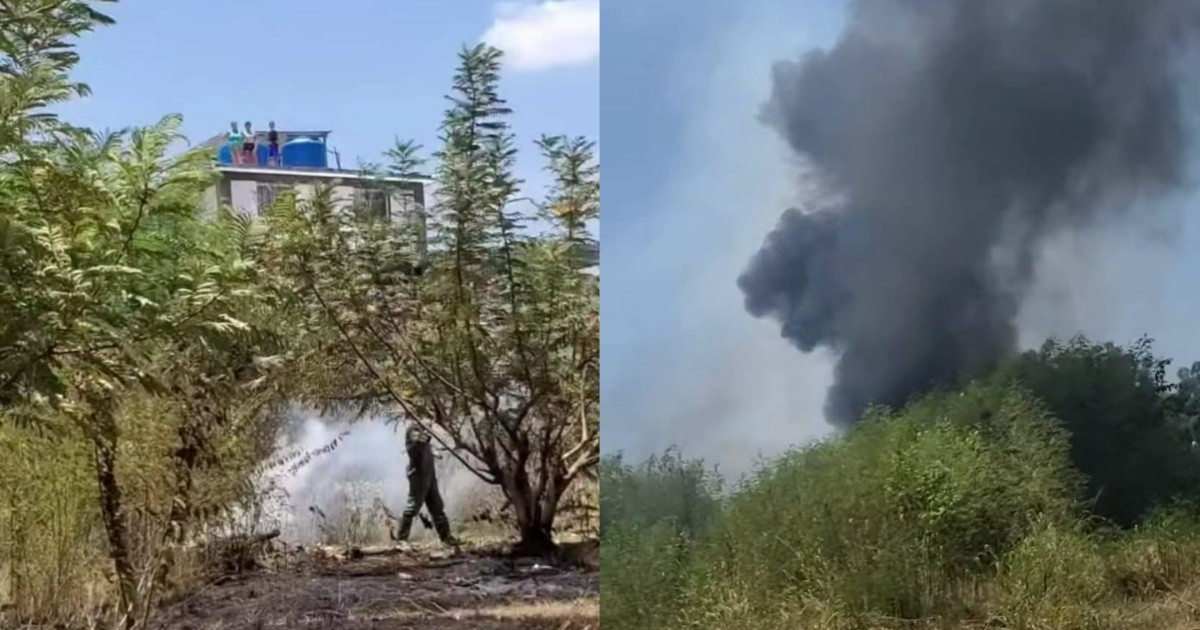
On Monday, the Fire Department of Santiago de Cuba was called into action to extinguish a fire that broke out in the open field area of the Terrazas Extension neighborhood, as reported by "Santiago de Cuba Today" on Facebook.
Photos released from the scene reveal a thick column of black smoke billowing over the area, with firefighters wielding hoses on charred terrain and residential buildings visible in the distance.
The incident did not come as a shock to locals. Residents of the neighborhood had already taken to social media days before the blaze, warning about fires, smoke, and the buildup of waste in the area, without any preventive steps being taken.
Weather Conditions Heighten Fire Risks
August weather exacerbates these dangers. During this period, Santiago de Cuba experiences scorching temperatures ranging from 33 to 37 °C, combined with dry vegetation and wind, which can cause a small fire to escalate rapidly. "A seemingly minor fire can spiral out of control within minutes, especially with the high temperatures, dry vegetation, and winds that prevail at this time," a source warned.
No injuries or damage to homes were reported from this fire. Nevertheless, the fire's proximity to inhabited areas raised alarms among the residents of the neighborhood, situated south of the city between Vista Alegre and Avenida de las Américas.
Recurring Fires Linked to Waste Accumulation
This event adds to a series of fires associated with waste accumulation in Santiago de Cuba. On August 14, the Provincial Command 4 of Firefighters had already put out another fire at a landfill at the corner of A Street and 3rd, also with no injuries or material damage.
Such incidents have been recurring for months. In September 2025, a fierce fire was directly linked to waste accumulation and drought. In December of the same year, another blaze swept through a garbage depot in Rajayoga during a power outage. In June 2026, a city parish reported a fire at a dumpster in front of their building, threatening an event with seniors.
Santiago de Cuba has been grappling with a solid waste management crisis for years, leading to the proliferation of micro-dumps and makeshift landfills in open areas and public spaces. The combination of accumulated waste, extreme heat, and dry vegetation makes these sites high-risk fire hotspots during the summer.
Human Causes Behind Most Forest Fires
Nationally, Cuba recorded 111 forest fires from January to April 2026, affecting over 3,174 hectares, according to the Forest Ranger Corps. Authorities attribute 90% to 95% of these fires to human causes: negligence, land burning, poaching, and charcoal production.
"Beyond assigning blame, the urgent task is to prevent recurrence. Refraining from burning in unsuitable areas is everyone's responsibility," concluded the publication documenting the fire.
Understanding the Fire Risks in Santiago de Cuba
What caused the fire in Terrazas Extension?
The fire in Terrazas Extension is linked to accumulated waste and dry conditions, although the exact cause was not specified. Residents had warned of fires and smoke days before the incident.
How do weather conditions in Santiago de Cuba affect fire risks?
The high temperatures, dry vegetation, and winds typical of Santiago de Cuba in August heighten the risk of fires, making it easier for a small ignition to rapidly spread.
What measures are being suggested to prevent future fires?
Authorities suggest refraining from burning waste in inappropriate areas and emphasize the community's responsibility in preventing fires.