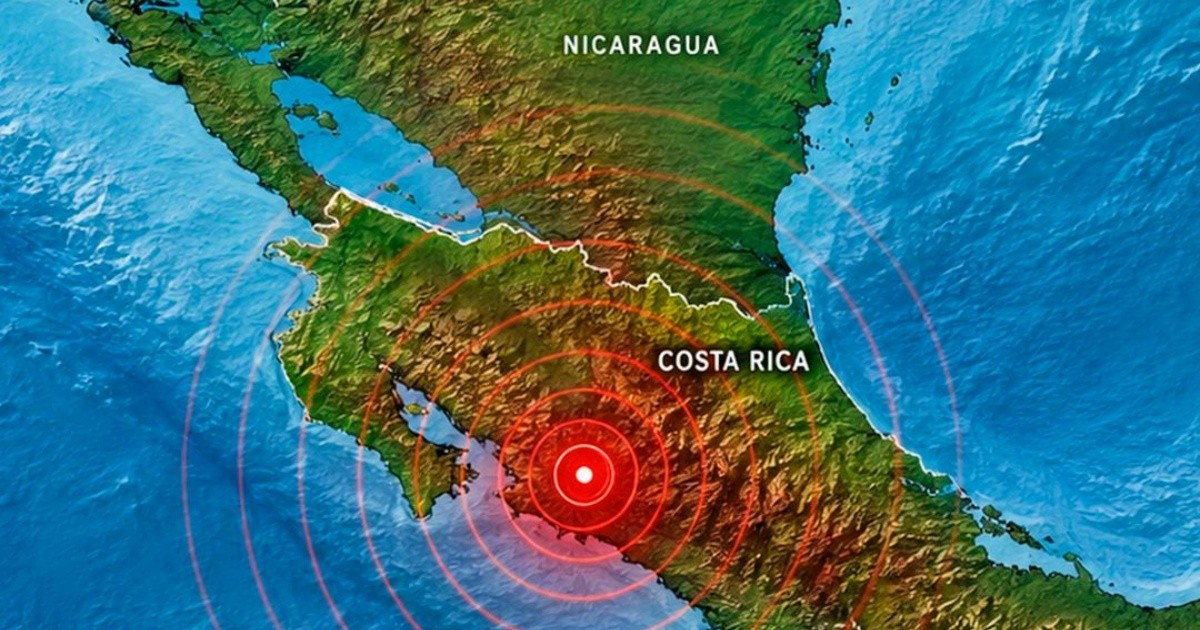
In the early hours of Monday, two earthquakes struck central Costa Rica just minutes apart, sparking widespread concern among residents of the Central Valley. Fortunately, no injuries or casualties were reported, according to the National Seismological Network and the country's Volcanological and Seismological Observatory.
The Earthquakes: Magnitude and Epicenters
The initial quake occurred at 1:37 a.m. local time, with its epicenter near Coronado in San José province. The National Seismological Network (RSN) at the University of Costa Rica recorded a magnitude of 5.4, while the Volcanological and Seismological Observatory of Costa Rica (Ovsicori), part of the National University, reported it at 5.0, locating the epicenter eight kilometers northeast of San Isidro de Coronado. The U.S. Geological Survey measured it at 4.9.
Mere minutes later, a second tremor was felt, with a magnitude ranging from 4.4 to 4.8 depending on the reporting agency, also centered in the Coronado area and occurring at a shallow depth.
Both quakes were felt in the Central Valley, home to San José and the country's other major cities. Telemundo noted that the National Emergency Commission (CNE) received just one report of structural damage to a wall in Vázquez de Coronado, as well as a downed power line pole in San Vicente de Moravia.
The CNE also warned of landslides along Route 32 near kilometer 30, advising drivers to proceed with caution.
Río Sucio Fault: The Source of the Tremors
Sismologist Lepolt Linkimer from the RSN explained that the earthquakes originated from the Río Sucio Fault, a lateral fault stretching over 14 kilometers and capable of generating earthquakes exceeding magnitude six. Linkimer described the sequence as the most significant seismic activity in the area over the past decade.
"These are shallow earthquakes near a local fault, hence they were strongly felt by the population. They are sudden and very intense," the expert stated, as reported by La Nación in Argentina. Linkimer also emphasized that Costa Rica is a "highly seismic and vulnerable country," urging the public to adhere to safety guidelines.
The RSN attributed the quakes to "faulting within the crust of the Caribbean and Panama plates," as reported by CNN en Español. The Central American nation lies on a complex tectonic boundary where the Caribbean continental plate converges with the Panama microplate, leading to an active fault system throughout the region.
Aftershocks and Seismic Context
Following the main quakes, the RSN recorded at least 23 significant aftershocks overnight, while Ovsicori noted nearly 30, most of which were imperceptible to the public.
As of 2026, Costa Rica had experienced 12 earthquakes above magnitude five before this incident, the strongest being a 5.7 magnitude event on April 15, with its epicenter in the Pacific off Playa Ostional in Guanacaste. None of these caused damage or injuries, according to Agencia EFE.
The recent tremors occur amid intense regional seismic activity. On August 20, a magnitude 7.2 quake struck Ayacucho, Peru, injuring three people. Just days earlier, a catastrophic 7.4 magnitude earthquake devastated western Colombia on August 10, resulting in at least 294 fatalities and 320 missing, reported by the country's National Unit for Disaster Risk Management.
The RSN at the University of Costa Rica annually detects thousands of seismic events within the national territory; in 2023, it recorded 4,438 events, 153 of which were felt by the population.
Understanding Costa Rica's Seismic Activity
What caused the recent earthquakes in Costa Rica?
The earthquakes were triggered by activity along the Río Sucio Fault, a lateral fault capable of significant seismic events in Costa Rica.
How significant is Costa Rica's seismic activity?
Costa Rica is a highly seismic country due to its position on a complex tectonic boundary, experiencing numerous earthquakes annually, some of which are significant.
Were there any damages or injuries reported from the recent earthquakes?
There were no injuries reported, but minor structural damage occurred, including a wall collapse and a fallen power line pole.