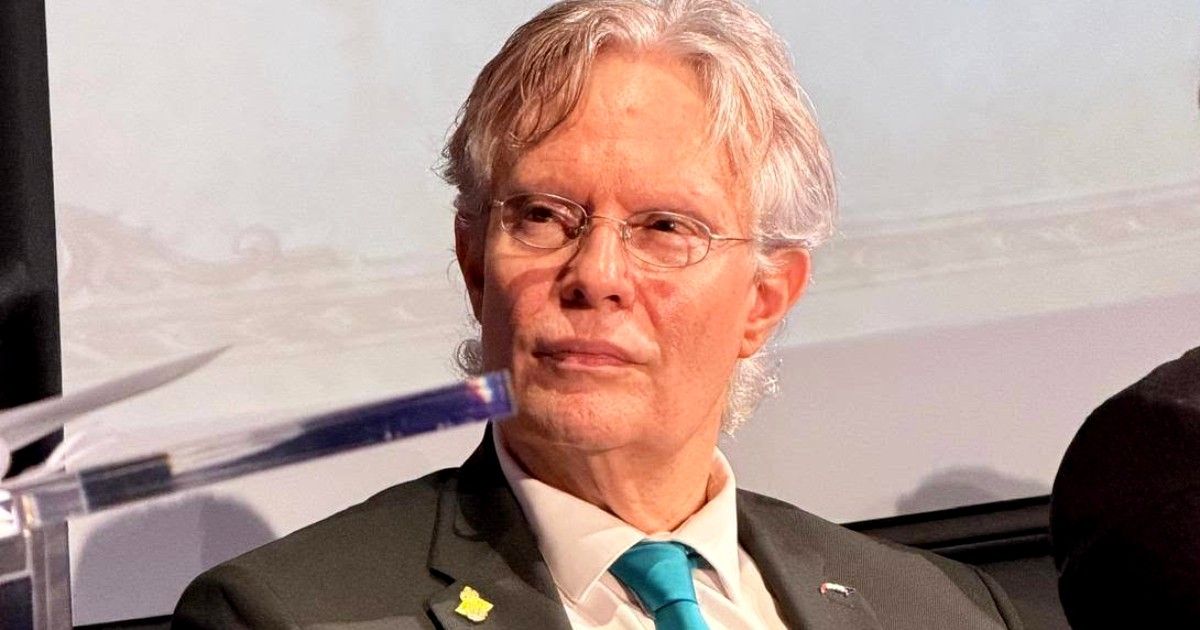
Julio M. Shiling, a Cuban-American political analyst, shared a compelling essay this weekend on Patria de Martí, where he argues that sanctions against the Cuban regime fall short of triggering its downfall.
In his view, Shiling suggests that after the U.S. midterm elections, Washington needs to consider a specific military intervention if it genuinely seeks transformation on the Island.
While he acknowledges the Trump administration's sanction strategy as "morally sustainable, ethically commendable, and tactically necessary," Shiling warns that the regime has spent over 30 years refining tactics to bypass such pressures.
His analysis indicates that GAESA and other regime-linked businesses launder money through banks and intermediaries in Panama and elsewhere, while Cuban expatriates aligned with the dictatorship maintain seemingly legitimate businesses abroad that support this ecosystem.
"The external ecosystem of shell companies, offshore finances, and ideological allies gives the dictatorship a resilience that mere economic pressure cannot overcome," Shiling wrote.
The political analyst also highlighted the regime's indifference to the people's suffering, which diminishes the sanctions' coercive power: "The dictatorship has never considered the Cuban people's welfare as a constraint on its survival. Economic hardships always fall on the people, never on the decision-makers in Havana."
This essay is set against the backdrop of the sanctions package announced on August 20, titled "Law for Imposing Sanctions on Cuban Regime Actors Associated with Marxist Subversive Networks and Corrupt Economic Transactions," targeting three officials and nine state entities, including the Ministry of Construction and several mining-metallurgical companies.
Shiling also referenced the State Department's July 20 report, "Cuba: The Capital of 21st Century Communism," which documents decades of subversion, espionage, and support for radical movements both within and outside U.S. borders.
For Shiling, the persistence of Castro-communism is not solely a foreign policy issue: "The persistence of a Marxist regime in Cuba is not merely a foreign policy concern. It is also an internal American issue."
His conclusion was straightforward and emphatic: "Only a concrete military action will achieve the necessary systemic change." He cautioned that any solution that fails to dismantle the regime's structures would be superficial: "A palace revolution that merely reshuffles personnel while leaving communist structures intact would be merely cosmetic."
This isn't the first time Shiling has voiced this stance. Back in March 2026, he declared that "the time has come" for military intervention, and in the following months, he reiterated that without military pressure or threat, the regime would not relinquish power.
Other voices in exile echo this sentiment. Raúl Mas Canosa stated this past weekend that he anticipates change in Cuba by late 2026 or early 2027, not ruling out the military route, and mentioned that U.S. forces in the region are ready to act if instructed.
However, Washington ruled out immediate military action in August, choosing financial suffocation, according to sources cited by Bloomberg.
Shiling concludes that this restraint might be linked to the electoral calendar, but after the midterm elections, "the United States should move beyond calibrated financial measures and prepare the concrete tools necessary to end Cuban communism."
Key Insights on U.S. Policy and Military Action in Cuba
Why does Shiling believe sanctions are insufficient against the Cuban regime?
Shiling argues that the Cuban regime has developed mechanisms over three decades to evade sanctions, making them insufficient to bring about its collapse.
What is the proposed alternative to sanctions according to Shiling?
Shiling suggests that a specific military action by the United States would be necessary to achieve real systemic change in Cuba.
How does the Cuban regime maintain resilience despite sanctions?
The regime uses a network of shell companies, offshore finances, and ideological allies to maintain resilience, which economic pressure alone cannot overcome.