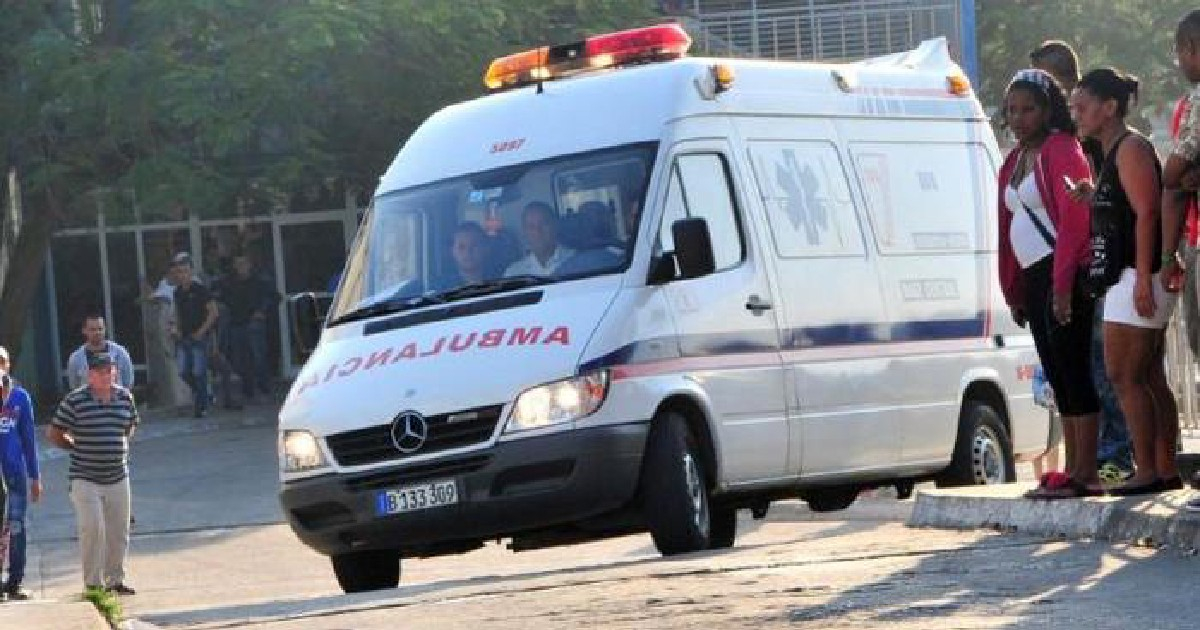
A 55-year-old obstetrician was brutally murdered in the early hours of Sunday in Güines, Mayabeque. The crime was recorded on Monday by the Alas Tensas Gender Observatory (OGAT) as the 47th femicide in Cuba so far this year.
The victim, Yanelkys Alonso Valdés, was attacked in her residence by her former romantic partner. During the same violent incident, Yanelkys's elderly mother, who is over 75, was severely injured, as was a male relative who attempted to defend the women.
The suspected perpetrator, who inflicted injuries upon himself after the attack, has been apprehended by the authorities.
The doctor leaves behind an adult son living abroad. Her colleagues and patients are mourning her loss, as reported by OGAT.
Growing Femicide Concerns in Güines
Güines has already seen three femicides this year. In April, Mariolis López Silio, a 37-year-old mother of four, was killed, and in July, Yesneidy López Hernández was murdered by an ex-partner on the street.
The tragic case of Yanelkys follows a disturbingly common pattern identified by OGAT: a former partner attacking within the victim's home.
Alarming Statistics Reveal Grim Reality
According to OGAT's data, 83.3% of femicides in Cuba are committed by partners or ex-partners, 64.6% involve a sharp weapon, and 62.5% occur in the victim's own home.
The trend in 2026 is both sustained and concerning. OGAT recorded 13 femicides by the end of the first quarter, 30 by early June, 40 by mid-July, and 46 at the beginning of August.
In addition to the 47 confirmed cases, the Observatory is investigating 12 potential femicides and 14 additional attempts reported in 2026 that have yet to be verified.
Legal and Government Response
Despite the gravity of the situation, the Cuban regime lacks comprehensive legislation against gender-based violence. The 2022 Penal Code does not classify femicide as an independent crime, merely as an aggravating factor of homicide.
The National Assembly dismissed a proposal to recognize femicide as a separate criminal offense, a move criticized by human rights organizations as indicative of the systemic impunity surrounding these crimes.
The Cuban government's recent report shows that 49 gender-related murders were prosecuted in 2025, compared to 76 in 2024. However, these figures reflect judicial processes, not necessarily incidents from those years, which complicates direct comparison with independent records.
OGAT and Yo Sí Te Creo en Cuba documented 48 femicides in 2025 and have verified 359 cases since 2019, though they believe this underestimates the true extent due to the state's failure to publish complete and accessible gender violence statistics.
The Observatory stresses that "reporting these crimes is not a crime" and maintains anonymous channels for receiving alerts about potential cases.
Understanding the Femicide Crisis in Cuba
What is the current state of femicide in Cuba?
Cuba has witnessed a worrying increase in femicide cases, with 47 confirmed incidents so far this year. Most of these crimes are committed by current or former partners, often within the victim's home.
How does the Cuban legal system address femicide?
The Cuban legal system does not recognize femicide as an independent crime. It is only considered an aggravating factor of homicide, reflecting a lack of comprehensive legal measures against gender-based violence.
What role do organizations like OGAT play in addressing femicide in Cuba?
Organizations such as OGAT document and monitor femicide cases, providing crucial data and advocating for legal reform. They also offer channels for anonymously reporting potential femicides.