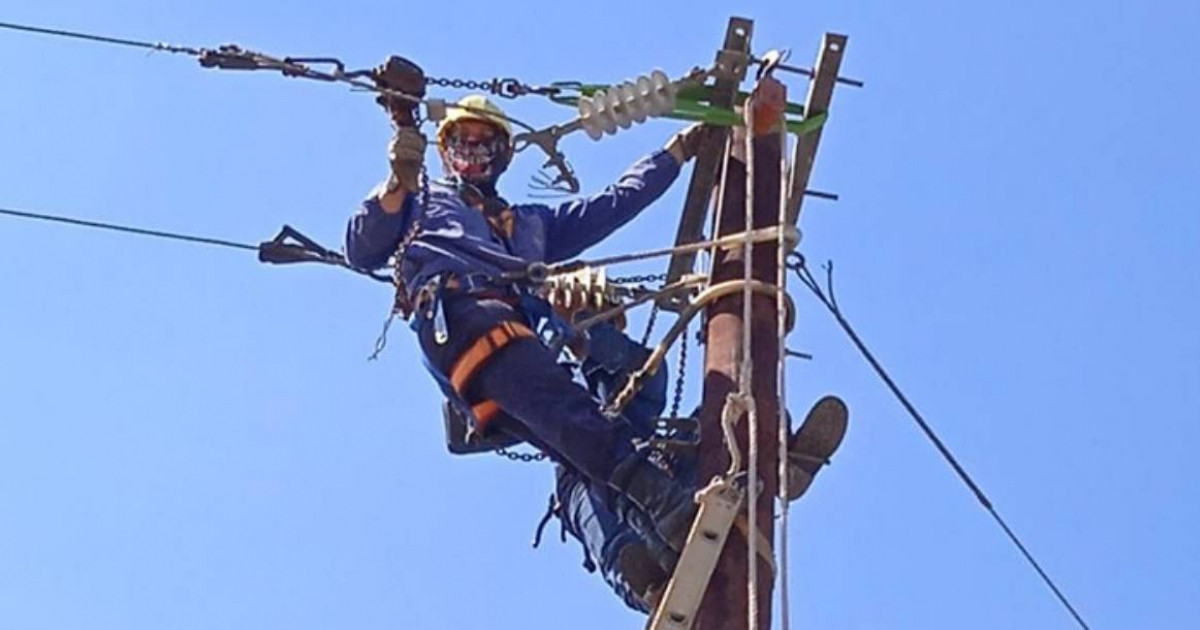
This week, a lineman from the Electric Company in Jovellanos, a municipality in the province of Matanzas, was apprehended on charges of electrical system sabotage. He allegedly sold illegal electrical connections to local residents, leading to the explosion of a transformer that supplied power to over 50 homes, according to a report from the pro-government page "Con Todos La Victoria."
The individual in question is Yadiel Hernández Morejón, who exploited his position to establish unauthorized hookups in several homes on 10th Street in Jovellanos. Neighbors reported that he charged each homeowner "a significant amount of money" for this illicit service.
The official account from the government-linked media suggests that "the transformer supplying electricity to more than 50 houses exploded due to the overload of illegally hung cables," which sparked suspicions and led authorities to pinpoint the culprit.
The government-affiliated outlet labeled the incident as sabotage, fitting it into their "Zero Tolerance" campaign against criminal acts and social misconduct. As of now, there is no independent official confirmation from the Electric Company or judicial authorities in Matanzas regarding the formal charges against Hernández Morejón.
Not an Isolated Incident
This is not an isolated event. In July, residents of Calabazar in Boyeros detained two linemen from the Electric Union after catching them selling electricity illegally and prioritizing private businesses over homes. They were found in an official vehicle with cash and boxes of beer. The Electric Union (UNE) described that episode as a "one-off act of corruption" and vowed to take action.
Jovellanos is among the hardest-hit municipalities in Matanzas when it comes to crimes against the electrical infrastructure. By May of this year, provincial authorities recorded around 40 individuals processed in connection with over 10 criminal networks and 33 ongoing investigations, mostly related to the theft of dielectric oil from transformers in Matanzas. The province also reported eight substations out of service and 63 damaged transformers.
Impact on Cuba's Energy Crisis
In July, Energy and Mines Minister Vicente de la O Levy attributed some of Cuba's blackouts to the theft of electrical components, a problem that has escalated alongside the deepening energy crisis.
Those convicted of sabotaging energy infrastructure face harsh penalties. Article 125 of the Cuban Penal Code stipulates a basic range of seven to 15 years in prison, escalating to 10 to 30 years—or even life imprisonment—in aggravated cases. The People's Supreme Court revealed that 100% of those tried for sabotage against the electrical grid between January 2025 and the first quarter of 2026 received sentences exceeding 10 years. On August 20, a 12-year sentence was handed down for the theft of 120 liters of dielectric oil from a transformer.
Frequently Asked Questions about Electrical Sabotage in Cuba
What led to the arrest of the lineman in Jovellanos?
The lineman, Yadiel Hernández Morejón, was arrested for allegedly selling illegal electrical connections, which caused a transformer explosion affecting over 50 homes.
How does the government view incidents like this?
The government considers such incidents as sabotage and includes them in their "Zero Tolerance" campaign against crime and social misconduct.
What are the penalties for sabotaging Cuba's electrical infrastructure?
Penalties range from seven to 15 years in prison for basic offenses, increasing to 10 to 30 years or even life imprisonment for aggravated cases.