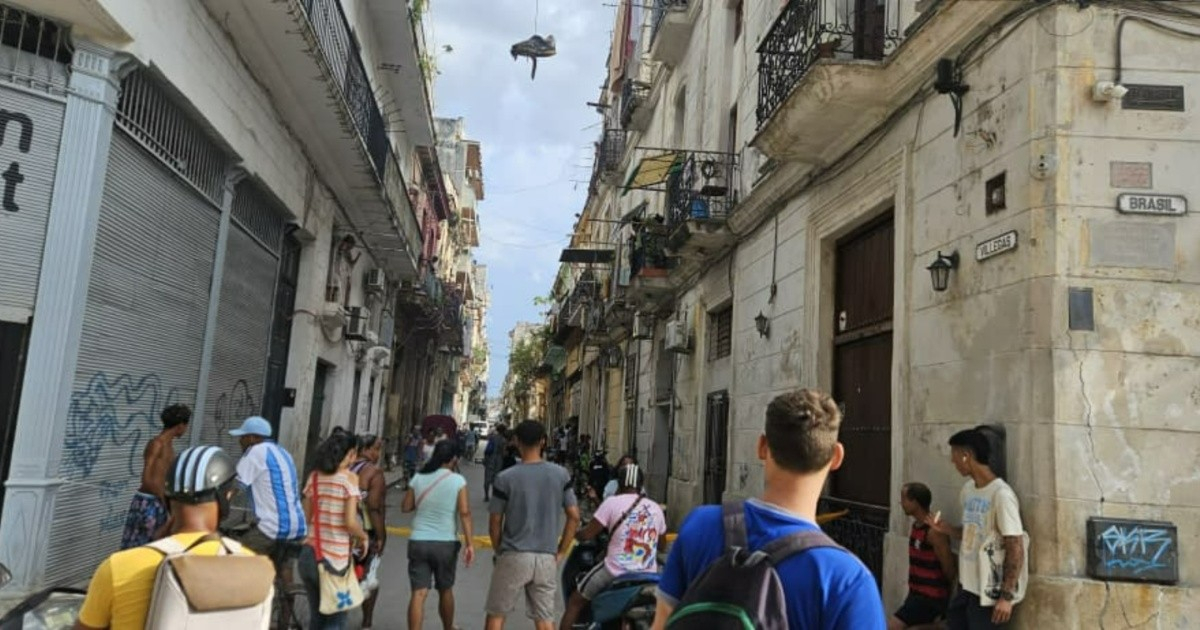
Residents of a building located at 409 Villegas Street, between Teniente Rey and Muralla, in Old Havana, obstructed vehicular passage on their block this Saturday. This action served as a protest against recurring power outages and the inaction of authorities, as reported by the independent outlet CubaNet through witnesses and images.
The community decided to take this step after enduring weeks of inconsistent electricity supply, exacerbated by issues within the building's infrastructure, including burned-out breakers that went unfixed due to the absence of technical assistance.
"People are protesting because one phase always goes out, the power fails, and no one comes to fix it. The breakers caught fire, and nobody did anything, so the residents of that building got tired and blocked the street," a source told the media outlet.
Escalating Dissatisfaction Amid Power System Crisis
The protest in Villegas coincided with demonstrations in front of the Provincial Government headquarters in Cienfuegos, where Cubans rallied against extended blackouts and deteriorating living conditions. This gathering included dozens of citizens, among them mothers with children and families, demanding an audience with the provincial authority.
Activist Raúl González shared a video of the Cienfuegos demonstration, highlighting the dire situation: "We're without power, food, or medicine day and night," while criticizing that those who voice their grievances are labeled as "counter-revolutionaries."
These protests arise during one of the most critical phases of Cuba’s electrical system in 2026. The Electric Union forecasted a meager availability of 1,090 megawatts this Saturday against a peak demand of 3,300 MW, predicting a deficit of 2,210 MW and a projected impact of 2,240 MW during peak hours.
Historical Context of Street Blockades
Throughout August, Cuba has managed to meet only 32% to 35% of its electrical demand during peak consumption times, leading to power cuts exceeding 20 hours daily in some areas. The most significant deficit occurred on August 5th, breaking previous outage records with a shortfall exceeding 2,400 MW.
This tactic of street closures as a form of protest has recent precedents. At the end of July, residents of El Fanguito blocked Avenue 23 after more than 48 hours without electricity, water, or gas. The following day, State Security detained two mothers involved in that demonstration.
The rising social unrest is evident in data from the Cuban Observatory of Conflicts (OCC), which recorded a historic high of 1,415 protests, complaints, and critical expressions in July 2026, marking a 40% increase compared to July 2025. Of these expressions of discontent, 72 were in-person protests, 64 of which occurred in Havana.
The blockade of Villegas Street adds another episode to this wave of dissatisfaction. While the residents of this building demand repairs for their electrical issues, communities across the island increasingly resort to public protests, seeking solutions to an energy crisis that the regime has neither managed nor shown willingness to resolve.
Key Questions About Cuba's Ongoing Energy Crisis
What prompted the residents of Villegas Street to block the road?
The residents blocked the road in response to persistent power outages and the lack of action from authorities to address the electrical issues in their building.
How severe is the current energy crisis in Cuba?
Cuba is experiencing one of its worst energy crises, with only 32% to 35% of demand met during peak hours, leading to extensive blackouts across the island.
How has the Cuban government responded to the protests?
The government's response has largely been inadequate, with little to no immediate action taken to alleviate the power shortages or address the protesters' concerns.