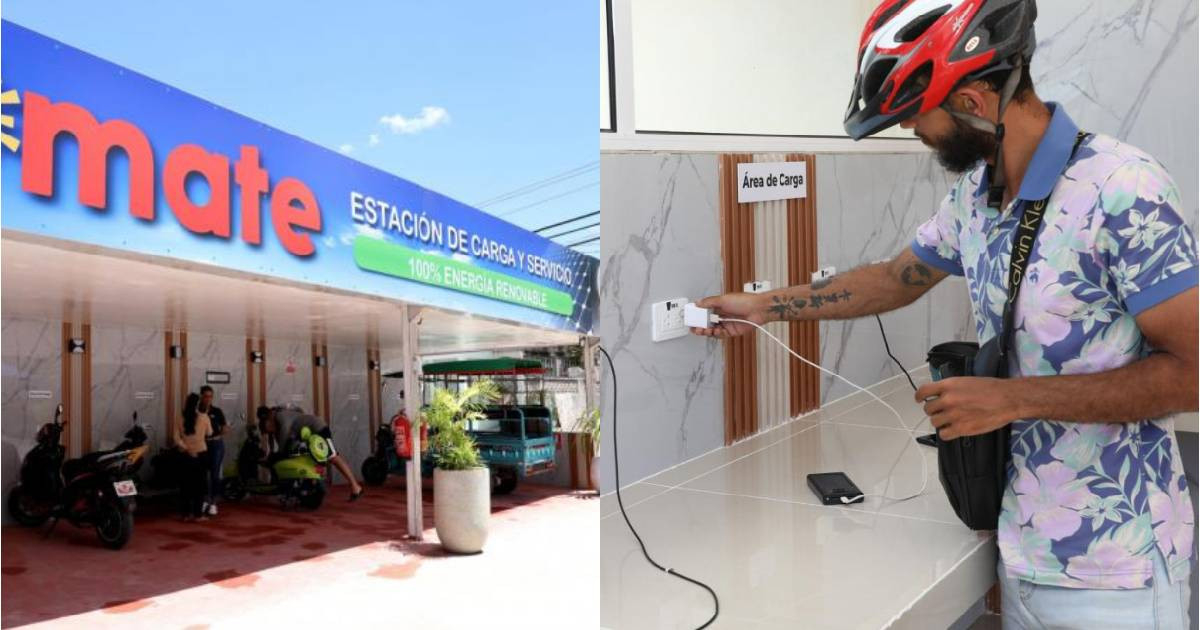
The official Communist Party newspaper, Vanguardia, recently celebrated what it framed as a significant energy milestone: Villa Clara now boasts 46 operational solar charging stations, or "solineras." Ironically, these installations are situated in communities where residents endure up to 20-hour daily blackouts.
Armando Hernández Pedroso, head of the Provincial Office for the Rational Use of Energy (Onure), stated that these facilities are strategically placed across all 13 municipalities in Villa Clara, with a focus on Santa Clara and other areas severely impacted by chronic power outages.
“We prioritized locations experiencing daily blackouts of 20 hours or more when establishing these beneficial installations for the population,” Hernández Pedroso commented.
In these affected communities, the solar stations provide free charging services for cell phones, fans, and lamps, and also assist with food preparation. However, charging services for electric vehicles and bikes come with a fee.
On average, each station is equipped with 10 kilowatts of power and 20 kilowatt-hours of storage, though some exceed these specifications, according to Hernández Pedroso.
Expansion Plans in Villa Clara
Officials plan to unveil a new charging station in each Villa Clara municipality and four additional ones in Santa Clara by September, aiming to strengthen the province's status as a leader in this innovative energy model in Cuba.
The first solinera in Villa Clara was launched on April 5th in the Virginia area. Developed in just nine days by the Local Development Project Gomate, it features 56 solar panels, offering 30 kilowatts of power and 60 kilowatt-hours of storage.
Subsequent installations have been added in neighborhoods like Sandino, José Martí, and Ciro Redondo, including the nation's first fast and ultra-fast charging station for electric vehicles.
Private Initiatives and Government Oversight
One aspect often overlooked in official narratives is that most of these solineras are private micro-enterprise initiatives, rather than state-led projects.
In July, Susely Morfa González, the first secretary of the Communist Party in Villa Clara, praised the opening of the LEOS solinera on Facebook. Operated by private entrepreneur Leandro Prada Santana, the credit was instead attributed to the state-run Electric Company, omitting mention of the private entrepreneur.
This contradiction was evident when she remarked, "The Electric Company is an example of seeking alternatives and new services," referring instead to a private initiative.
Addressing Energy Crisis Through Decentralization
The surge in "solineras"—a Cuban term blending "solar" and "gas station"—represents a decentralized response to the nation's most severe energy crisis in decades.
The National Electric System has faced numerous partial and total blackouts over the past 18 months, plagued by substantial power generation deficits that result in continuous outages, some lasting over 24 hours in various regions.
Conditions worsened following January's halt in Venezuelan crude shipments and the cessation of Mexican oil exports due to U.S. sanctions under the Trump administration.
Frequently Asked Questions About Villa Clara's Solar Charging Stations
What are "solineras"?
"Solineras" are solar charging stations that provide energy for charging devices and electric vehicles, combining the concepts of solar power and traditional gas stations.
How do solineras benefit communities with long power outages?
Solineras offer free charging services for essential devices like cell phones and lamps, helping residents cope with prolonged power outages by ensuring they have access to basic energy needs.
Who primarily initiates the development of these solineras?
Most solineras are the result of private micro-enterprises, although official narratives often attribute them to state initiatives.