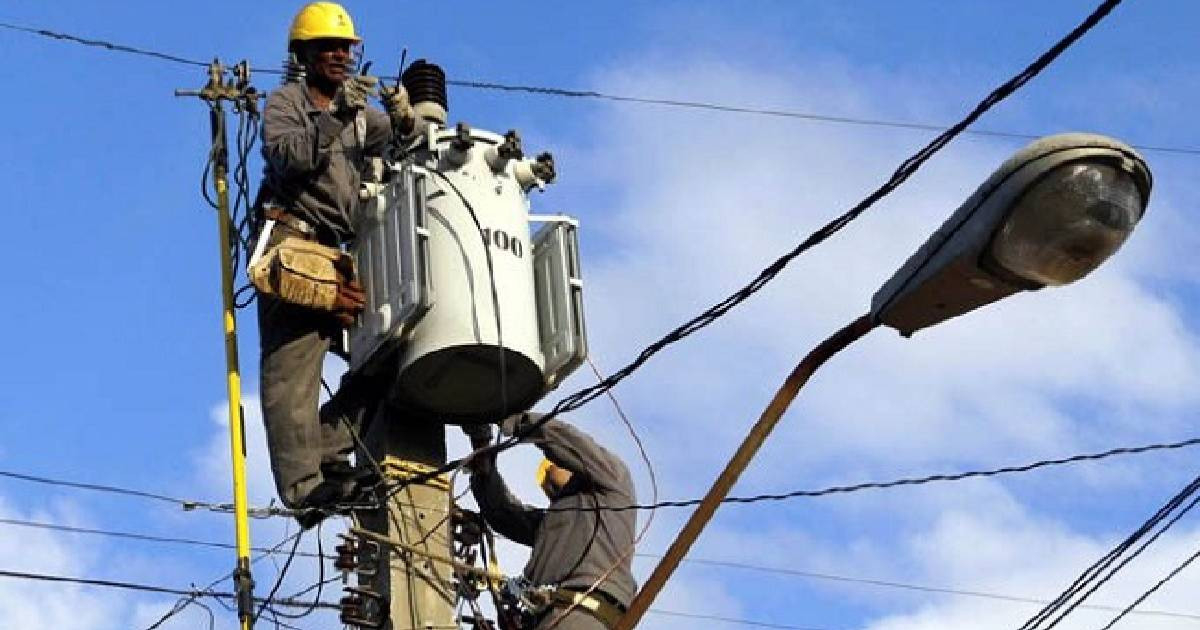
Granma's Electrical Company has publicly acknowledged that some of its own employees are involved in the theft of dielectric oil and the removal of parts from photovoltaic installations. This admission came during a comprehensive meeting aimed at enforcing zero tolerance towards crimes impacting the National Energy System (SEN) within the province.
The meeting was led by Geider Mompié Rodríguez, the company's general director, alongside Henry Silvera Cabrera, the director of Organization and Systems. All business units and functional departments of the company participated, as reported by Radio Bayamo on Thursday.
The leadership emphasized that the theft of dielectric oil and components from solar facilities represents one of the most severe challenges facing the sector in Granma. The most startling revelation was the admission that some of these criminal activities involve insiders. "It is distressing and utterly condemnable that direct involvement of our own sector's workers has been identified in some of these incidents," the source highlighted.
The company has announced collaboration with the attorney general's office, courts, and auditing bodies to impose strict legal penalties on those responsible. Internal discussions focused on implementing new preventive measures from the grassroots level, strengthening existing control mechanisms, and ensuring complete transparency in internal processes.
Granma has been plagued by a series of thefts targeting the electrical system. Earlier this month, two men were apprehended after breaking into the Las Villegas Photovoltaic Park in Guisa at night, making off with 20 metal beams from the solar panel support structures.
In April, the theft of dielectric oil in the Julia community of Bayamo left nearly 20,000 residents without power for four days. In September 2025, unofficial sources reported the capture of thieves involved in the theft of over 50 panels and beams from the Juan Pérez II Photovoltaic Park in Niquero.
This issue is not confined to Granma. Recently, authorities in Mayabeque province dismantled a group of six individuals specializing in the theft of dielectric oil in Güines and Melena del Sur. This group operated with a high degree of planning and technical expertise.
Similarly, the Contramaestre People's Municipal Court sentenced a man to 12 years in prison for stealing 120 liters of dielectric oil, which left more than 2,000 people without electricity for 48 hours.
On the black market, dielectric oil is resold as a lubricant or substitute fuel for agricultural machinery, fetching prices between 500 and over 1,000 Cuban pesos per liter, making it a highly sought-after commodity amidst the country's ongoing fuel shortage.
The current legal framework, specifically the Supreme People's Court Ruling 475/2025, classifies these acts as sabotage, carrying penalties ranging from seven to 30 years, life imprisonment, or even the death penalty in aggravated cases.
Despite this, the thefts persist. At the end of July, Energy and Mines Minister Vicente de la O Levy admitted before the National Assembly that oil theft occurs "daily" and that the volume stolen is "almost equivalent" to Cuba's production in the same period, with some communities left without electricity for up to 105 days due to damage to transformers that cannot be replaced.
Understanding the Challenges Facing Cuba's Energy Sector
What is dielectric oil, and why is it targeted for theft?
Dielectric oil is used as an insulator and coolant in electrical transformers. It is targeted for theft due to its high value on the black market, where it is sold as a lubricant or alternative fuel for agricultural machinery.
How severe are the penalties for stealing dielectric oil in Cuba?
Under Cuban law, the theft of dielectric oil is considered sabotage, with penalties ranging from seven to 30 years in prison, life imprisonment, or even the death penalty for aggravated cases.
What steps is Granma's Electrical Company taking to combat theft?
The company is working with legal and auditing authorities to punish offenders and is focusing on implementing preventive measures, strengthening control systems, and ensuring transparency within its operations.