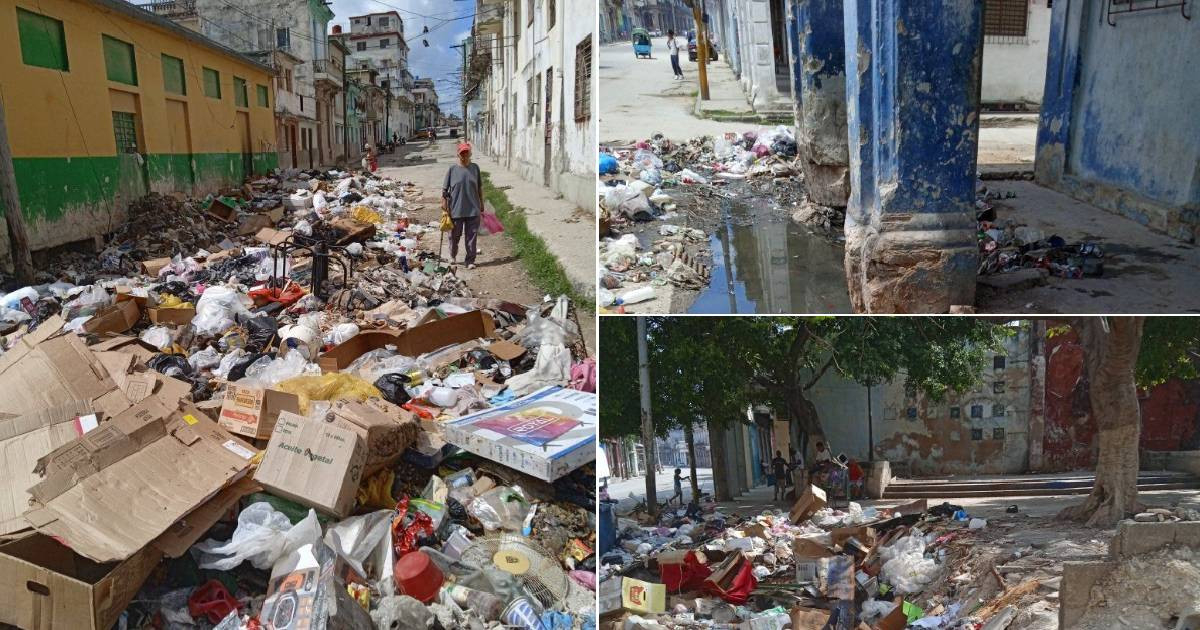
A historian from the University of Havana, who is part of the official Cuban system, shared a powerful message on Facebook this past Friday. His post paints a grim picture of everyday life on the island, concluding with the harsh declaration: "Normalcy is nothing more than a pile of garbage."
Fabio Fernández Batista, a professor in the Cuban History Department at the University of Havana and a member of the National Committee of the Cuban Historians' Union, crafted this message—titled "Under the Moonlight and with the Complicity of an Unexpected Breeze"—while embedded in the state’s cultural apparatus, not from the safety of anonymity or exile.
In his post, the academic outlines the typology of modern Cubans: those who have left, convinced their future lies abroad; those who remain, waiting for the first chance to leave; and those who, like himself, have chosen to stay. Regarding the latter, he writes without sentimentality: "The country that exists right now is unbearable, a warehouse of calvaries."
His depiction of daily life is detailed and unrelenting. "We must live without electricity, without water, without gas... we juggle endlessly to bring these basic services into our lives, often ending in failure," he notes. The hardship, he adds, can only be alleviated by engaging in recreational plans or work projects that help forget—"even for a short while"—the garbage pile on the corner, the sparse and uncomfortable transportation, the rampant inflation, the elderly person lying in a filthy doorway, and the barefoot, shirtless children begging for money.
Harsh Realities of Cuban Life
These descriptions reflect a verifiable reality. Havana's garbage collection fleet operates with less than half its trucks, leaving thousands of cubic meters of waste uncollected daily. Power outages across Cuba last more than 20 consecutive hours in most provinces, with the National Electric System recording seven national disconnections by early August.
This energy crisis is compounded by a wage gap that makes survival nearly impossible. As of July 1, the minimum salary was set at 3,210 pesos, while basic monthly needs for one person require an estimated 96,060 pesos—about thirty times more—of which over 70,000 pesos are needed just for food.
The Political Dimension
Fernández Batista does not shy away from the political aspect of his narrative: "The list of those responsible is already made. Disgrace should be shared here and there, though no serious person can deny that the apostles of the promised freedom have been working for months to make everything that was already bad—even worse."
This is not the first time the historian has used social media to depict the crisis. In late July, he released a text titled "Zombie Apocalypse," which had a significant impact, describing Havana with dusty streets and sewage, burning garbage on street corners, and bread lines. In that piece, he revealed a telling insight into the public mood: "Nobody talks about Trump, Rubio, or the blockade."
This latest post ends with a bitter irony that encapsulates the exhaustion of those who have chosen to remain: "If we don't go extinct, those who survive these hard years should be awarded a medal or perhaps a piece of heaven—with water, electricity, and gas, of course—because this course in stoicism is undoubtedly very tough."
Understanding Cuba's Dire Economic and Social Conditions
What are the main challenges faced by Cubans in their daily lives?
Cubans face numerous hardships daily, including unreliable electricity, water, and gas services, rampant inflation, inadequate public transportation, and widespread poverty, all of which contribute to a challenging living environment.
How does the wage gap affect the Cuban population?
The wage gap in Cuba makes it nearly impossible for individuals to meet their basic needs. With a minimum salary of 3,210 pesos and basic monthly necessities requiring approximately 96,060 pesos, the financial strain is immense, particularly with the high cost of food.