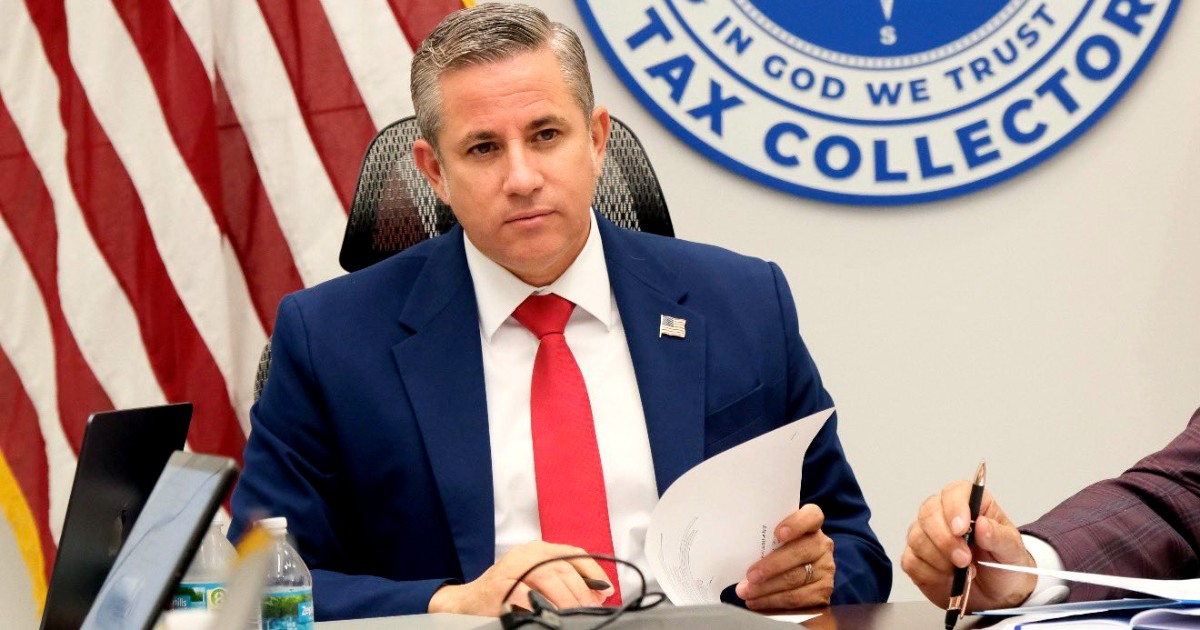
Dariel Fernandez, a tax collector from Miami-Dade County and a Cuban-American, delivered a pointed response to Democratic Senator Chris Van Hollen this past Saturday. Fernandez emphasized that the hardships faced by the Cuban people stem from decades of communist dictatorship, not the policies of the Trump administration.
This exchange was sparked by a statement from Maryland's Senator Van Hollen, who claimed that "Trump and Rubio's embargo on Cuba has led to a humanitarian crisis" and argued that these actions were making life unbearable for the Cuban people, including children, rather than the regime itself.
The Democratic senator referenced an article from the New York Times discussing new sanctions imposed by Washington, advocating for the cessation of these pressure tactics.
Fernandez, however, firmly rejected this narrative. "Senator, with all due respect, the Cuban people do not suffer because of President Trump or Secretary Rubio. They suffer because of a murderous communist-socialist dictatorship that has denied them freedom, destroyed their economy, imprisoned dissenters, and controlled nearly every aspect of their lives for decades," he stated on his verified X account.
The elected official, who was born in Güines and Madruga and moved to the United States in 2002, was clear about his stance as a Cuban-American: "I reject the notion of portraying the dictatorship as the victim. The true victims are the Cuban people."
Fernandez further criticized what he described as the real foreign policy failure: "The failed policy of the past six decades has been providing excuses to a brutal dictatorship while demanding little accountability from those responsible for Cuba's repression and economic destruction."
Senator Van Hollen's position aligns with the Cuban regime's official narrative, which consistently blames the island's issues on U.S. sanctions rather than its own leadership.
This perspective has gained traction among sectors of the Democratic Party, particularly after the Trump administration intensified pressure on Havana with an executive order signed in late January 2026, threatening tariffs on countries supplying oil to Cuba.
In early May, Van Hollen posted on his X account, calling for an end to the oil blockade imposed on Cuba by the Trump administration, labeling it "reckless" and asserting that the only outcome achieved was a humanitarian crisis that punished the Cuban people, not the regime.
"The only change the United States has successfully imposed on Cuba is a humanitarian crisis affecting millions, due to Trump's and Rubio's reckless blockade that punishes the Cuban people, not the Cuban regime," the Democratic senator stated.
As a tax collector, Fernandez has been one of the most proactive elected officials in enforcing this pressure. His office sent out approximately 3,900 compliance notices to businesses with potential unauthorized commercial links to Cuba and subsequently revoked business licenses from companies in violation.
Fernandez was elected in November 2024, becoming the first elected tax collector in Miami-Dade in over 60 years, defeating Democrat David Richardson.
His message concluded with a direct appeal to the senator: "Stand with the Cuban people, senator, not with the dictatorship's narrative. The Cuban people don't need another lifeline for the regime. They need freedom, democracy, human rights, and free elections."
Understanding the Cuban Crisis and U.S. Policy
What are the main causes of the Cuban people's suffering?
The primary cause of the suffering of the Cuban people is attributed to decades of communist dictatorship, which has systematically denied them freedoms, destroyed the economy, and oppressed dissenters.
How do U.S. policies impact the situation in Cuba?
U.S. policies, such as embargoes and sanctions, aim to pressure the Cuban regime. However, some argue that these measures exacerbate the humanitarian situation for the Cuban people rather than affecting the regime itself.
What has been Dariel Fernandez's stance on U.S. policy toward Cuba?
Dariel Fernandez advocates for holding the Cuban regime accountable and opposes narratives that portray the regime as a victim. He believes that the Cuban people need freedom and democracy, not excuses for the dictatorship.