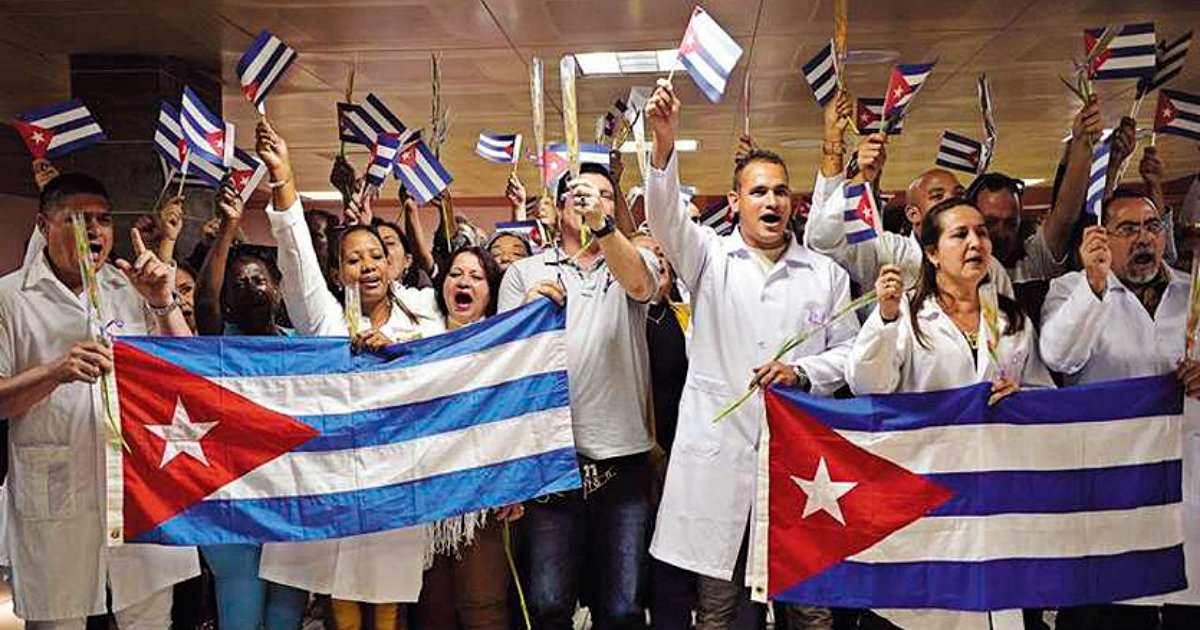
Nathalys Anchia Guerra, a specialist in Internal Medicine residing in Spain since 2021, shared a detailed post on Facebook shedding light on the Cuban regime's migration control over emigrated doctors, effectively trapping them in permanent exile. Returning to Cuba means risking indefinite entrapment on the island.
Dr. Anchia Guerra reveals that Cuban specialist doctors, except for Family Medicine practitioners, are labeled as "regulated." This status bars them from any migration processes, including obtaining or renewing a passport, without prior consent from the public health system.
This authorization must navigate a bureaucratic maze, concluding with a single individual: Marcos Agustín del Risco del Río, the National Director of Human Resources at MINSAP, who holds the exclusive power to lift this restriction.
Faced with this, Anchia Guerra chose to apply for a temporary exit—an expedient option—since a definitive exit process can span over three years. However, if her work center's authorized period lapses, a disciplinary procedure is automatically triggered, reinstating the "regulated" status, even while abroad.
The repercussions are severe: returning to Cuba means being subject again to this restriction without any chance of appeal. "Returning to Cuba as a doctor exposes you to the risk of being ensnared, even if your entire family lives abroad and you've rebuilt your life elsewhere," she warns.
The situation is further complicated by Cuban law, which suspends a doctor after 18 months without practice on national soil, yet offers no provision to alter the "regulated" status in such cases. The doctor becomes a "prisoner in the country of their birth, with no avenue of appeal."
A MINSAP official confided to a friend of Anchia Guerra that every time the issue was raised with the Minister of Public Health, the response remained unchanged: "They will have to keep waiting."
Dr. Anchia Guerra addresses her complaint to the European Parliament, Human Rights Watch, and the UN, among other international bodies, demanding visibility and condemnation of these regulations' impacts.
"One of the world's most altruistic and beautiful professions becomes a prison, a form of blackmail for those of us who wear the white coat," she asserts.
"Cuban emigrated doctors are, in practice, consigned to exile—a forced banishment that arrogantly dictates our lives and those of our families," she concludes.
This denunciation joins a growing wave of similar testimonies that have stirred social media in recent months. In June, Dr. Alberto Tejeda Illas' open letter to Minister José Ángel Portal sparked a massive response from colleagues identifying with his plight. Despite having no contractual ties with MINSAP for three years, Tejeda has repeatedly been denied a passport.
The numbers underscore the issue's scale. Prisoners Defenders documented 1,402 cases of Cuban healthcare professionals affected by these restrictions in a January 2024 report, compared to 110 in 2019. Between 2021 and 2024, over 77,522 left Cuba, exacerbating the island's healthcare crisis.
The legal foundation for these restrictions is Decree 306 of 2012, classifying certain professionals as "vital" and subjecting their departure to their superiors' approval. In 2023, restrictions expanded to include medical specialists, dentists, health technicians, and nurses during an internal MINSAP videoconference, with a call for "discretion."
The new Migration Law No. 171/2024, published in the Official Gazette on May 5, 2026, fails to address the situation, as authorization remains at the discretion of officials.
Understanding the Impact of Cuban Migration Restrictions on Doctors
What are the consequences for Cuban doctors returning to the island?
Returning to Cuba as a doctor can mean being subjected again to restrictive policies without any possibility of appeal, potentially leaving them trapped indefinitely.
Why are Cuban doctors considered "regulated"?
Cuban specialist doctors, other than those in Family Medicine, are categorized as "regulated," which restricts their ability to leave the country without prior government approval.
How has the international community responded to these issues?
Dr. Anchia Guerra has reached out to international bodies like the European Parliament and Human Rights Watch to highlight and condemn the impact of these Cuban migration regulations.