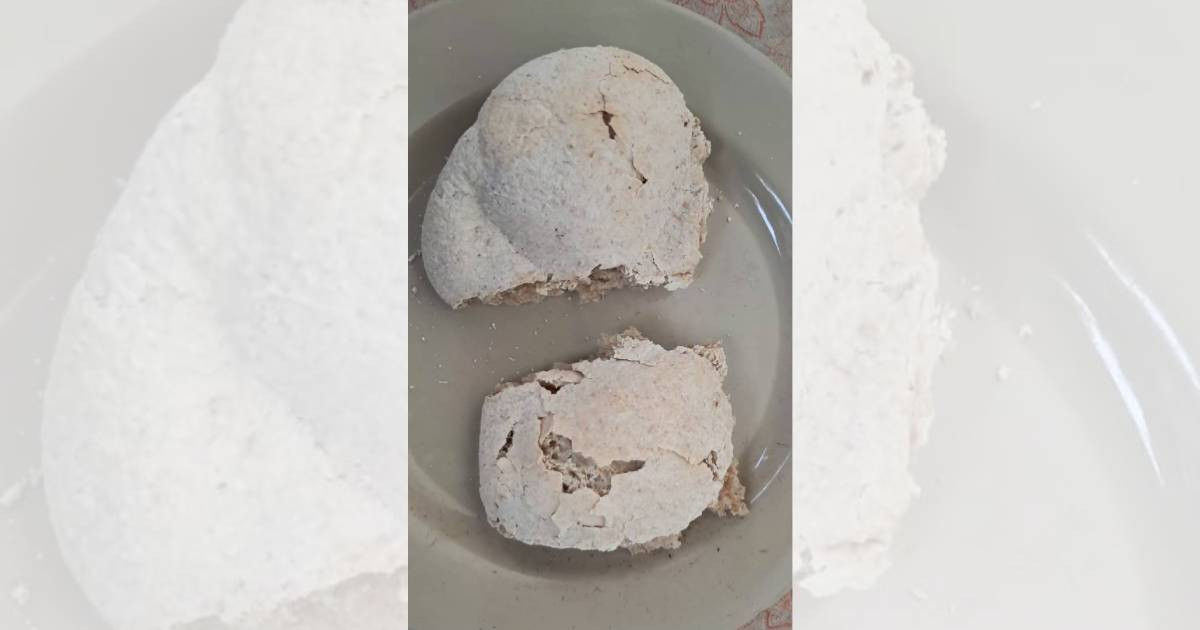
The state-run newspaper Venceremos recently highlighted the poor quality of bread being distributed in Guantánamo, showcasing images of bread loaves that fail to meet even the reduced official weight standards and are sold at 75 cents.
These photos were taken on Monday, August 17, at the former La Nueva Bakery, located at the intersection of Carlos Manuel de Céspedes and Aguilera in Guantánamo's city center.
The article revealed that these bread pieces weigh a mere 30 to 50 grams, describing them as "anemic in color and corroded." It also questioned the product's ingredients, noting the absence of essentials like salt, sugar, and fat.
The criticism was directed at those responsible for overseeing production and sales. The author challenged what decision-makers and inspectors from the Alimentaria company, the Flour enterprise, and the Comprehensive Supervision and Control Directorate are doing about a situation that, as the official media itself acknowledged, directly impacts consumers.
Informal Market Exacerbates Bread Situation
The issue worsens in the informal market, where street vendors sell "ball bread" at 40 pesos each. This price disparity hits family finances hard, highlighting profiteering at the expense of necessity and inflation-driven opportunism.
The complaint is particularly noteworthy as it comes from a state-run source and includes photos exposing a basic product deficiency that directly affects families in Guantánamo.
“We all suffer from shortages of all kinds: fuel, electricity, medicines, food... but no one has the right to add to our burdens and so senselessly harm the consumer,” Venceremos asserted.
Widespread Bread Quality Issues Across Cuba
Guantánamo's situation is not isolated. In early August, content creator Yordania Orduñez shared a video showing her bodega bread, tiny and with moldy dough, after five days without supply due to blackouts.
"Look at that dough inside. We can't take it anymore, folks, the disrespect, it seems moldy," she expressed.
Shortly after, residents of the Cuabitas district in Santiago de Cuba reported deformed and dark-spotted bread distributed through the ration book.
A 68-year-old woman summarized the collective sentiment: "There used to be shortages sometimes, but at least the bread was bread. Today, it's embarrassing to collect the ration."
In Havana, Dimitri Peñate also released a video comparing bodega bread to something "from Mars." "I've never seen bread like this. It's disrespectful, I don't know how they have the decency and shame to sell this," he lamented.
Nationwide Flour Shortages Compound Problems
Cuba requires around 20,000 tons of flour monthly to ensure regulated bread, but by June, only one of the six wheat shipments contracted for the entire year had arrived, as acknowledged by the Minister of the Food Industry, Alberto López Díaz, on the official television program Mesa Redonda.
The only operational mill, located in Cienfuegos, produces approximately 250 tons daily compared to the 700 needed, while the Guantánamo plant remains out of service.
This flour shortage has forced the mixing of wheat with cassava, sweet potato, or corn pulp, affecting the bread's texture, flavor, and preservation. In Villa Clara, regulated bread has been restricted since February only to those under 13 and over 65.
Additionally, as of July 2, without prior notice, the Cuban Bread Company in Havana raised the price of 400-gram bread from 240 to 500 Cuban pesos, a staggering 108% increase, while the weight of subsidized bread has been decreasing over two years, from 80 grams in 2024 to 60 grams, and in some areas, down to 40 grams.
Understanding Cuba's Bread Crisis
Why is bread quality poor in Guantánamo?
The bread in Guantánamo suffers from poor quality due to inadequate ingredients and failure to meet official weight standards, as reported by the state-run newspaper Venceremos.
How is the flour shortage affecting bread production in Cuba?
The flour shortage has severely impacted bread production, forcing the substitution of wheat with alternatives like cassava and corn pulp, degrading the bread's quality and consistency.
What are the consequences of the informal bread market in Guantánamo?
The informal market exacerbates issues by selling bread at inflated prices, further straining family budgets and highlighting economic disparities.