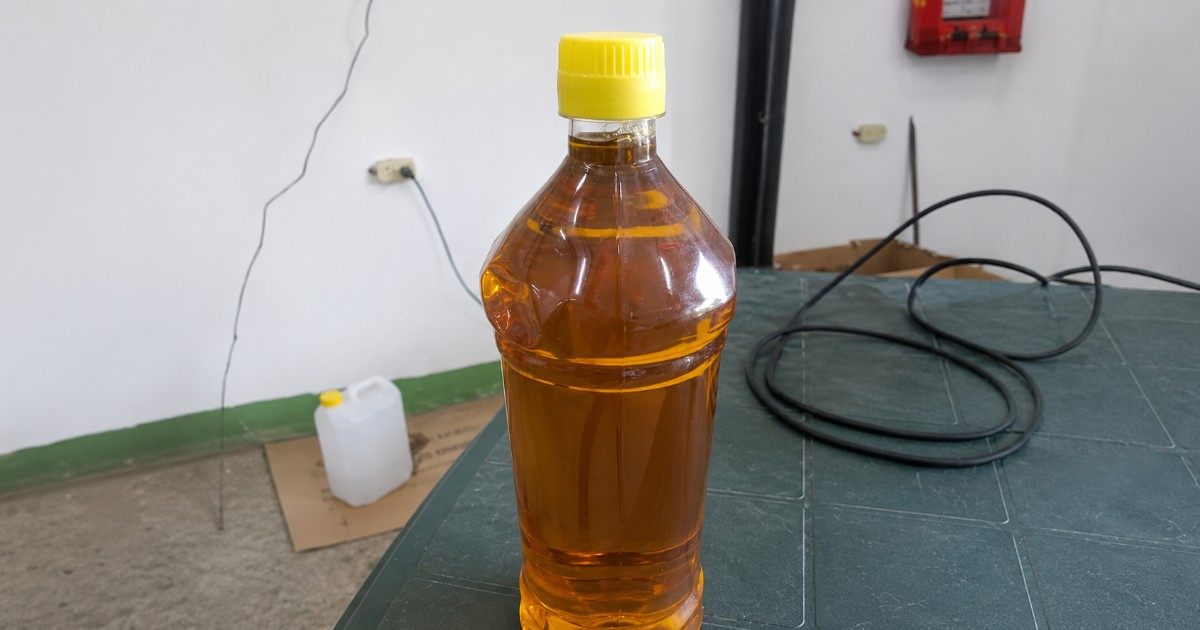
The health authorities in Mayabeque issued a warning on Friday urging the public to avoid consuming oil sold at the El Rodeo Fairgrounds after tests revealed it was crude vegetable oil meant for animal feed, not human consumption.
The Mayabeque General Directorate of Public Health released the warning, emphasizing that the product should not be ingested.
"The Mayabeque General Directorate of Public Health informs our population that they should not consume oil sold at the El Rodeo Fairgrounds in the Mayabeque capital, as tests confirmed it is crude vegetable oil for animal consumption, not human," the institution stated.
This alert comes amid a particularly challenging time for Cuban consumers, who are struggling with the scarcity and rising costs of cooking oil—a staple product whose high price forces many families to seek alternatives wherever possible.
Official Statement Lacks Crucial Details
Despite the seriousness of the situation, the brief official statement leaves several critical questions unanswered about the incident.
Public Health did not disclose who sold the oil, its origin, the quantity distributed, the duration of its availability, the selling price, or how many individuals may have purchased it. Additionally, there was no explanation of the testing methods used on the product, the specific results, whether it has been fully removed from the fairgrounds, or if it might have reached other sales points.
Furthermore, the type of animals the product was intended for, the potential health impacts on humans, and guidance for those who have already consumed it were not clarified.
Public Concerns and Incomplete Communication
The institution also advised the public to avoid purchasing products lacking identification and quality assurances: "It is important not to buy items without labels or quality certificates," they noted.
The warning itself contains a glaring omission: it concludes abruptly with "and with its value of," leaving readers in the dark about additional information Public Health intended to provide, demonstrating a lack of seriousness for a health alert involving a product already sold and potentially consumed by many.
Public Outcry and Demands for Accountability
The absence of detailed information led to numerous questions and criticisms from users commenting on the alert, especially regarding how the sale occurred before it was confirmed the product wasn't fit for human consumption.
YV Jimenez expressed confusion: "I DON'T UNDERSTAND... HOW WAS THIS SALE MADE?... SPEECHLESS... I'M SHARING THIS...".
Madeleine Armas Núñez was more direct: "Who authorized this sale?"
José Ignacio Martínez questioned the efficacy of official inspections: "Where were the inspectors? All these products must be approved by municipal authorities. There are unscrupulous vendors."
Angel Miguel German Almeida also focused on oversight. "I wonder: WHERE WERE THE PHYTOSANITARY INSPECTORS AT THIS TIME?" he wrote.
He added that, in his opinion, products entering through ports and airports should be certified, questioning what went wrong in the documentation. "A note is not enough and doesn't fix the problem," he concluded.
Testimonials and Concerns Over Health Risks
Jan Miguel asked how the product could be identified: "How do you identify it? It must have some different smell or color."
This question gains importance because the released communication doesn't provide physical characteristics, brand, packaging, batch, or other information to help individuals determine if the oil they purchased matches the one analyzed by Public Health.
The comments also included accounts from individuals claiming to have bought or used oil they believe is related to the alert. These are accounts from Facebook users that haven't been confirmed by health authorities and don't independently establish a link between the analyzed product and the described symptoms or characteristics.
Adianeilis Marrero claimed: "My God, that oil was being sold in San José, and it irritated our throats at home. We thought it was a cold, but apparently, it was the oil irritating our throats. We're going to harm each other, my God."
Dayi Fruto Ciudad shared another account: "My aunt bought it and said it was bitter and released green foam when frying. Be careful."
Mey De Armas decided not to purchase oil due to perceived characteristics. "I never liked it. I went to buy it and noticed a strong smell, and I said: 'I'm not buying that.' You have to be very careful with purchases because people's health is at stake," she wrote.
Concerns also arose about potential sales outside the El Rodeo Fairgrounds. Reinier Alfonsomartines stated: "But several private enterprises bought it and are reselling it everywhere. Watch out for that."
Other users demanded accountability. Tocororo Cubano asked: "How many were jailed?" while Iglesias Tatiana replied: "I assure you, NO ONE... You can be sure of that."
Lisset Nuñez Diaz linked the situation to the country's economic hardships: "This is what hunger, misery, and need in this country lead to."
The comments reflect alarm but also a specific demand for information that the official statement fails to satisfy.
Key Questions About the Mayabeque Oil Alert
What is the primary concern with the oil sold at the Mayabeque fair?
The primary concern is that the oil sold was crude vegetable oil intended for animal consumption, not for humans, posing potential health risks.
What information was missing from the official statement?
The statement did not specify who sold the oil, its origin, the amount distributed, the sale duration, price, or the number of people who bought it. Details about the tests performed and the results were also absent.
What should consumers do if they have already consumed the oil?
The official statement did not provide guidance for those who have consumed the oil. It is advisable to seek medical advice if any adverse effects are experienced.