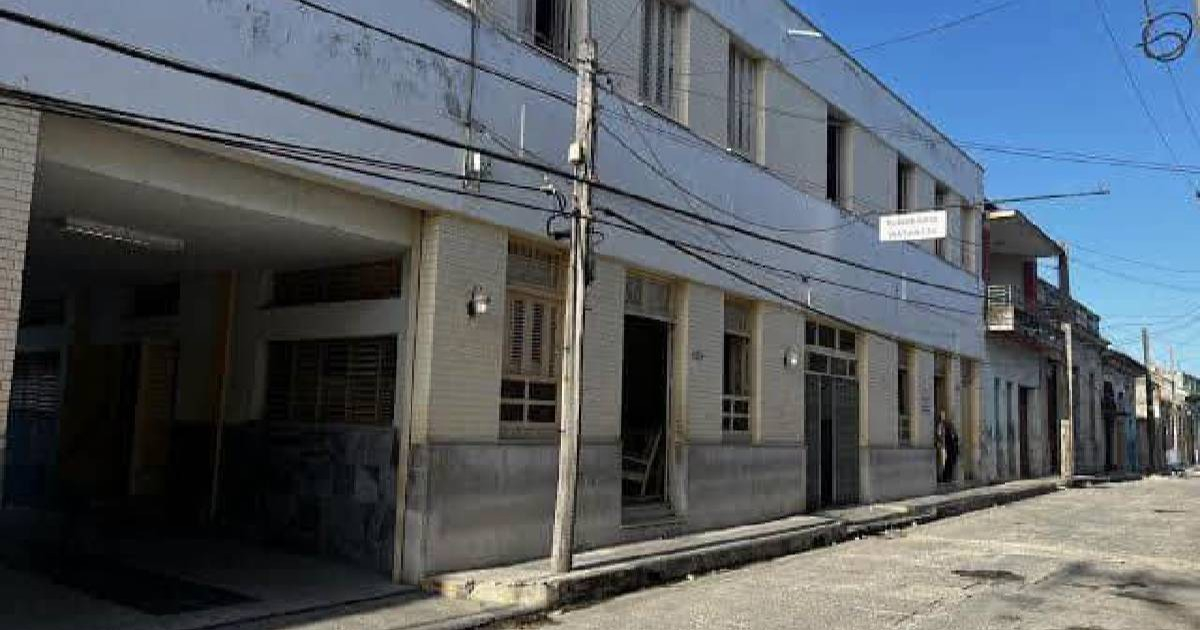
In March, the Matanzas Funeral Home installed a solar power kit intended to provide electricity during blackouts. However, the system has been malfunctioning for over four months, forcing grieving families to hold vigils in the dark.
Indira Hernández García, the director of Necrological Services in the municipality, highlighted a concerning pattern: the system operates for a few hours before shutting down automatically, only to restart the next day. "In the morning, the panel triggers, and it doesn't work again until two or three in the afternoon the following day," she explained.
The kit is located on the ground floor of the building, catering to two viewing rooms and the main reception area. Its energy consumption is minimal, powering only energy-saving bulbs, a rarely used television, and a small water cooler. "We don't even have cold light lamps; they're just energy-saving bulbs," noted Hernández García.
In addition to the viewing rooms, the funeral home also houses a wreath-making workshop, which halts operations each time the system fails. Despite daily calls to the supplier, Soluciones CEDAI Atenas, the issue remains unresolved. "We call them every day. They say they have a lot of work and are attending to other issues, but haven't reached us yet," said Hernández García.
The company offered a public technical explanation, stating that the installed equipment has a nominal power of 2 kW and batteries with a storage capacity of 6.7 kWh. It was designed for the funeral home's "energy survival" during power outages, not as an unlimited replacement for the electrical grid.
According to CEDAI Atenas, the system's behavior—operating for several hours and then shutting down until the next day—is expected when consumption approaches or exceeds the equipment's capacity, rather than indicating faulty installation.
They suggest two possible causes: an instant overload that triggers the inverter's protective mechanism or the gradual depletion of the battery when consumption remains near its limit for extended periods. Additionally, outdated wiring in the building could exacerbate the issue by causing voltage loss.
Earlier this year, the company installed 87 solar kits in Matanzas as part of a provincial initiative involving 326 photovoltaic systems distributed among isolated homes and essential centers, including 19 funeral homes, 32 polyclinics, and nursing homes, among others.
This situation highlights the gap between the expectations of institutions receiving these systems and their actual technical capabilities in a province that has experienced power cuts lasting up to 85 consecutive hours, with eight substations out of service and 63 damaged transformers.
As the technical dispute between the funeral home and the supplier remains unresolved, the director awaits a specialized review to determine the cause of the failures. Meanwhile, families in Matanzas continue to face uncertainty about having light during their farewells.
Understanding Solar Power Kit Issues in Matanzas
What is the main issue with the solar power kit at Matanzas Funeral Home?
The solar power kit frequently shuts down after a few hours of operation, leaving the facility without power until the following afternoon.
What reasons does the supplier give for the system's failure?
The supplier, CEDAI Atenas, claims that the system is behaving as expected when consumption nears or exceeds its capacity, suggesting issues like overloads or battery depletion.
How is the problem affecting the funeral home's operations?
The failure of the solar power kit disrupts both the viewing rooms and a wreath-making workshop, impacting the funeral home's ability to serve families effectively.