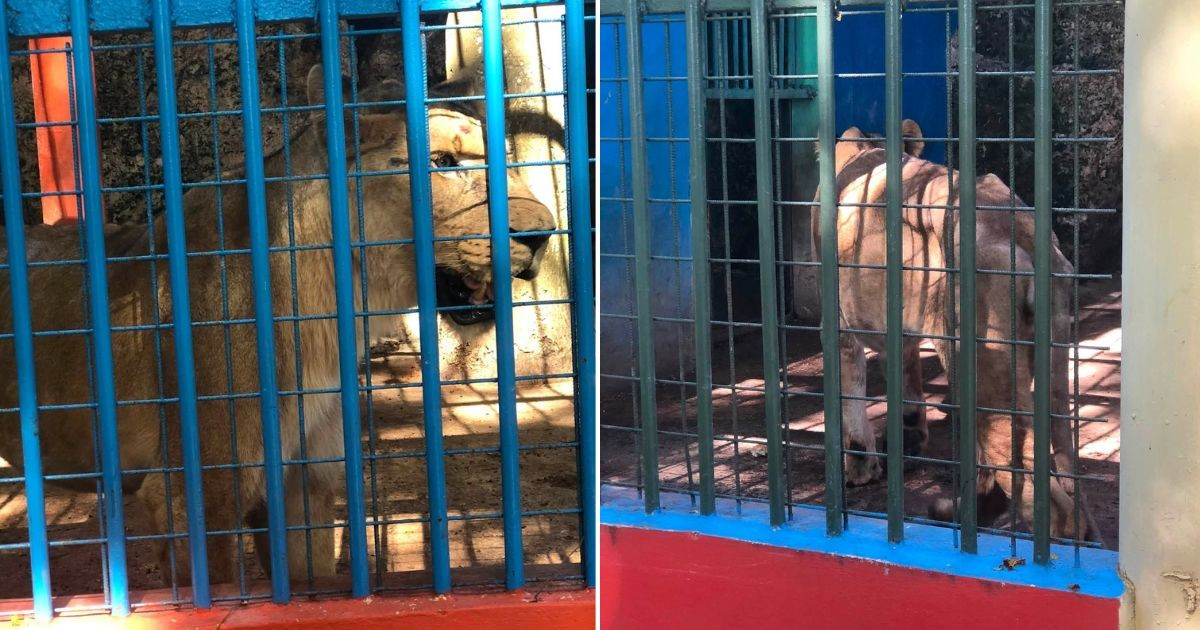
Reports of malnourished animals in Cuba's state-run zoos continue to surface, painting a grim picture of neglect. Following a scandal in Las Tunas, where one of two emaciated lions died after a violent altercation, new alarms are being raised about the deteriorating condition of several animals at Watkin Park Zoo in Matanzas.
Arielys Pérez, a concerned Cuban citizen, took to Facebook on Friday to express her worries about the lions at the Matanzas zoo. She described their condition as showing a "very advanced level of malnutrition" and noted that monkeys and other animals at the facility are also suffering.
“Matanzas is no exception when it comes to the hunger faced by animals in the zoo,” Pérez wrote, identifying the zoo as Watkin Park. She highlighted that the lions' bones are starkly visible due to their severe thinness.
“If you zoom in on the images, you can see every vertebra in their spine,” she asserted, sharing photos and video evidence to support her claims.
Broader Implications of Animal Neglect
Pérez emphasized that monkeys also exhibit signs of malnutrition, a situation she finds particularly inexcusable given that their diet, like that of other herbivorous or omnivorous animals in the zoo, could be supplemented with fruits, tubers, and vegetables.
She suggested forming partnerships with local agricultural markets to salvage produce fit for animal consumption before it is discarded.
“It’s not just the carnivores affected by the 'current situation'; even those easiest to feed are in poor nutritional condition,” she lamented, mentioning rabbits and iguanas as additional victims of neglect.
Matanzas Not Alone in Facing Criticism
The recent outcry comes hot on the heels of a wave of complaints that subjected the Las Tunas zoo to intense scrutiny, culminating in the death of one of its lions.
However, the issues in that province have deep roots. Back in February, Bienestar Animal Cuba reported neglect and hunger at the Puerto Padre Zoo, where lions showed visible signs of starvation, languished on concrete floors, and had insufficient access to clean water.
Birds and primates were also observed to be weak and underfed.
In mid-August, residents of Las Tunas raised the alarm again, highlighting the extreme thinness of the provincial zoo's lions. Photographs depicted the animals with prominent ribs and other bones, raising questions about the zoo's ability to provide adequate food and conditions.
A Tragic Outcome in Las Tunas
The situation reached a tragic climax when one lion died after being attacked by its companion. Animal welfare representatives in Las Tunas claimed the animals had gone without food for around 13 days, with reports suggesting over 15 days without meat products.
Activists linked the violent incident to the extended period without feeding, criticizing the zoo's lack of resources to consistently supply the necessary meat for the lions.
The official response came later: the Provincial Government of Las Tunas denied that one lion killed the other out of hunger but confirmed a key aspect of the complaints—the animals had indeed gone several days without food.
“Nothing justifies leaving the animals unfed for so many days,” the authorities admitted, deeming the situation “unacceptable” and pledging to investigate the matter further. They also acknowledged the zoo's "deterioration and impoverishment" and coordinated with suppliers to deliver food for the surviving lion and other species.
Understanding the Crisis in Cuban Zoos
What sparked the recent criticism of Cuban zoos?
The criticism was intensified after reports of malnourished animals, particularly in Las Tunas, where a lion died post an attack by another due to starvation.
How are local residents and activists responding to the zoo conditions?
Residents and activists are raising awareness through social media and urging authorities to address the critical conditions by forming partnerships for food supplies.
What actions have been promised by the Cuban authorities?
The authorities have acknowledged the issues and promised to investigate, while also coordinating food deliveries for the animals still in the zoo.