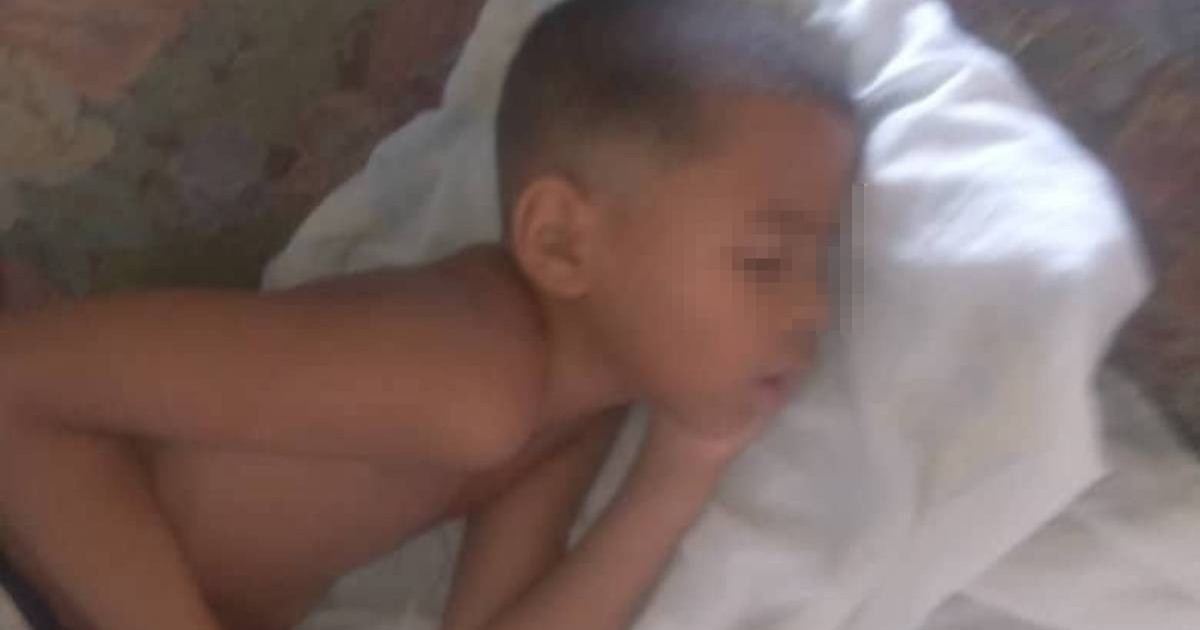
A Cuban mother, Ivisleivi Castellano Puig, has publicly criticized the lack of prompt emergency care for her seven-year-old son, Cristian Michel Roldán Castellano, who has been suffering from a fever for five days and has developed a nosebleed. Her grievance was shared on Facebook by the Democracy Movement (MD) and the Opponents for a New Republic Movement (MONR).
Castellano Puig reported that she initially took her son to a polyclinic where he was diagnosed first with a common cold and later with a viral infection. However, on the fourth day of fever, Cristian began experiencing nosebleeds and was taken to the hospital.
The mother expressed frustration that despite her son arriving with a nosebleed, hospital staff did not immediately check his vital signs or provide the urgent care she felt was necessary. Additionally, she was informed that the laboratory was non-operational due to a lack of reagents, preventing basic clinical tests from being conducted.
Eventually, Cristian was assessed and referred to Las Católicas Hospital with a suspected case of hemorrhagic dengue, though this diagnosis has not been confirmed, according to the claims made by José Díaz Silva and Ramón Saúl Sánchez, leaders of MONR and MD, respectively.
Cuba's Health Crisis and the Threat of Dengue
This case highlights a severe health crisis in Cuba, worsened by an ongoing dengue outbreak since 2025. In July 2026, Villa Clara reported the simultaneous circulation of DENV-2 and DENV-4 serotypes, which pose a heightened risk of severe disease progression.
The absence of laboratory reagents, crucial for conducting essential tests like hemograms, hematocrits, and platelet counts to monitor dengue, has been a widespread issue in Cuban hospitals during 2025 and 2026. This situation is exacerbated by power outages and an energy crisis.
An Infobae report revealed that fuel shortages and reagent deficits have forced hospitals across the island to limit essential blood tests.
Impact on Children and Previous Alarming Incidents
Children are particularly vulnerable in this scenario. By the end of 2025, the Pan American Health Organization recorded 81,909 dengue and chikungunya infections in Cuba, with 65 associated deaths, over half of which were children.
In December of the same year, children accounted for 65% of severe arbovirosis cases nationwide. In July 2025, a two-year-old boy in Camagüey died, reportedly due to medical negligence related to hemorrhagic dengue, at a hospital lacking specialists and clinical tests.
Months later, a mother reported that only one pediatrician was available at the entire pediatric hospital during an arbovirosis outbreak in the same province.
The account of Cristian Michel concludes with a poignant question reflecting the desperation of many Cuban families: "How many more children must fall ill before dignified and timely medical care is ensured?"
Understanding Cuba's Healthcare Challenges
What are the main health challenges Cuba is facing?
Cuba is dealing with a significant health crisis, primarily due to a dengue outbreak, shortages of medical supplies, and a struggling healthcare infrastructure exacerbated by energy shortages.
Why are children particularly at risk during this health crisis in Cuba?
Children are especially vulnerable because they make up a large percentage of severe arbovirosis cases, and hospitals are lacking the necessary resources and specialists to provide adequate care.
How has the dengue outbreak affected Cuban healthcare facilities?
The dengue outbreak has strained Cuban healthcare facilities due to a lack of critical reagents for testing, insufficient medical personnel, and logistical challenges exacerbated by the ongoing energy crisis.