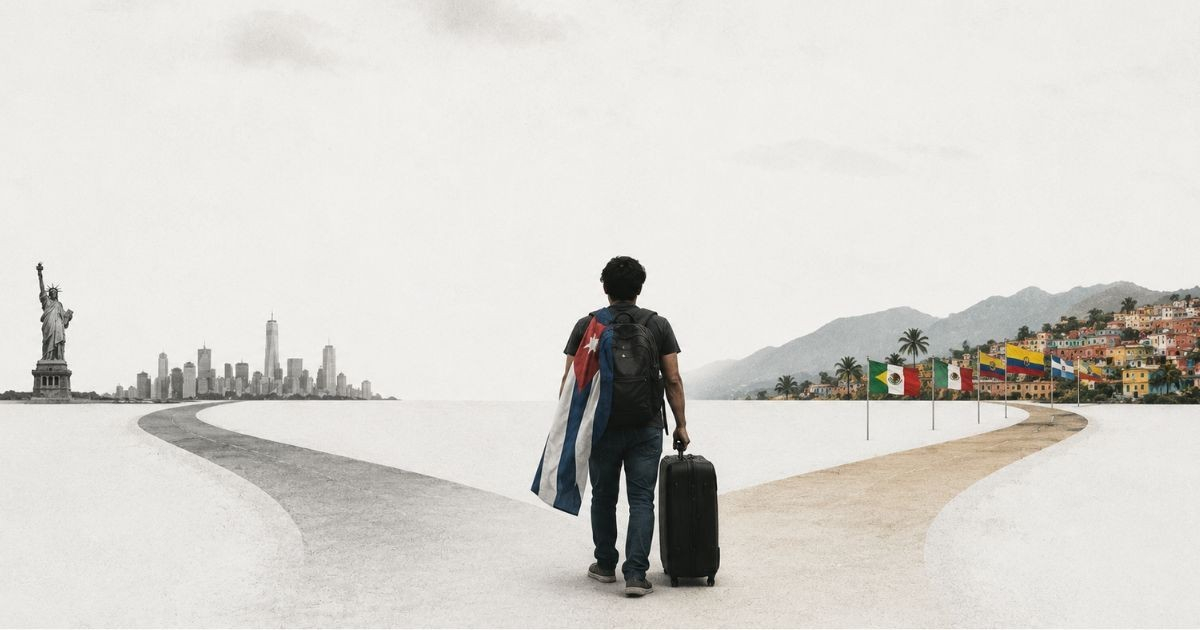
When the state-run media outlet Cubadebate released Cuba's demographic statistics for 2025 this Thursday, the response from Cubans on social media was immediate: a mix of sarcasm, outrage, and direct criticism toward the government, which they blame for the massive exodus emptying the island.
The official post on Facebook revealed that Cuba's population shrank by 313,414 people between 2024 and 2025, leaving the total population at 9,434,593 and a growth rate of -32.7 per thousand.
The primary driver of this decline wasn't mortality—although deaths (136,214) nearly doubled births (68,064)—but a negative migration balance, with 245,264 people leaving the island in just one year.
Cuban commentators succinctly captured what the official data dared not mention. "Why is this happening?" one user rhetorically asked, encapsulating the frustration of those who feel the answer is obvious yet unacknowledged by the regime.
Another comment was more explicit in its political critique: "When people emigrate, the rulers become unnecessary."
A third user used an agricultural metaphor to blame the economic system: "A country's economy is like farming: if you work hard over time, you'll reap good harvests, but if you do a poor job, you'll hardly recover any investment."
The Dire Demographic Picture
These reactions align with a pattern confirmed by surveys: according to data cited by Observa Cuba, 93% of Cubans would leave the country immediately if they could.
The official figures reveal an alarming scenario on multiple fronts. The Total Fertility Rate remains at 1.29 children per woman for the second consecutive year, the lowest since 1958, and far below the generational replacement level of 2.1. The population aged 60 and over has reached 2,519,823, accounting for 26.7% of the national total, with an average age of 45 years.
Havana is experiencing the most significant population loss: 78,537 people emigrated abroad in 2025. Although internal migration brought 21,104 individuals from other provinces, the city ended the year with a net loss of 57,433 people, the highest in the country in absolute terms.
The working-age population declined by nearly 1.3 million people from 2021 to 2025, dropping from 6,866,435 to 5,606,541, a contraction that severely jeopardizes the nation's productive capacity.
Migration's Impact on Cuba's Future
Diego Enrique González Galbán, director of the Population and Development Studies Center at the National Office of Statistics and Information (ONEI), acknowledged, "The most significant impact on the population structure is due to emigration," although the official report avoids addressing the political and economic causes driving this exodus: prolonged blackouts, chronic shortages, inadequate salaries, and a lack of freedoms.
The crisis intensified following the July 11, 2021 protests, when government repression and the collapse of basic services accelerated the exodus. In just five years, Cuba's population declined from around 11 million to less than 9.5 million, an unprecedented contraction in the island's recent history.
The United Nations Population Fund warns that if these trends continue, Cuba could reach the year 2100 with only 5.6 million inhabitants.
Frequently Asked Questions About Cuba's Demographic Crisis
What is the main reason for Cuba's population decline?
The primary reason for Cuba's population decline is the negative migration balance, with a significant number of people leaving the island.
How has the fertility rate in Cuba changed?
The Total Fertility Rate in Cuba has remained at 1.29 children per woman for two consecutive years, the lowest since 1958.
What impact has the migration had on Cuba's workforce?
The working-age population in Cuba has decreased significantly, reducing the productive capacity of the country.
How might Cuba's population change by 2100?
If current trends continue, Cuba's population could drop to just 5.6 million by the year 2100.