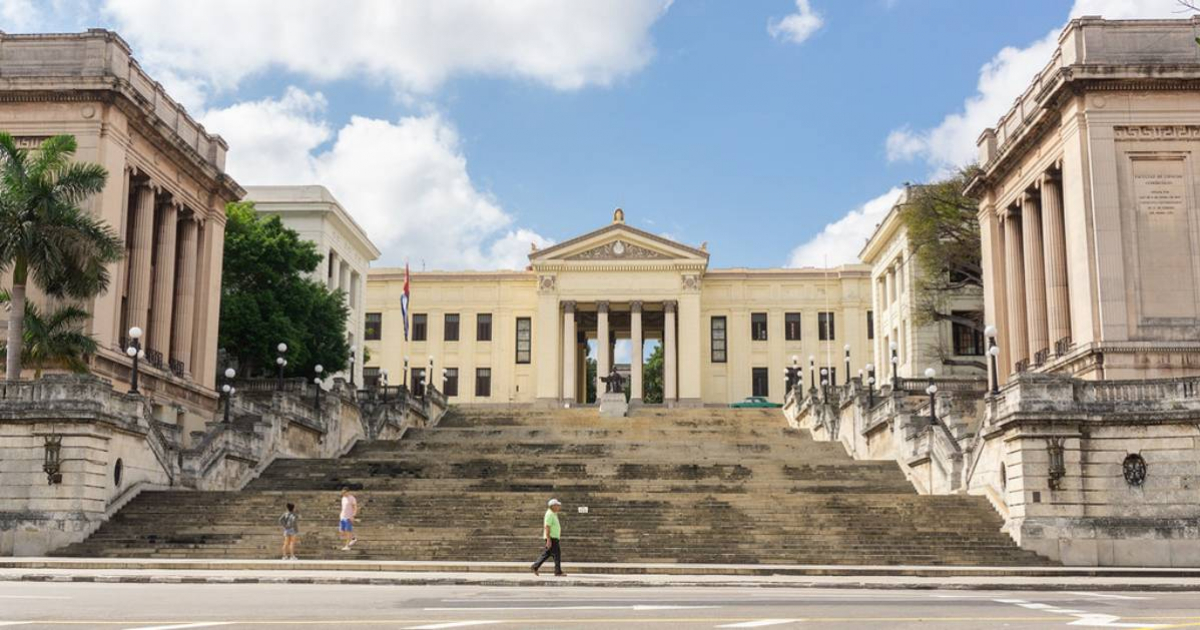
The ongoing fuel shortage is set to disrupt the operations of Cuban universities for the academic year 2026-2027, starting with a mix of online and limited face-to-face instruction, particularly affecting daytime students.
This Thursday, the Ministry of Higher Education (MES) announced that the new academic year will commence on September 1 across all higher education institutions in the country amid what it described as a "worsening fuel supply crisis."
In response to this situation, the ministry stated it would largely continue with the academic framework used in the previous semester, focusing on decentralizing teaching processes and utilizing the university structures within each region.
Education will be delivered through both blended and remote learning formats. The Ministry noted that in-person periods will be introduced "whenever possible," mainly targeting daytime students.
On-campus activities may be conducted at central university campuses, Municipal University Centers (CUM), Municipal University Branches (FUM), and local production or service entities.
In the on-campus course format, both Higher Technician programs and university degrees will resume in-person meetings at least once a month to guide and assess learning tasks.
The distance learning courses will continue to operate as usual.
For universities under the Ministry's jurisdiction, new students can enroll from their home regions.
Returning students will also complete their re-enrollment through decentralized processes.
Youth enrolled in national or regional programs can finalize these steps at their university, at CUMs, or FUMs in their provinces or municipalities, either in person or online.
The Cuban government claims to have "experience" in implementing such emergency measures, asserting, as per its usual rhetoric, that these do not impact the educational process in any significant way.
For instance, in February, the University of Havana extended the blended learning format for 30 days across all its degree programs and Higher University Technician programs due to the energy and fuel crisis.
Each faculty was tasked with identifying which activities needed to be conducted in-person.
A few days later, the University of Oriente also adopted a blended learning regime and closed its student residence, allowing exceptions for international students and others needing to stay.
The institution turned to virtual platforms and WhatsApp groups to maintain educational activities.
However, the crisis has impacted not just the functioning of higher education but also access to it.
In May, the government canceled university entrance exams for the 2026-2027 academic year, instead deciding university placements based on students' pre-university grade point average.
Authorities acknowledged connectivity and transportation issues as barriers to conducting academic activities.
Understanding the Impact of Cuba's Fuel Crisis on Education
What measures are Cuban universities taking due to the fuel shortage?
Cuban universities are adopting a mix of online and limited in-person classes, focusing on decentralized teaching methods and utilizing regional university structures.
How is the fuel crisis affecting university students in Cuba?
Students face challenges like limited access to in-person classes and disrupted academic schedules, as well as the cancellation of traditional entrance exams.
How are new and returning students in Cuba enrolling for the academic year?
New students can enroll from their home regions, while returning students will complete re-enrollment through decentralized processes, either in person or online.