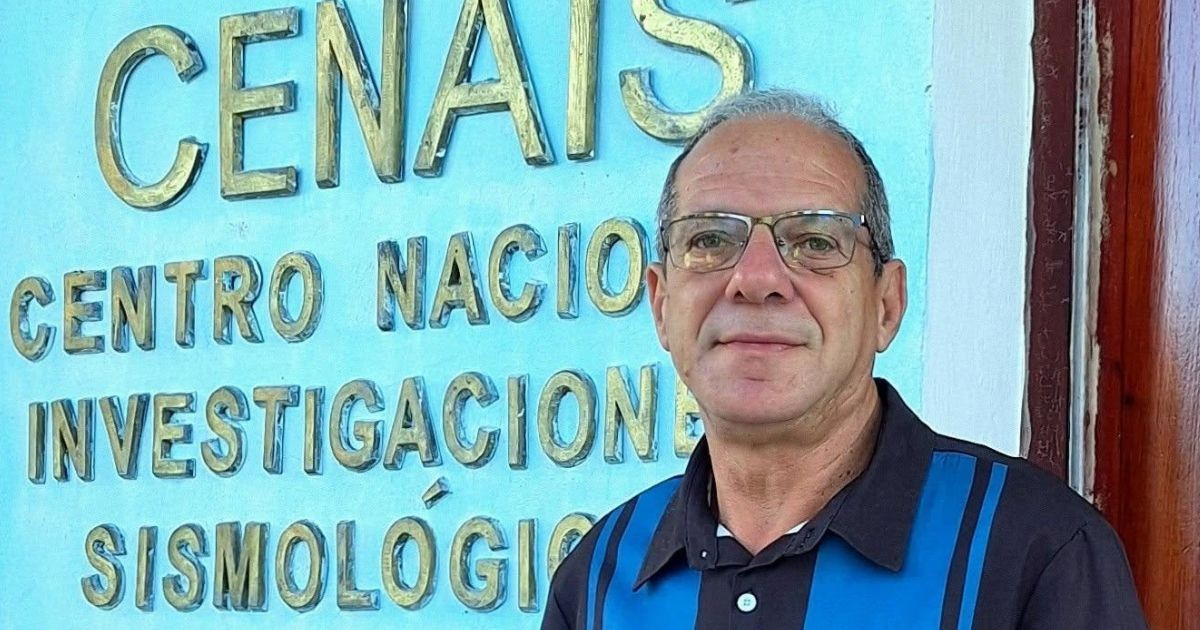
Dr. Enrique Diego Arango Arias, head of the National Seismological Service, issued a warning on Thursday about the potential consequences of a false earthquake alert that reached numerous phones across Cuba. He expressed concern over the lack of clarity regarding who was responsible for the erroneous notification.
In a Facebook post, Arango questioned, "So, what happened? Who is accountable for this 'error' that stirred the population with a false earthquake message?"
The expert noted that despite the National Seismological Service not recording any seismic activity that would justify such an alert, they are continuously being asked for explanations.
"We continue to receive requests for clarification, and we respond that not only was there no earthquake to justify the alert, but we also do not have any established protocol with national or international communication entities for sending alerts or warnings regarding earthquakes," he stated.
Arango emphasized that there are still "many unanswered questions" and warned about the potential damage to the credibility of future warnings due to incidents like this.
The alert appeared shortly after 3:00 p.m. on Tuesday on phones and tablets, causing alarm among countless users.
Soon after, Arango confirmed that it was indeed a false alert and that no seismic activity had been recorded to support it.
The National Center for Seismological Research later confirmed that its network of stations had not detected any seismic events during the afternoon of August 18, while the exact cause of the notification remained unknown.
However, Cubadebate suggested that the Android Earthquake Alerts System might have been responsible. According to the official portal, this system utilizes phone accelerometers to detect movements that may resemble an earthquake, and when numerous devices report similar signals, it can estimate an event and issue a warning to users in a specific area.
This theory was debunked on Thursday when Google denied that its Android Earthquake Alerts System had generated or sent the alert in Cuba. The company confirmed that its system did not detect any earthquakes or issue alerts on the island.
A source claiming to hold a senior management position at ETECSA told Martí Noticias that the alert originated during an internal test at the Technology Center in El Vedado. The test was intended to be limited to a controlled environment but unexpectedly went beyond that scope.
As of Thursday, the state telecommunications monopoly had not publicly explained the origin of the false alert through its communication channels.
Understanding the False Earthquake Alert in Cuba
What caused the false earthquake alert in Cuba?
The false alert was reportedly triggered during an internal test at the Technology Center in El Vedado, which was intended to be in a controlled environment but extended beyond its intended scope.
Did Google's Android Earthquake Alerts System issue the alert?
No, Google has denied that its Android Earthquake Alerts System generated or sent the alert in Cuba, confirming that no seismic activity was detected on their system.
How has the false alert affected trust in future warnings?
Dr. Enrique Diego Arango Arias warned that incidents like the false alert could undermine the credibility of future warnings, potentially causing people to disregard real alerts when they occur.