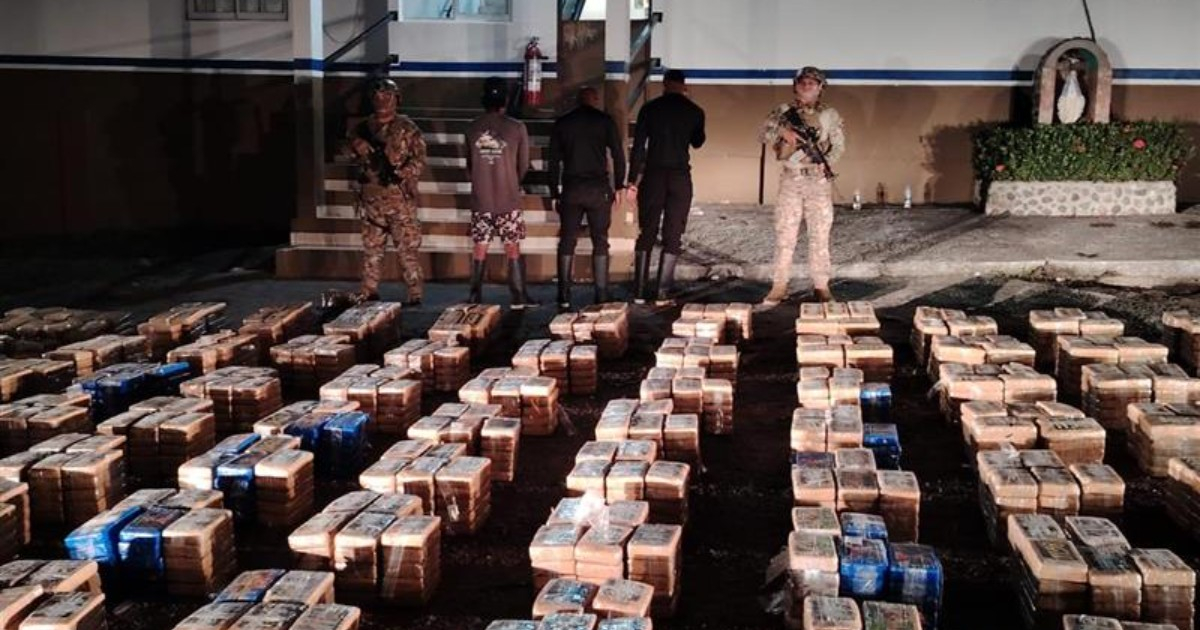
A high-speed boat carrying over 2,400 kilograms of cocaine and hundreds of pounds of marijuana was seized on Wednesday in the Eastern Pacific by a multinational coalition led by the Joint Interagency Task Force South (JIATF-South), the organization announced on social media.
The 35-foot "go-fast" boat was spotted 114 nautical miles south of Punta Burica, located at the border between Panama and Costa Rica. It was traveling from Colombia towards Costa Rica along one of the busiest drug trafficking routes in the Central American Pacific.
An aircraft from the U.S. Southern Command (SOUTHCOM) identified the vessel and monitored it from the air until surface forces could intercept.
At this point, Panama's National Aeronaval Service deployed their interceptor boats. According to JIATF-South, their forces "chased down the vessel and brought it to a halt."
The operation resulted in the confiscation of 2,428 kilograms of cocaine and 619 pounds of marijuana, and the arrest of three suspects.
Multinational Efforts Against Drug Trafficking
Participating in the operation were JIATF-South, the U.S. Homeland Security Investigations (HSI) division, as well as Colombia and Panama, all part of the American Coalition against Cartels, a multilateral initiative coordinated by SOUTHCOM that involves 18 countries.
"Teamwork makes the mission possible," highlighted JIATF-South, emphasizing these efforts support operations to dismantle narcoterrorist networks in the Western Hemisphere.
Key Transit Routes in the Pacific
The corridor south of Punta Burica has become a major transit point for drug trafficking in the Pacific, with routes originating from Colombia—particularly from Buenaventura and Valle del Cauca—heading towards Central America and ultimately the U.S. market.
This interception is part of a recent series of maritime drug trafficking busts in the region.
In mid-July, U.S. authorities seized tons of narcotics at sea, including cargo from the "Ángel del Pacífico" boat, which originated from Colombia and was intercepted 142 nautical miles south of Golfito, Costa Rica.
Days later, an international coalition intercepted nearly three tons of cocaine in Ecuadorian waters, marking the largest maritime drug bust in that country this year.
Strengthening Anti-Drug Operations
The anti-drug campaign in the Eastern Pacific intensified in late 2025 with Operation Southern Spear, initiated by the Trump administration and expanded in January 2026.
On August 4, SOUTHCOM activated a new permanent military force to combat cartels in the Western Hemisphere.
Between October 1, 2025, and June 18, 2026, JIATF-South intercepted 305.5 metric tons of cocaine, denied over $7.7 billion to narcoterrorist networks, and detained 518 individuals, according to the organization.
FAQs About the Recent Drug Interdiction
How was the drug-laden boat detected?
The boat was detected by a maritime patrol aircraft from the U.S. Southern Command, which maintained aerial surveillance until surface forces arrived.
What was the outcome of the operation?
The operation led to the seizure of 2,428 kilograms of cocaine, 619 pounds of marijuana, and the arrest of three suspects.
Who participated in the operation?
The operation involved JIATF-South, the U.S. Homeland Security Investigations (HSI), Colombia, and Panama, as part of the American Coalition against Cartels.