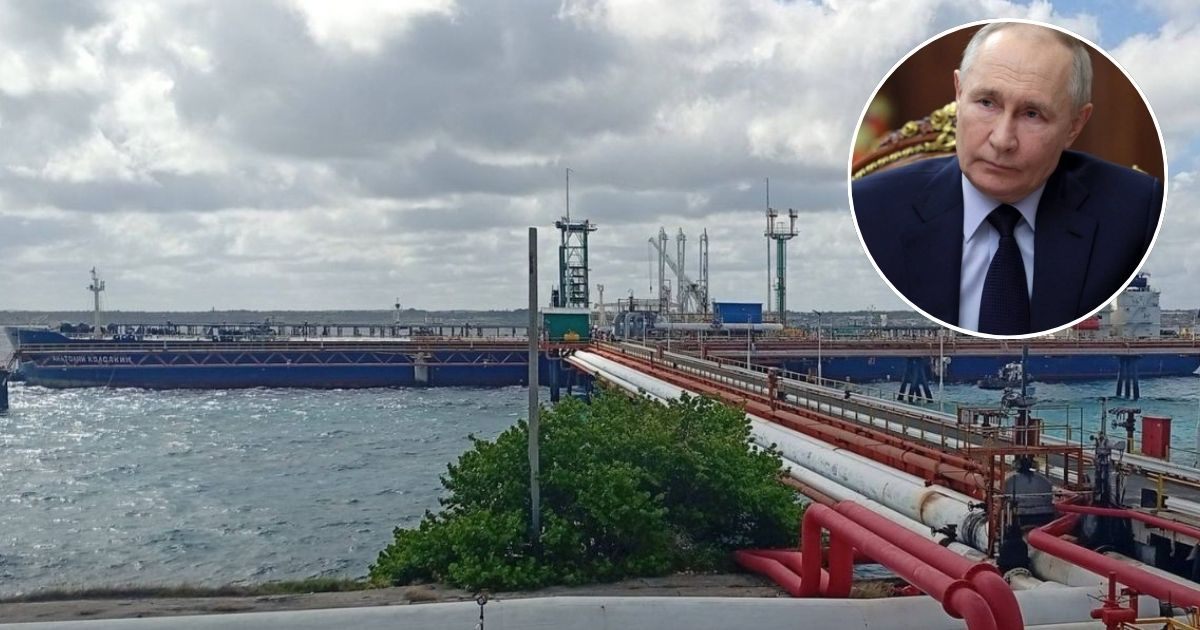
Russian President Vladimir Putin has officially expressed his gratitude to the crew of the tanker Anatoly Kolodkin, which transported approximately 100,000 metric tons of oil to Cuba last March. This operation was touted by Moscow as humanitarian aid amid the island's severe energy crisis.
On August 6, Putin signed a decree acknowledging the crew's "high professionalism" during the mission, as reported by the state-owned shipping company Sovcomflot. The decree was published on Russia's official legal information portal and echoed by the news agency EurAsia Daily.
This commendation comes more than four months after the Anatoly Kolodkin docked at the Matanzas oil terminal, carrying a cargo equivalent to around 730,000 barrels of crude. Moscow framed the shipment as humanitarian relief intended to mitigate Cuba's energy emergency, which has been characterized by extended blackouts, fuel shortages, and a continuous decline of the National Electric System.
Impact and Geopolitical Dimensions
The decree honors crew members from various roles, such as the captain's aides, sailors, machinists, boatswains, electromechanics, loading operation staff, and even a waitress and cook, according to the Russian online outlet Life.
Sovcomflot emphasized the operation's critical importance, asserting that the oil shipment was crucial in sustaining essential services on the island. "This voyage was of utmost significance: the delivered energy resources ensured the operation of hospitals and water supply systems, preventing a total economic collapse in Cuba," the company stated.
The Anatoly Kolodkin, owned by Sovcomflot, left the Russian port of Primorsk on March 8, marking one of the largest oil deliveries to Cuba in early 2026. The mission also had a clear geopolitical aspect, as Sovcomflot has been under U.S. Treasury sanctions since February 2024, part of Washington's sanctions against the Russian energy and maritime sectors.
Cuba's Response to the Oil Shipment
While Russia hailed the mission's significance, Cuban authorities offered a different perspective on its actual impact. Cuban leader Miguel Díaz-Canel expressed gratitude for the aid, describing the shipment as "symbolic" and admitting it was insufficient for the country's energy needs.
Prime Minister Manuel Marrero Cruz also publicly thanked Moscow. However, analyses at the time suggested that the 100,000 tons sent by Russia could only supply about 10 days of consumption. By May, Díaz-Canel acknowledged that the Russian oil had already been used up, with no new shipments on the horizon to replace it.
The scenario highlighted the scale of the problem: even a tanker loaded with hundreds of thousands of barrels could provide only a temporary respite for the country's accumulated energy demands.
Ongoing Energy Crisis in Cuba
The operation occurred during one of Cuba's most severe energy crises, with generation deficits nearing 2,000 MW and blackouts in many areas lasting over 20 hours a day. Alongside the fuel shortage, the country's aging thermal power plants suffer from frequent breakdowns and years of inadequate investment and maintenance.
Putin's decree, signed four months after the delivery, further underscores the political significance Moscow attaches to the operation. The Kremlin presents the oil shipment as tangible support for Havana while publicly praising those who facilitated a mission conducted by a U.S.-sanctioned shipping company.
For Cuba, however, the 100,000 tons of oil offered merely a temporary reprieve. Months after that delivery, the energy crisis continues to affect the daily lives of millions of Cubans, with no comprehensive solution to the ongoing blackouts and fuel shortages in sight.
Understanding Cuba's Energy Crisis and Russian Involvement
Why did Russia send oil to Cuba?
Russia sent oil to Cuba as part of a humanitarian aid mission to help alleviate the island's severe energy crisis marked by fuel shortages and prolonged blackouts.
What was the significance of the oil shipment to Cuba?
The oil shipment was significant because it temporarily supported essential services like hospitals and water supply systems, preventing a complete economic collapse in Cuba.
How did Cuban authorities respond to the Russian oil shipment?
Cuban authorities, including Miguel Díaz-Canel, expressed gratitude for the aid but acknowledged that the shipment was insufficient to meet the country's energy demands.