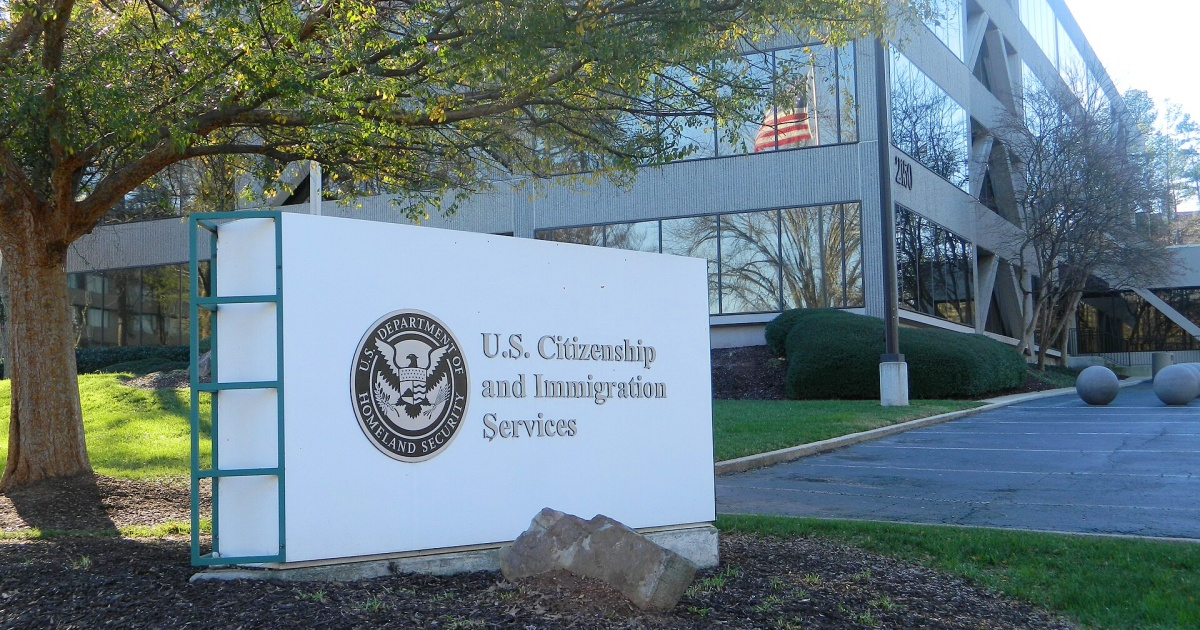
The United States Citizenship and Immigration Services (USCIS) has released updated guidelines on public charge inadmissibility that broaden the criteria for assessing whether a foreign national applying for permanent residency might become a financial burden on public resources.
These revised guidelines, integrated into the USCIS Policy Manual, stem from a final rule by the Department of Homeland Security (DHS) announced on July 16 and published in the Federal Register four days later.
Set to take effect on September 18, 2026, this rule revokes the public charge inadmissibility criteria established in 2022 during the Biden administration.
Significant Changes in Public Charge Assessment
The most notable alteration under the new rule involves the scope of public benefits considered when evaluating a permanent residency application.
Under the 2022 guidelines from the Biden administration, officials were limited to considering cash assistance and long-term government-funded institutionalization. However, starting September 18, USCIS will be able to assess a broader range of public aid.
This includes "cash assistance for income maintenance, housing assistance, food stamps, financial aid for college, or any similar benefits," according to the agency's official statement.
For benefits received before this date, USCIS will adhere to the previous criteria. Benefits obtained after September 18 will be subject to the expanded scrutiny.
USCIS emphasizes that each decision will be made on an individual basis and that receiving a public benefit does not automatically result in application denial.
Factors Influencing the Decision
Congress mandates that USCIS officers consider five key factors: the applicant's age, health status, family situation, financial assets and resources, and educational level and skills.
In specific instances, officials might also evaluate the Form I-864, Affidavit of Economic Support, submitted by someone pledging financial backing for the applicant.
According to USCIS, the updated guidelines "align with Congress's intent for immigrants in the United States to become self-sufficient and not rely on taxpayer-funded government benefits."
Who is Affected and Who is Exempt?
Generally, all foreign nationals seeking to adjust their status to permanent resident are subject to this evaluation unless they fall under an explicitly exempt category.
Those affected include spouses, children, and parents of U.S. citizens, relatives of permanent residents, fiancés of citizens, priority workers, professionals with advanced degrees, and investors, among others.
Exemptions apply to asylees and refugees, victims of trafficking (T visa), victims of criminal activity (U visa), self-petitioners under the Violence Against Women Act (VAWA), and special immigrant juveniles.
A critical point for the Cuban community: applicants covered by the Cuban Adjustment Act are specifically exempt from this inadmissibility cause, as are Cubans and Haitians adjusting status under section 202 of the Immigration Reform and Control Act of 1986.
Public Charge Bond Mechanism
The updated guidelines also elaborate on the public charge bond process.
If an officer determines that the sole ground for inadmissibility is the likelihood of becoming a public charge, they may formally invite the applicant to provide a financial bond using Form I-945.
Immigration attorney Mauricio García explained the procedure: "If the officer believes you are likely to be a public charge, they must consider issuing a letter of intent to deny, offering a public charge bond."
Applicants cannot submit this bond on their initiative; USCIS must first issue a Notice of Intent to Deny. The bond amount is determined based on the estimated government assistance the individual might receive over the next five years.
New Form and Key Dates
Additionally, USCIS announced that on September 18, a new edition of Form I-485, tailored to the new rule, will be released.
The agency was clear: "Only the 09/18/26 edition of this form will be accepted if postmarked or submitted electronically on or after September 18, 2026."
Previous versions will be rejected without a grace period.
The DHS anticipates that approximately 588,000 adjustment of status applications will be subject to this annual review.
The agency itself acknowledges a potential "chilling effect": nearly 950,000 individuals in immigrant households might forgo public benefits to which they are legally entitled out of fear of jeopardizing their immigration processes.
This measure is part of the Trump administration's stricter immigration policies, which also introduced a public charge bond pilot program for visa applicants abroad, with reported amounts between $100,000 and $250,000.
The public charge rule was unveiled in July as part of this policy framework.
USCIS Director Joseph B. Edlow justified the change, asserting that "the federal government reaffirms the need for self-sufficiency, protects public resources, and ends policies that encouraged dependency at the expense of American taxpayers."
Understanding USCIS's Expanded Public Charge Rule
What triggered the update in USCIS's public charge criteria?
The update follows a final rule by the Department of Homeland Security aiming to broaden the criteria for assessing public charge inadmissibility for permanent residency applicants.
Who will be affected by the new public charge guidelines?
Most foreign nationals applying for permanent residency will be affected, except for those in specific exempt categories such as asylees, refugees, and victims of trafficking.
What public benefits are considered under the new rule?
The rule allows USCIS to consider a wider range of benefits, including cash assistance for income maintenance, housing aid, food stamps, and educational financial aid, among others.