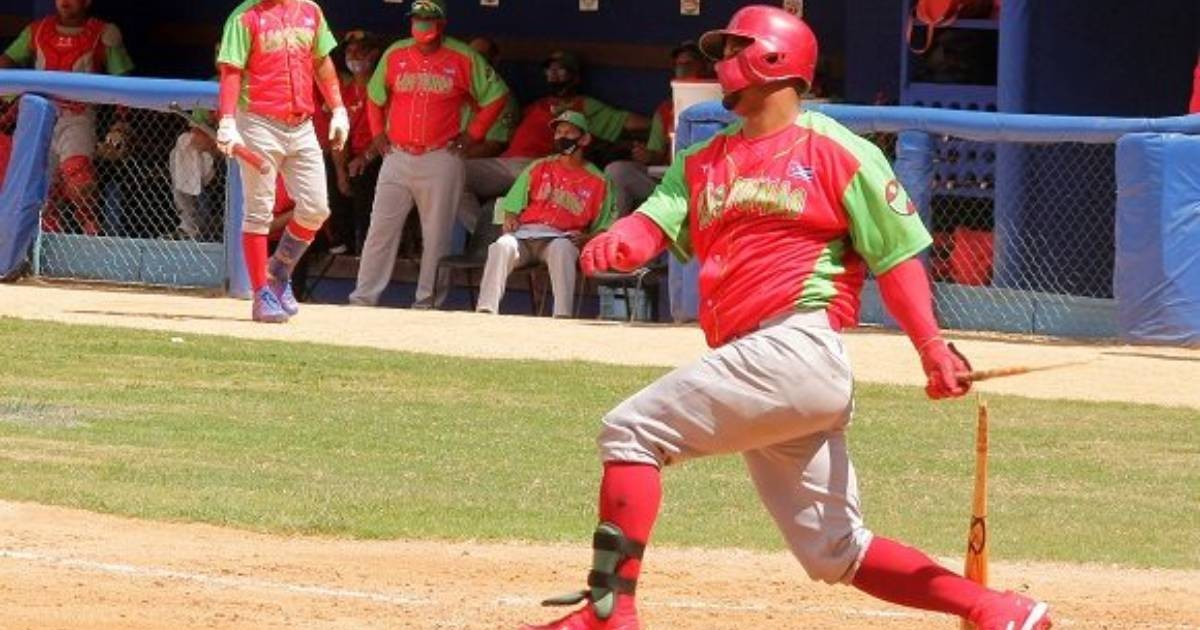
The ongoing fuel crisis in Cuba, which has severely impacted transportation and various services, is now forcing changes in the country’s premier sporting event. The 65th National Series of Baseball will adopt a new format, dividing teams into two geographical zones and four groups to minimize travel and save on fuel.
This change was announced by the National Baseball Commission on Tuesday during a press conference held at the Adolfo Luque Hall in Havana's Latinoamericano stadium, as reported by the Cuban News Agency.
Juan Reinaldo Pérez Pardo, president of the Cuban Baseball and Softball Federation, acknowledged that economic and energy hardships were the driving forces behind the reorganization.
"The adjustments aim to optimize resources, particularly fuel, given the country's complex economic context," the official stated.
New Group Structure
The tournament, scheduled from October 4 to December 22, will feature 16 teams divided into two major zones.
The Western Zone will consist of Group A, including Pinar del Río, La Isla, Artemisa, and Industriales, and Group B, which includes the reigning champion Matanzas, Mayabeque, Villa Clara, and Cienfuegos.
In the Eastern Zone, Group C will feature Sancti Spíritus, Ciego de Ávila, Camagüey, and Las Tunas, while Group D will comprise Granma, Holguín, Santiago de Cuba, and Guantánamo.
Game Schedule and Format
Each team will play 44 games during the qualifying phase: 24 against opponents within their group and 20 against teams from the other group in their zone.
Series within the same group will consist of four games, with a day designated for travel. Inter-group matchups will involve five games with a rest day in between.
The restructuring is more than just a sports strategy; it's a necessity to keep teams playing close to their home territories to cut down on interprovincial travel and, thus, fuel consumption.
Innovative Playoff System
The 65th National Series will also see significant changes in the postseason, adopting a double-elimination format similar to that often used in softball.
Teams finishing first and second in each zone will face off, with the winner advancing directly to the zone finals. The loser will get another shot against the winner of the third and fourth place matchup.
These matchups will be best-of-three series. Subsequently, the champions of the Western and Eastern Zones will compete for the national title in a best-of-seven series.
Historical Context and Current Challenges
Although the circumstances leading to this format are unique, territorial divisions are not new to Cuban baseball.
According to records by statistician Benigno Daquinta, a similar structure was used starting in season 32 (1992-1993), won by Villa Clara, and lasted with various modifications until season 47 (2007-2008), when Santiago de Cuba claimed the championship.
Nearly two decades later, zones are reintroduced amidst significant challenges in moving teams and securing the fuel necessary to maintain a national schedule.
Impact on Youth Sports
This format change highlights a broader crisis affecting Cuba's national sport over recent months.
In May, the National Commission suspended national youth championships for sub-12, sub-15, and sub-18 categories due to fuel shortages, a decision impacting hundreds of young players and their families.
Weeks later, Matanzas' own INDER acknowledged that the Cocodrilos could not travel to Havana for a game because their team bus didn't receive the required fuel.
Return of Veteran Coaches
The upcoming season will also see the return of several experienced coaches to the dugouts, including Alfonso Urquiola for Pinar del Río, Miguel Borroto for Camagüey, and Armando Johnson for La Isla.
The champion of the 65th National Series will represent Cuba in the 2027 Americas Baseball Champions League.
This opportunity currently belongs to Matanzas, who triumphed in the 64th National Series, concluding the final with a decisive 11-0 victory over Las Tunas on February 14.
The upcoming season, however, begins with a challenge that extends beyond the field: ensuring teams can travel and complete the schedule in a nation where fuel scarcity is already affecting how the national sport is played.
Understanding the Impact of Fuel Shortage on Cuban Baseball
Why is the 65th National Series of Baseball in Cuba adopting a new format?
The new format is being adopted to minimize travel and save on fuel due to Cuba's ongoing fuel crisis, which has impacted transportation and various services, including sporting events.
How are the teams structured in this new format?
Teams are divided into two geographical zones and four groups to limit travel. Each zone has two groups, and teams play more games against nearby opponents to reduce travel distances.
What changes are being made to the postseason format?
The postseason will adopt a double-elimination format similar to softball, with teams facing off in best-of-three series to determine who advances to the zone finals and ultimately the national championship.