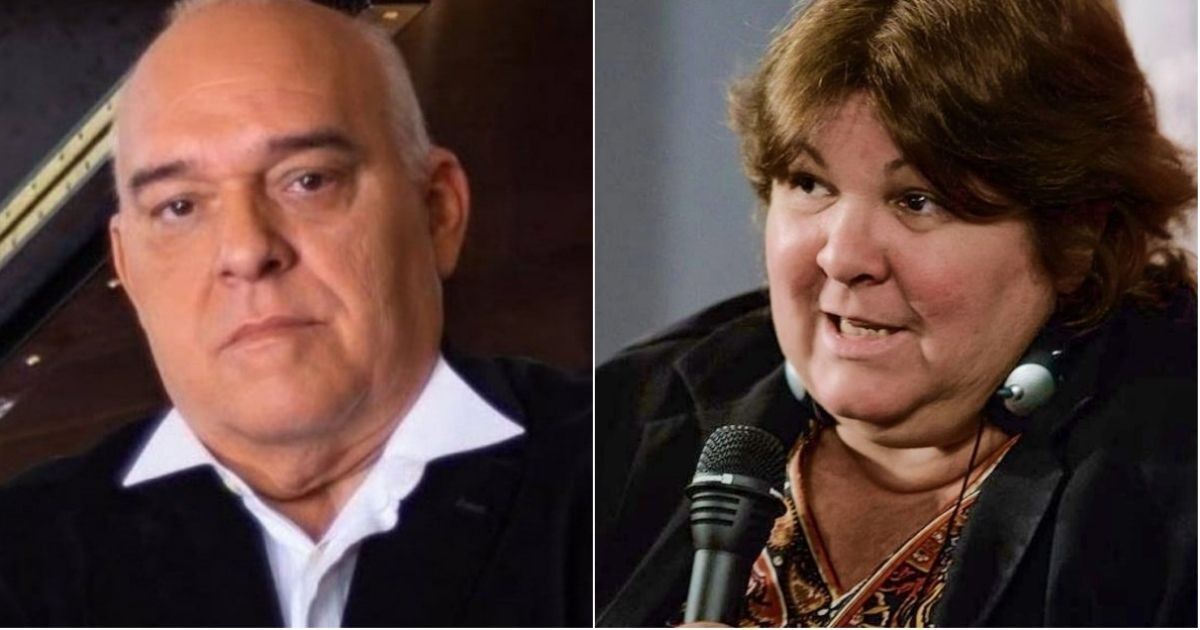
Cuban baritone and activist Ulises Aquino Guerra has taken to Facebook to sharply criticize Aleida Guevara March, daughter of the famed guerrilla fighter Ernesto "Che" Guevara, after her comments resurfaced labeling self-employment as "a small cancer within society."
Aquino, known for both his artistic career and outspoken criticism of the Cuban regime from within the island, did not just refute Guevara March's argument but also highlighted the privileged standpoint from which she speaks.
"Clearly, the society she refers to is not in her interest. For her, those who strive daily to make a living, those who work hard not to be a burden on others, are a 'cancer,'" Aquino wrote.
He was quick to point out the underlying contradiction: "And those who live off the efforts of others, who enjoy benefits and privileges without having lifted a finger, what ailment do they suffer from?"
Background on Guevara March's Controversial Statements
The comments that incensed Aquino came from two interviews with Guevara March: one published by the state-run outlet Cubadebate in October 2020, and another with BreakThrough News in 2022.
In both instances, the pediatrician argued that self-employment is ideologically unacceptable because "people start thinking only about their own pockets."
"A man's thinking is shaped by how he lives. If you begin living solely to enhance the economic opportunities for yourself and your family, you might forget that you live in a different society. That's a tremendous risk," she stated in 2022, questioning: "How do you foster a social conscience in someone who is solely working for themselves?"
The Double Standards of Cuba's Elite
Although Guevara March admitted that private enterprise was an emergency measure in response to the crisis—"sometimes you have to make decisions that, while not always right, are within our reach"—she presented it as a tactical concession, rather than a right.
Describing herself as "very radical about these things," Guevara March had already urged the Committees for the Defense of the Revolution (CDR) in May 2024 to increase surveillance on small and medium-sized enterprises (SMEs) due to "the risks they pose to security."
Despite her rhetoric, Guevara March, a spokesperson for the regime, does not shy away from the luxuries typical of her social class. Last August, she was seen shopping in a dollar-based market in Havana, highlighting the double standards of the elite connected to power, who preach sacrifice while engaging in consumer practices beyond the reach of ordinary citizens.
Closing his post, Aquino, who recently criticized the regime for its economic management, posed a question that encapsulates the frustration of those struggling to survive while the Castro elite preaches austerity from their privileged positions: "She claims that's a tremendous risk... and speaks of social conscience, obviously because she's convinced of her class consciousness."
Understanding the Debate on Private Enterprise in Cuba
What was Aleida Guevara's stance on self-employment?
Aleida Guevara criticized self-employment as ideologically unacceptable, suggesting it leads people to focus solely on personal gain rather than societal needs.
How did Ulises Aquino respond to Guevara's comments?
Ulises Aquino responded by highlighting the privileged perspective of Guevara and defending those who work hard to support themselves without burdening society.
Did Guevara March acknowledge any benefits of self-employment?
Guevara March acknowledged self-employment as a necessary response to crisis situations but viewed it as a temporary measure rather than a fundamental right.