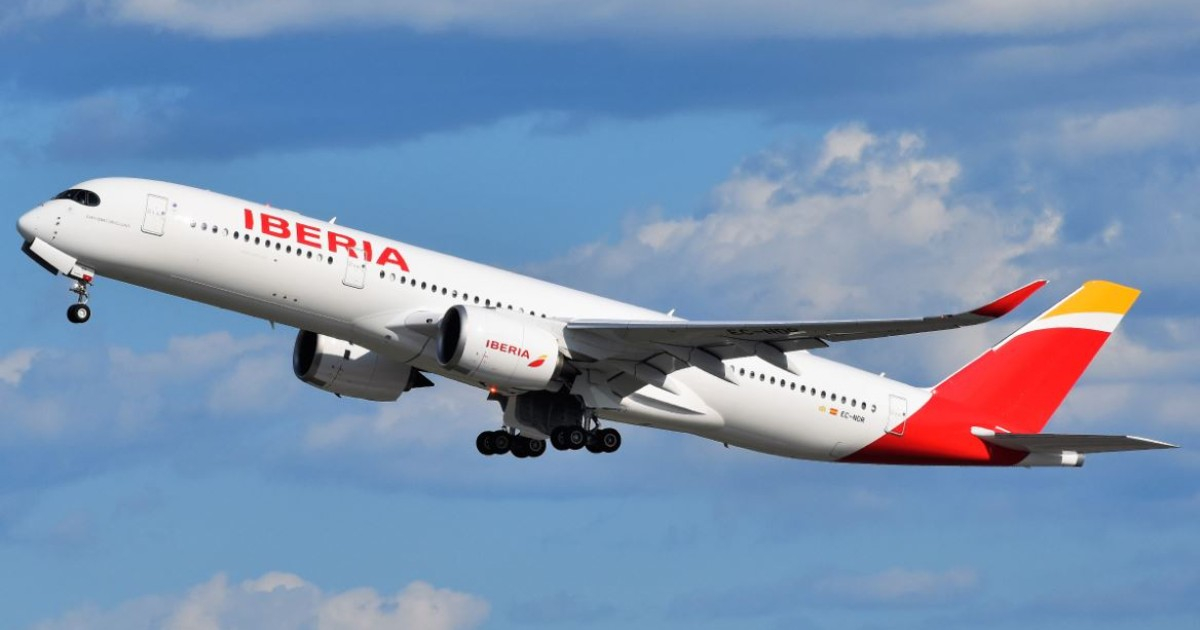
On Wednesday, Iberia revealed that its direct flights to Cuba will not resume until at least June 2027. This decision extends a suspension in place for over two months, which the airline attributes to Cuba's ongoing energy crisis.
Tickets for the anticipated return have been made available, but the actual resumption of service will depend on favorable conditions emerging.
A statement from Iberia, as reported by Europa Press, indicates a further delay. Initially, when the suspension was announced in April, there was a tentative plan to restart flights by November 2026. This timeline has now been pushed back by seven months.
Iberia cites significant impacts on both demand and operational conditions as reasons for the continued pause in service to Cuba.
Alternative Travel Arrangements
During the suspension, passengers can travel to Panama and continue to Cuba through a codeshare agreement with Copa Airlines. Despite the route suspension, Iberia's Havana offices will remain open to assist travelers.
The airline, part of the IAG group, is also offering flexible options for ticket holders. Customers can request refunds in cash or as vouchers or change their destination to Miami, Panama, Santo Domingo, or Mexico.
"Since 1949, Iberia has maintained a historical commitment to Cuba, marking its inaugural flight to the island, and remains devoted to resuming operations when feasible," the company stated.
The Energy Crisis Behind the Suspension
Challenges in maintaining the Madrid-Havana route began prior to the suspension. On February 9, 2026, Cuba issued NOTAM A0356/26, indicating Jet A-1 fuel shortages at nine international airports, including those in Havana, Varadero, Holguín, Santiago de Cuba, and Camagüey.
This situation forced Iberia to make technical stops in Santo Domingo to refuel for return flights to Madrid, a temporary measure that eventually became unsustainable.
The energy crisis in Cuba is deep-rooted. The country produces only 40,000 of the 110,000 barrels of oil it requires daily. In 2026, it lost two major external supply sources. Venezuelan oil, previously covering two-thirds of imports, ceased following Nicolás Maduro's capture in January, while Pemex halted shipments under pressure from Trump administration sanctions.
Gradual Reduction to Flight Cessation
On April 13, 2026, Iberia formally announced the suspension of flights to Cuba, emphasizing that the decision was due to Cuba's unique situation.
The withdrawal was phased: three weekly flights operated in April, reduced to two in May, and ultimately, the Madrid-Havana route was entirely suspended as of June 1.
Iberia is not the only airline affected by the crisis. At least 11 international carriers halted flights to Cuba in 2026, resulting in over 1,700 cancellations, including Air Canada, Air France, Turkish Airlines, and LATAM Peru.
Air Europa's Continued Service
Air Europa continues with three weekly flights to Cuba, though it too has adjusted operations due to fuel shortages. Since mid-June, the airline has refueled in Punta Cana for return flights rather than Santo Domingo. This arrangement is expected to last until at least September 13, barring further changes.
Tourism Decline in Cuba
The reduction in air connectivity coincides with a severe downturn in tourism, a vital source of revenue for Cuba. The first half of 2026 saw only 387,591 international visitors, a 60.7% decrease from the same period in 2025. Hotel occupancy plummeted to 12.9% in May.
Major Spanish hotel chains have also felt the impact. Meliá withdrew in July after managing 34 hotels, with Iberostar and Barceló following suit amid the energy crisis and U.S. sanctions.
Understanding Iberia's Suspension and Cuba's Energy Crisis
Why has Iberia delayed its return to Cuba?
Iberia has postponed its return due to the ongoing energy crisis in Cuba, which significantly affects both demand and operational conditions.
How are passengers affected by the suspension?
Passengers can either travel via Panama to Cuba through a codeshare agreement with Copa Airlines or choose alternative destinations like Miami, Panama, Santo Domingo, or Mexico, with flexible refund options.
What led to the energy crisis in Cuba?
Cuba produces insufficient oil for its needs and lost key external suppliers in 2026, including Venezuelan oil after Nicolás Maduro's capture and Pemex under U.S. sanctions pressure.