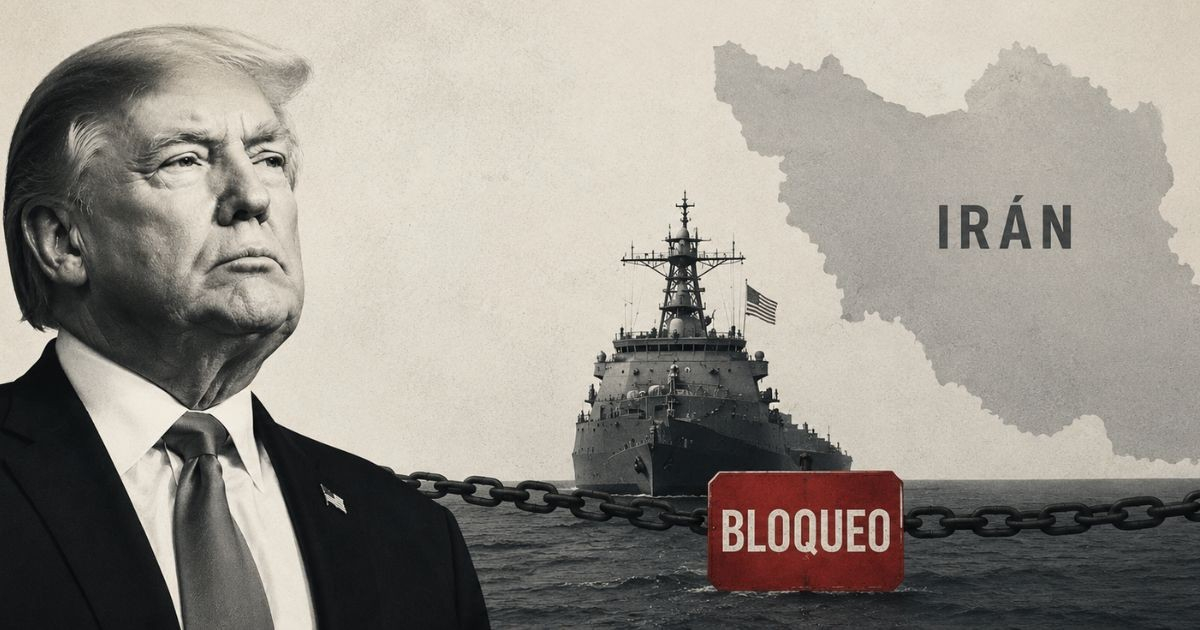
On Tuesday, Donald Trump took a tougher stance against Iran by ruling out any immediate diplomatic resolution and asserting that the situation in the Strait of Hormuz is under control, a key hotspot in the ongoing conflict.
“There are no negotiations or discussions ongoing, nor are any planned, with the Islamic Republic of Iran,” Trump stated on Truth Social.
The former president emphasized that “the naval blockade remains in full force and effect” and claimed that all mines laid in the water “have been removed or detonated.”
Trump further asserted that “the Strait of Hormuz is open and operational,” a statement that clashes with Tehran's position and the limited maritime traffic recorded in the area.
Trump's pronouncement follows the end of a 60-day negotiation period between the United States and Iran without reaching an agreement to end the conflict, according to AP.
The U.S. continues to block Iranian maritime traffic through the strait, although Washington maintains that the passage is available for other navigation, AP noted.
Tensions Persist in the Strait
The situation in the Strait remains tense: a projectile struck a ship leaving Hormuz on Tuesday, damaging its engine room, as reported by the United Kingdom Maritime Trade Operations (UKMTO).
The incident resulted in one casualty among the crew, though it was unclear initially whether the person had died or was injured.
Conflicting Narratives from Washington and Tehran
Washington's version also clashes with Iran's stance: Tehran's chief negotiator and Speaker of Parliament, Mohammad Bagher Qalibaf, stated that the strait will remain closed until the United States meets the conditions of a provisional agreement reached in June.
According to Reuters, Iran's demands include lifting the blockade on its ports and oil sanctions, releasing frozen Iranian assets, and ending military threats and operations on all fronts.
The disagreement highlights conflicting narratives between Washington and Tehran regarding the status of Hormuz: while Trump claims it is open, operational, and mine-free, Iranian authorities insist it will not fully reopen until the U.S. complies with their conditions.
Strategic Importance of the Strait of Hormuz
The Strait of Hormuz is one of the world's most crucial maritime routes for energy supply. Before the conflict, about one-fifth of globally traded oil passed through this narrow passage, as reported by AP.
Trump’s latest declaration comes just four days after he heightened the rhetoric on Hormuz by claiming he would soon declare the strait “U.S. territory.”
In that address, he also proclaimed that Washington controlled the maritime passage and that no ship could traverse it without U.S. authorization.
Days earlier, Trump had opted to maintain economic pressure on Iran and ruled out, for the time being, a new large-scale military offensive.
The naval blockade imposed by Washington was seen as a key tool to increase pressure on Tehran at that time.
The positions between the two nations remain far apart. On August 8, Iran presented an extensive list of conditions to fully reopen the Strait of Hormuz, including lifting the U.S. naval blockade, withdrawing Washington's forces from the vicinity, releasing frozen assets, and lifting sanctions.
FAQs on the Strait of Hormuz Conflict
Why is the Strait of Hormuz strategically important?
The Strait of Hormuz is a vital maritime route for global energy supply, with around 20% of the world's traded oil passing through it before the conflict.
What are Iran's conditions for reopening the Strait?
Iran demands the lifting of the U.S. naval blockade, removal of oil sanctions, release of frozen assets, and cessation of military threats and operations by the U.S.
What is the current status of negotiations between the U.S. and Iran?
Negotiations have ended without an agreement, with both nations maintaining conflicting narratives about the status of the Strait of Hormuz.