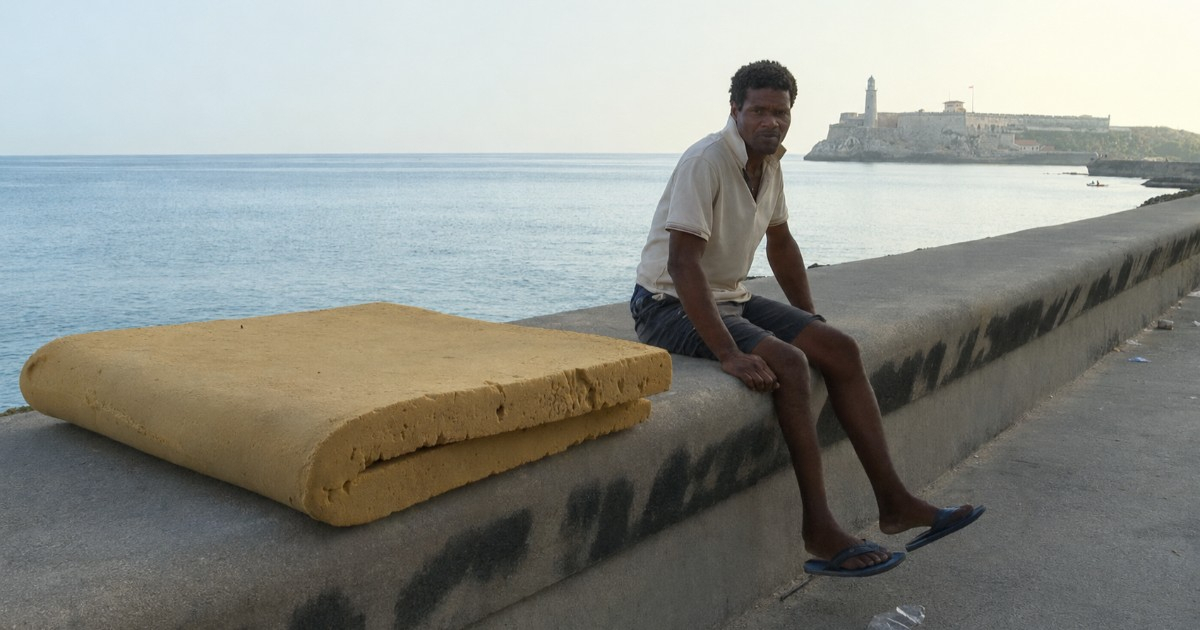
In the face of relentless power outages in Havana, many Cubans have turned to sleeping on rooftops, in parks, and even the Malecón to escape the oppressive heat and find some rest.
As reported by AFP, countless residents are leaving their homes at night. Their electric fans stand still due to the lack of power, prompting them to seek out a breath of fresh air under the open sky.
Among these individuals is Alexis Miján, a 59-year-old Cuban who, along with his blind son, began sleeping on their building's rooftop after power cuts worsened earlier this year.
What started as a temporary fix has spread among his neighbors. "Almost everyone from the building came here," Miján shared with AFP, while setting up bedding with sheets and pillows for the night.
Over time, and as the energy crisis shows no signs of improvement, the rooftop has essentially transformed into a shared bedroom. Among water tanks and pipes, each family has carved out their own sleeping spot. "We've divided up the spaces," explained the weary father.
Every evening, Miján and his son wait for sunset before hauling their sleeping gear to the rooftop. At dawn, they pack everything up to start another day.
Miján's personal story adds another layer to the crisis: once a Sociology professor, he left academia for better pay and now works as a warehouse clerk. Regarding the ongoing electrical issues, he remains skeptical of a resolution, stating, "I see no end to this," with a disheartening expression.
Public Spaces as Makeshift Bedrooms
The rooftop refuge is far from unique. According to AFP, many Habaneros spend their nights on cardboard, mattresses, or simply on the ground in public spaces, unable to sleep indoors due to the stifling heat.
The Malecón has become a prominent symbol of this phenomenon. Dozens of people arrange themselves along the seawall and pavement at night, using the ocean breeze for relief, equipped with sheets, backpacks, and other essentials.
Earlier in August, the Associated Press captured similar scenes following another collapse of the National Electric System. Numerous residents sought solace on the Malecón's concrete, escaping the heat and the absence of fans and air conditioning.
The issue extends beyond this iconic promenade. Days later, Cubans were observed sleeping on mattresses near the University of Havana, further illustrating how power outages are driving people out of their homes in search of rest.
Rooftop Retreats: A Longstanding Solution
Yet, the use of rooftops as a refuge predates these recent reports. In early July, a Cuban mother reported sleeping with her family on their rooftop for over a week. There, her daughter suffered from mosquito bites while the blackouts also hindered their access to water.
Understanding the Impact of Havana's Power Outages
Why are Cubans sleeping outside during power outages?
Cubans are sleeping outside to escape the heat and discomfort inside their homes due to lack of electricity, which renders fans and air conditioning useless.
What areas are most affected by these power outages?
While the entire city is affected, public areas like rooftops, the Malecón, and spaces near the University of Havana are notably used by residents seeking relief from the heat.
How have residents adapted to the ongoing energy crisis?
Residents have adapted by creating makeshift sleeping areas on rooftops and public spaces, dividing these areas into personal spaces for nighttime rest.