From the Oval Office on Monday, Donald Trump announced that Kim Jong-un had responded favorably to his diplomatic overtures, describing their interactions as "very positive."
When questioned about the lack of a public response from the North Korean leader, Trump simply stated that Kim "has responded," but did not elaborate on the details or the medium of these conversations.
A Shift in Military Strategy
These comments come on the heels of diplomatic gestures initiated over the weekend. Trump instructed Secretary of Defense Pete Hegseth to significantly scale back joint military exercises with South Korea, as he believes these drills convey an "inappropriate and hostile signal" to a nation that, according to him, has been non-threatening and respectful since his presidency.
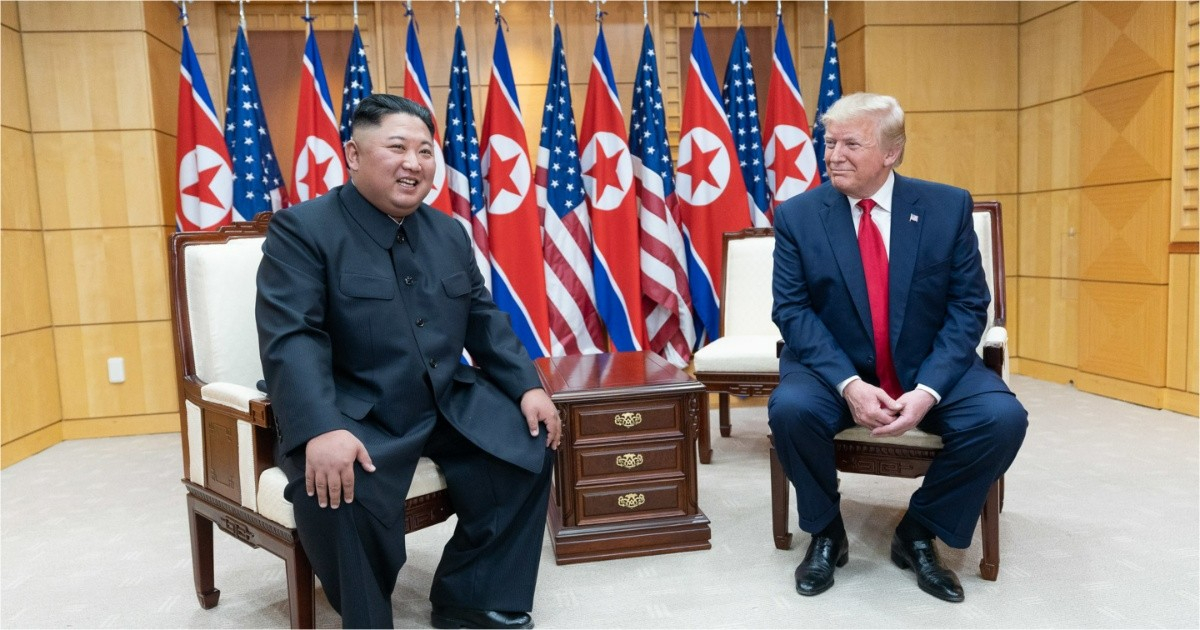
In a post on his Truth Social platform, Trump emphasized that these moves were essential for maintaining a positive relationship with North Korea, despite the "unfriendly gesture" in an archival photo he shared of his meeting with Kim in Panmunjom on June 30, 2019.
Exercises and Diplomatic Tensions
The affected military exercises, Ulchi Freedom Shield, were scheduled from Monday to August 27, involving around 18,000 South Korean troops, focusing on contemporary threats like drones, GPS jamming, and cyberattacks. Despite Trump's directive, South Korea's Ministry of Defense stated that the exercises would proceed as planned, although the number of field maneuvers was reduced from 17 to 14 this year.
Seoul was reportedly caught off guard by Trump's decision, as they had not been consulted beforehand. Trump also disclosed a diplomatic rift with the South Korean government, revealing that when he asked if they would support efforts to denuclearize Iran, the response was "No, thanks."
Escalating Tensions in the Peninsula
The backdrop to these developments is a period of heightened tension in the Korean Peninsula. North Korea launched two ballistic missiles in August, with the first on August 6 from Wonsan towards the Sea of Japan, and a second on August 12 covering over 700 kilometers before descending into the sea. Pyongyang had warned of a "new level of deterrence" in response to the joint exercises.
Trump’s strategy echoes his approach during his first term. After the landmark Singapore summit in June 2018, the first between a sitting U.S. president and a North Korean leader, he suspended critical military exercises, deeming them "provocative" and "very expensive." However, disarmament talks later collapsed at the Hanoi summit in February 2019, leading to the resumption of military drills.
A New Hope for Peace
In his second term, starting in February 2025, Trump has resumed a conciliatory tone, declaring his desire to engage with North Korea and affirming a strong rapport with Kim Jong-un during a press conference with Japanese Prime Minister Shigeru Ishiba.
Meanwhile, South Korea's presidency expressed optimism that the positive rapport between Trump and Kim could lead to "meaningful dialogue" aimed at achieving peace and stability on the Korean Peninsula.
Understanding Trump's Diplomatic Moves with North Korea
Why did Trump order a reduction in military exercises with South Korea?
Trump ordered the reduction as he believes the exercises send an inappropriate and hostile message to North Korea, a country he views as non-threatening and respectful under his administration.
How did South Korea react to Trump's decision on military drills?
South Korea was surprised by Trump's decision, as they had not been consulted. Despite this, their Ministry of Defense stated the exercises would continue as planned, with some reductions in field maneuvers.
What recent actions has North Korea taken that contribute to regional tensions?
North Korea has heightened tensions by launching two ballistic missiles in August, warning of a "new level of deterrence" in response to joint military exercises by the U.S. and South Korea.