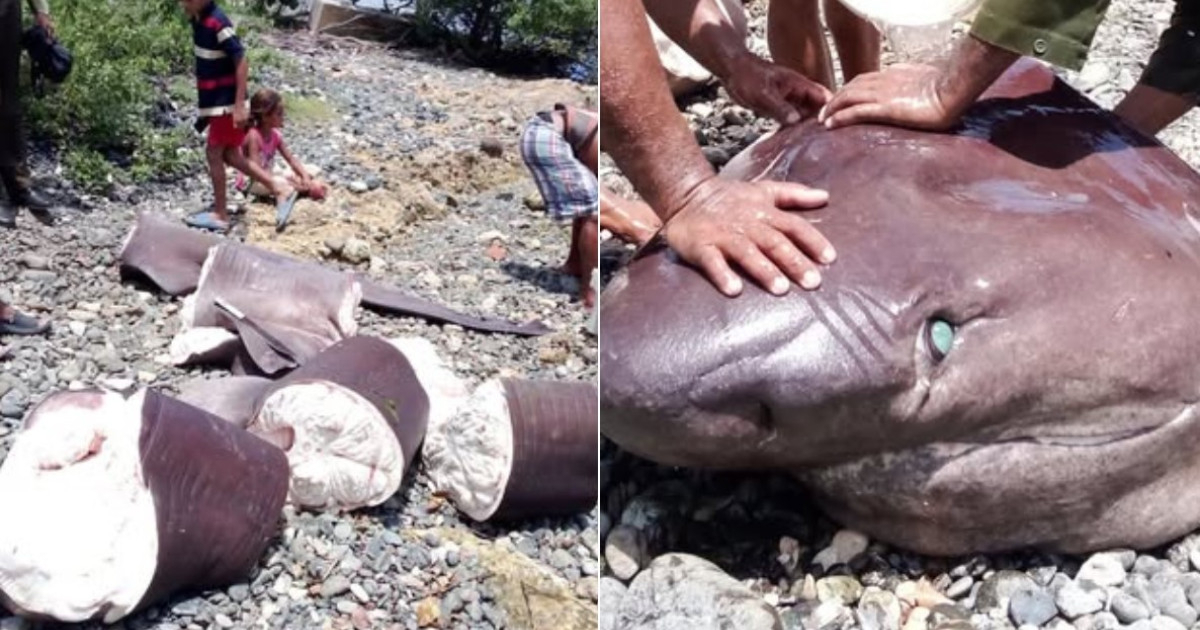
The Santiago de Cuba Divers Association issued a warning on Monday regarding the recent shark captures and killings occurring at various locations across the island. They highlighted the potential impact on the marine ecosystem due to the disappearance of these predators, while acknowledging that the severe economic and food crisis is driving many of these actions.
"Sharks are being killed in Santiago... and it's not just their problem," the organization stated in a Facebook post discussing several recent incidents along the Cuban coast.
The association cited examples including a shark over 500 kilograms being butchered in Baracoa, a hammerhead shark transported through Varadero’s streets, and other specimens caught in recent weeks.
"These aren't isolated incidents. They're part of a pattern. We cannot remain silent," the group of divers emphasized.
These divers, who explore the waters where these creatures live, also opposed the view of sharks solely as a threat to humans. "Sharks are not the danger. The real danger is losing them," they asserted.
The organization stressed the critical role these predators play in maintaining the balance of marine ecosystems, referring to them as the "ocean's doctors" due to their role in controlling other populations.
According to the divers, a recent study by Cuban scientists identified 83 species of sharks and rays in the island's waters, with several at critical risk of extinction.
"When we kill a shark, we're not 'removing a threat.' We are weakening an entire ecosystem that we rely on for fishing, tourism, and survival," they warned.
However, the association refrained from attributing the captures solely to a lack of environmental awareness, acknowledging the influence of the current economic situation on many Cuban families' decisions.
"The economic crisis is real. Hunger is real. In desperate times, people seek to survive however they can," they noted.
The divers insisted, nonetheless, on the long-term necessity of protecting these species, affirming the existence of Cuban laws aimed at shark conservation.
"It's not about pointing fingers. It's about education," they emphasized.
Various shark-related events have gained attention on social media in recent months, simultaneously reflecting the hunger and desperation that, according to the Santiago de Cuba divers, drive many of these captures.
One notable incident occurred in May, when a shark weighing over 500 kilograms was caught near the Yumurí coastline in Baracoa. Viral images depicted the massive creature already chopped and sectioned on the shore.
Another case arose in July, involving a large shark captured off 50th Street in Varadero. The individual who documented the event later confirmed that the animal ended up "filleted."
Just days later, a hammerhead shark was seen being transported on a motorcycle through Varadero's streets, with its tail brushing the pavement as the vehicle moved along.
Impact of Shark Depletion on Cuba's Marine Ecosystem
Why are sharks important to the marine ecosystem?
Sharks play a vital role in maintaining the balance of marine ecosystems by controlling the populations of other species, which helps to keep the ocean's ecological health in check.
What factors are contributing to the increase in shark killings in Cuba?
The primary factors include the severe economic and food crisis in Cuba, which is pushing people to capture sharks as a means of survival despite the ecological consequences.
Are there legal protections for sharks in Cuba?
Yes, there are Cuban laws in place aimed at the conservation and protection of shark species, although enforcement and awareness remain challenges.