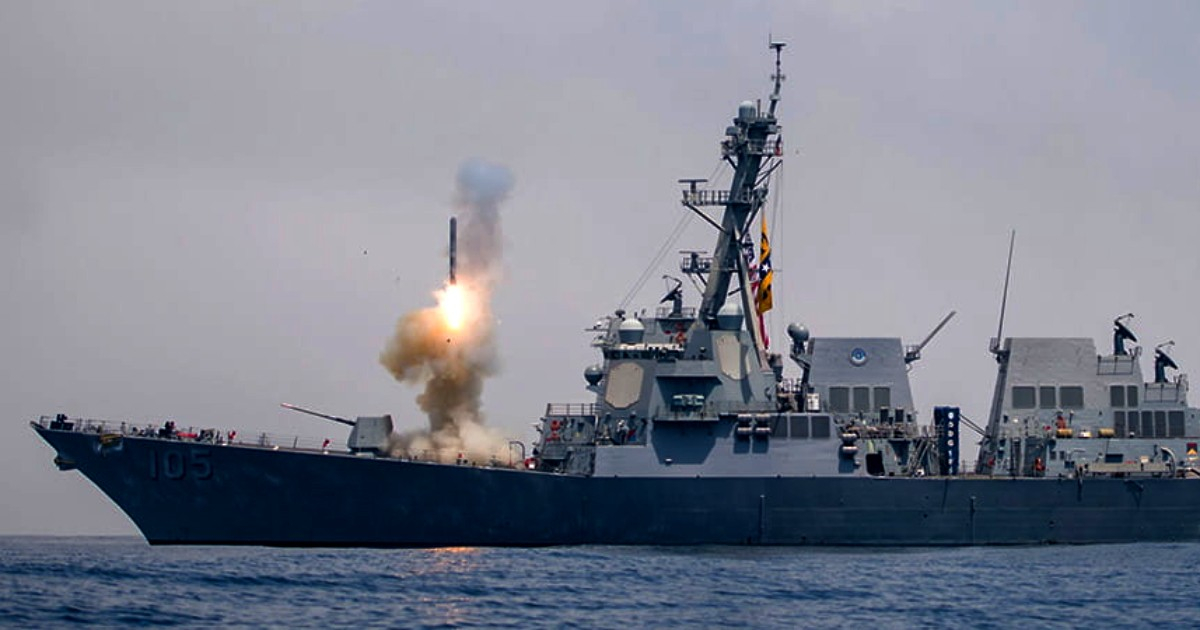
The U.S. Department of War announced on Monday a substantial $22.9 billion contract with Raytheon, part of the RTX group, awarded by the Navy to significantly ramp up the production of the Tomahawk cruise missile, which is the primary long-range offensive weapon of the American fleet.
This seven-year agreement comes at a time of ongoing conflict with Iran and addresses a critical vulnerability exposed by Operation Epic Fury, which began on February 28, 2026: the defense industry's inability to replenish precision munitions at the pace required by a high-intensity conflict.
According to estimates from 19FortyFive, the campaign targeting Iranian nuclear and military sites used between 850 and over 1,000 Tomahawk missiles, representing up to a third of the U.S. strategic arsenal, which is estimated to hold between 3,000 and 4,150 missiles.
Challenges in Replenishing the Arsenal
The contrast with previous production capabilities is striking: prior to the contract, Raytheon manufactured only between 60 and 90 Tomahawks annually, and the Navy had requested merely 57 units for the fiscal year 2026 budget before the conflict escalated.
At that rate, replenishing more than 850 missiles would have taken over a decade.
In February 2026, RTX had already signed five framework agreements with the Department of War to increase annual production to over 1,000 units; Monday's contract represents the financial realization of that commitment, according to Reuters.
Strategic Implications and Industry Expansion
Michael P. Duffey, the Undersecretary of War for Acquisitions, emphasized the agreement's significance: "The Department called on the industry to expand munitions production, and RTX answered that call. This Tomahawk contract enhances our ability to equip the Joint Force, ensuring our fighters never face a fair fight."
Acting Secretary of the Navy, Hung Cao, was even more assertive: "Ensuring our naval and joint forces have the lethal firepower they need to deter aggression and protect the homeland is paramount. This historic $22.9 billion investment will accelerate the delivery of Tomahawk missiles to our fighters at an unprecedented pace."
The White House amplified the announcement on social media, describing it as a "crucial investment" to ensure the fleet possesses "overwhelming power."
The contract also aims to bolster the industrial supply chain: it includes expanding Raytheon's workforce, increasing manufacturing output, and consolidating suppliers, in alignment with the Department of War's Acquisition Transformation Strategy.
Geopolitical Context and Future Concerns
The announcement arrives amid escalating geopolitical tensions. The NATO summit held in Ankara in July reaffirmed the Article 5 mutual defense commitment and demanded that Iran not acquire nuclear weapons, while intelligence reports this month warn that Russia might test the Alliance's resolve with actions in Eastern Europe.
Analysts also note that the depletion of arsenals in the Iranian conflict leaves the U.S. more vulnerable to potential tensions with China, making the rapid replenishment of munitions a strategic priority beyond the current theater of operations.
The Department of War is the operational name adopted by the Department of Defense following an executive order signed by Trump in September 2025, reviving the historical designation used until 1947; the final legal change still requires Congressional approval, which advanced in that direction in June 2026.
Key Questions on U.S. Missile Production Boost
Why is the U.S. increasing Tomahawk missile production?
The U.S. is boosting Tomahawk missile production to address vulnerabilities revealed by high-intensity conflicts, particularly the ongoing war with Iran, which has depleted a significant portion of its strategic arsenal.
How will the new contract with Raytheon impact the workforce?
The contract includes plans to expand Raytheon's workforce, increase manufacturing output, and consolidate suppliers, strengthening the overall industrial supply chain.
What strategic advantages does this contract provide the U.S. military?
This contract enhances the U.S. military's ability to maintain a robust arsenal, ensuring that forces have the necessary firepower to deter aggression and protect national security interests.