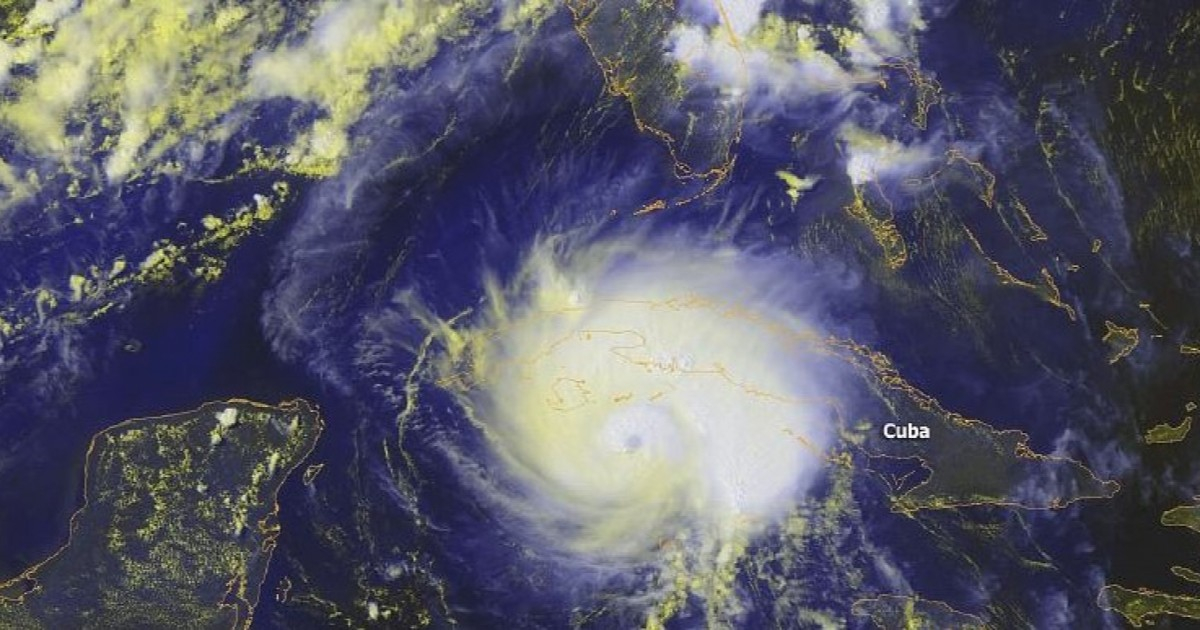
The latter half of August signifies the start of the most perilous cyclone period of the year for Cuba and the broader Caribbean, warned Professor Luis Enrique Ramos Guadalupe, coordinator of the History Commission of the Meteorological Society of Cuba, during a statement to the Cuban News Agency on Monday.
August shows a marked increase in tropical cyclone activity in the tropical Atlantic basin, which includes the Gulf of Mexico and the Caribbean Sea, compared to June and July, the expert specified.
The peak cyclone activity within the Caribbean season occurs during the third and fourth weeks of this month, extending into the first half of September.
For Cuba specifically, August ranks as the third most dangerous month for cyclonic strikes, only surpassed by October and September.
From 1791 to 2022, the island has endured 19 hurricanes during August, accounting for 16% of all hurricanes that have impacted Cuba over those 231 years.
The area with the highest cyclone activity is concentrated in the open waters of the tropical Atlantic, between the African coast and the Lesser Antilles arc. From there, systems typically move westward and west-northwest, potentially reaching the eastern Caribbean Sea, moving south of Cuba toward the Yucatán Peninsula, or heading toward the Bahamas and southeastern United States.
Memorable August Hurricanes
Two August hurricanes have left a lasting impression on the Cuban populace.
In 2004, Hurricane Charley made landfall on the southern coast of what was then the province of Havana on August 13, as a Category 3 storm on the Saffir-Simpson scale, with maximum sustained winds of 112 mph and gusts exceeding 124 mph.
Four years later, Hurricane Gustav, a Category 4 storm, swept across the western part of the Isle of Youth and entered Pinar del Río at Los Palacios; the Paso Real de San Diego weather station recorded a gust of 211 mph, the strongest officially reported in the Cuban archipelago.
Current Season Outlook
The 2026 hurricane season, however, began with an unusual calmness.
The Accumulated Cyclonic Energy of the Atlantic was 75% below normal at the start of the month, with only two named storms—Arthur and Bertha—posing no threat to Cuba.
Nevertheless, the National Hurricane Center (NHC) in Miami cautioned against complacency, reminding that August historically marks a shift toward increased cyclone activity.
"A quiet start to the season doesn't mean we can let our guard down," the agency posted on social media.
On Wednesday, August 12, Tropical Storm Cristóbal formed, the third storm of the season, but the Institute of Meteorology (INSMET) confirmed it posed no danger to the island, and the system dissipated days later.
The primary factor contributing to this calm is El Niño, with a 98% probability of persisting during the peak months of August, September, and October. This phenomenon increases vertical wind shear over the Atlantic, hindering cyclone organization and intensification.
The National Oceanic and Atmospheric Administration (NOAA) of the United States updated its 2026 forecast to expect between seven and 13 named storms, with a 75% probability that the season will be below normal.
Despite this, experts emphasize that calmness does not equal safety.
Cuba faces this high-risk period with its population still recovering from the devastating Hurricane Melissa, which made landfall in the eastern part of the island in October 2025 as a Category 3 storm, damaging more than 116,000 homes and affecting over 3.5 million Cubans in Santiago de Cuba, Holguín, Granma, and Guantánamo.
The warning from the U.S. National Hurricane Center carries particular weight now that the second half of August—the most hazardous stretch of the cyclone calendar—has just begun.
Cuba's Cyclone Season: Key Questions Answered
Why is August considered the most dangerous month for cyclones in Cuba?
August marks the beginning of the peak cyclone activity period in the Caribbean, with a significant increase in tropical cyclones in the Atlantic basin, making it particularly dangerous for Cuba.
What impact does El Niño have on the hurricane season?
El Niño increases vertical wind shear over the Atlantic, which can disrupt the development and intensification of tropical cyclones, potentially leading to a less active hurricane season.
How does the National Hurricane Center advise the public during a quiet start to the season?
The National Hurricane Center advises the public to remain vigilant and not become complacent, as a quiet beginning does not preclude the possibility of increased activity later in the season.