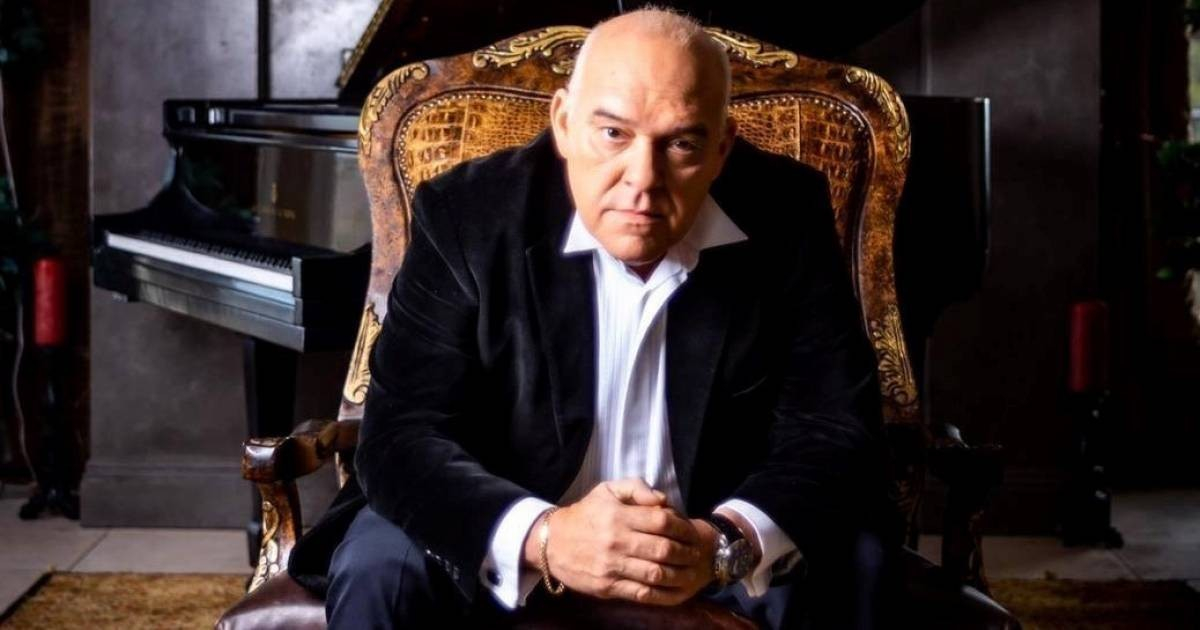
Cuban singer Ulises Aquino Guerra took to Facebook to share a pointed critique titled "You Cost Too Much," where he systematically dissects the economic policies of the Cuban regime. He accuses the government of using inspections, price controls, and closures of private enterprises to mask the chaos it has created.
Aquino begins his reflection by referencing economist Pedro Monreal, who questioned whether any government official understands economics. Aquino responds bluntly, stating, "In my opinion, they lack economic knowledge but are adept at calculating how to sustain a dysfunctional and unproductive bureaucratic structure at the expense of the people's and taxpayers' money."
In his view, the intensified inspections against private businesses in 2026, which involve fines up to 72,000 pesos, confiscations, and temporary shutdowns, do not provide a solution but rather act as a smokescreen.
"The economic disaster caused by their repeated mistakes is being covered up with inspectors, inspections, business closures, and license revocations, despite the corruption that accompanies all these 'tasks,'" he wrote.
Aquino also highlights an unacceptable double standard in regulations: while the state aggressively monitors and sanctions the private sector, state-owned enterprises continue to sell at exorbitant prices without facing inspections, price caps, or license revocations.
"We play the same game with different rules for each participant. Meanwhile, those who fund the game are always the ones who suffer," he summarizes.
His detailed analysis directly addresses the tax burden on self-employed workers and small and medium-sized enterprises: taxes on hired personnel, wages, sales, net income, and profits, which collectively, according to Aquino, represent nearly 70% of business activity.
This tax pressure is compounded by the necessity for private actors to procure foreign currency in the informal market to restock, forcing them to raise prices to recover their investment.
The artist further claims that monthly inspections of private businesses are not driven by complaints or actual irregularities but rather serve as an institutionalized extortion mechanism: "They inspect every month because that's where the inspectors' extra salaries come from, and who knows who else, with economic actors paying those bribes on top of all those taxes."
In contrast to the regime's inspection strategy, Aquino advocates for reducing the tax burden on the private sector, encouraging investment, and ensuring that wages reflect the value of productive effort.
"The state cannot be more important than the people, because the state is simply a group of politicians living off the taxes and contributions of the entire society," he concludes.
This publication follows weeks after the Communist Party's Extraordinary Plenum approved a package of 176 economic measures in June, which Aquino already described as "insufficient and delayed," prompting his public call for the government's resignation.
This latest critique continues a consistent line of argument over recent months, where Aquino has accused the Party and Government of clinging to power without listening to the people and questioned the feasibility of reforms without electricity.
He even penned a letter to his deceased revolutionary parents, stating that "everything you believed in and made us believe was wrong."
Ulises Aquino's Critique of the Cuban Economic System
What does Ulises Aquino accuse the Cuban regime of doing?
Ulises Aquino accuses the Cuban regime of using inspections, price controls, and closures of private businesses to cover up the economic disaster it has caused.
How does Aquino view the government's economic understanding?
Aquino believes that the government lacks understanding of economics but is skilled at maintaining a bureaucratic structure that relies on the people's finances.
What does Aquino propose as a solution to the economic issues?
Aquino suggests reducing the tax burden on the private sector, promoting investment, and ensuring wages reflect productive effort.