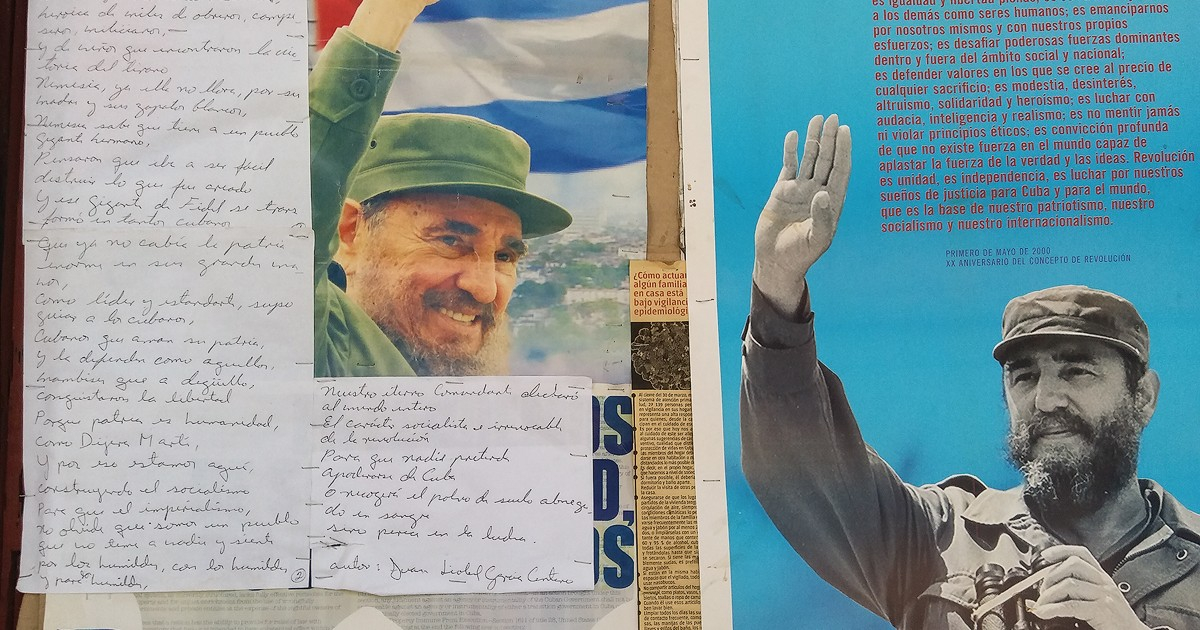
A billboard featuring the image of Fidel Castro was found covered in red paint on Sunday in Cayo Mambí, Frank País municipality, in Holguín province, as reported by independent journalist Yosmany Mayeta Labrada on Facebook.
Mayeta Labrada's report states that the paint was deliberately thrown over Castro's face, "visibly altering the banner displayed in the area." At the time of the report, there was no public information on who carried out the act or whether the authorities had launched an investigation to find those responsible.
The photograph shared shows the billboard—installed on posts amidst vegetation—drenched in red paint over the head and upper body of the depicted figure, who is shown with his right arm raised in a closed-fist salute, a common gesture of patriotic fervor by Cuban political leaders that has been extensively used in propaganda.
The choice of red paint has led to various interpretations among those aware of the incident. According to Mayeta Labrada, some people associate it "symbolically with the victims and the human cost attributed to decades of Castro's rule," though the journalist noted that it is unclear if this was the actual intention of those who defaced the billboard.
Context of the Incident
This event occurs shortly after Fidel Castro's birth anniversary—celebrated on August 13 with a flurry of official events across the island—a week marked by heightened propaganda around his persona. The defacement of a billboard bearing his image during such a period highlights the symbolic weight of the act.
Not an Isolated Case
Earlier this year, in March, another Castro billboard was vandalized with paint in Yara, Granma, an incident documented by dissident José Daniel Ferrer. Additionally, in Santiago de Cuba, slogans like "Down with communism" and "End the dictatorship" appeared on public billboards; in one instance, the authorities chose to remove the entire billboard rather than leave the messages visible.
At the start of the year, Ferrer and the Patriotic Union of Cuba (UNPACU) launched a campaign called "Paint Your Graffiti," encouraging citizens to alter government billboards and share their actions on social media. This initiative coincided with a rise in public expressions of discontent throughout the year.
Earlier this week, new posters with the message "We want food, electricity, and freedom" emerged in various areas of Santiago de Cuba, amidst the ongoing economic and energy crisis affecting the populace.
The Cuban regime maintains a widespread network of billboards, posters, and monuments featuring images of Castro and other historical leaders in public spaces across the island as part of its political propaganda strategy.
Mayeta Labrada concluded his report with a poignant observation: "What happened in Cayo Mambí leaves a hard-to-ignore image: Fidel Castro's face, this time, did not remain untouched in official propaganda; and the public discontent is increasingly encroaching on what were once 'communist strongholds.'"
Understanding the Impact of Vandalism on Cuban Propaganda
Why was the Fidel Castro billboard targeted with red paint?
The red paint could symbolize the human cost and victims associated with Castro's decades-long rule, though the exact intention of those responsible remains unclear.
What does the defacement of propaganda billboards indicate about public sentiment in Cuba?
The defacement of propaganda billboards reflects growing public discontent and a challenge to the regime's narrative, as citizens increasingly express dissatisfaction with the communist government.
How has the Cuban government responded to such acts of defacement?
In some cases, the government has opted to remove the entire billboard rather than allowing altered messages to remain visible, indicating an attempt to maintain control over public narratives.