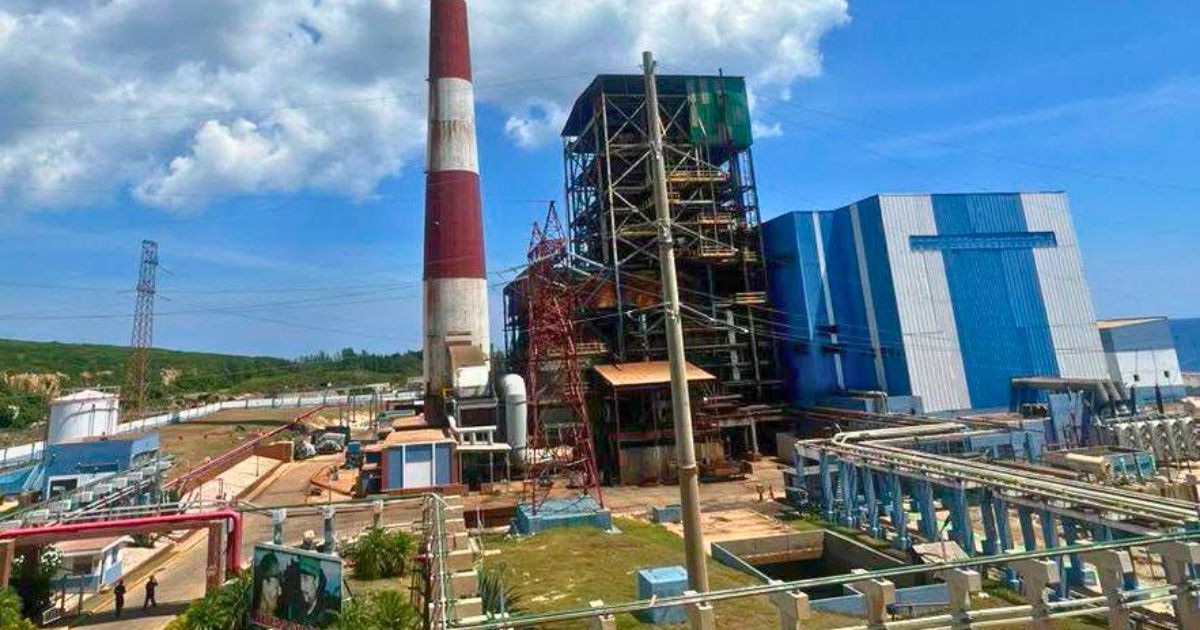
The Antonio Guiteras thermoelectric plant, Cuba's largest, announced on its official Facebook page this Sunday that it was "online and generating 190 MW," using the hashtag #MatancerosInVictory to accompany the news.
Rather than relief or celebration, the Cuban public responded with sharp irony, reflecting years of accumulated frustrations.
"In and out without a trace," commented one user, a phrase that quickly captured the collective sentiment toward the announcement.
Other responses were equally skeptical: "Ready to go offline again in a few hours," "Let's see how long it lasts," "And how does this benefit us???" and "Please date it so we don't confuse old news with new" were some of the reactions flooding the post.
The skepticism is rooted in history. Inaugurated in 1988 in Matanzas with a nominal capacity between 250 and 330 MW, the Guiteras plant has experienced approximately 20 unscheduled outages in 2026 alone and hasn't undergone major maintenance since 2010.
One of the most telling incidents occurred on July 17, when the plant synchronized with the National Electric System (SEN) only to disconnect 26 minutes later due to a boiler leak. It disconnected again on July 26 due to failures in the economizer and low-temperature air reheater. On August 4, it rejoined the SEN amidst recovery from the seventh nationwide blackout of the year.
Currently generating 190 MW, significantly below its nominal capacity, internet users were quick to notice: "Where is it generating to?" asked one. "The people are clueless," another mocked. A third offered perhaps the most vivid diagnosis of the situation: "Please don't overwork it, remember it's an old lady with makeup that shakes every time it gets publicity."
Some were even more direct in their distrust: "They're already announcing it's going offline. Every time they say how much it's generating, it's because they're about to take it offline."
The announcement couldn't come at a worse time for Cuba's energy system. On Sunday, the government anticipated a shortfall of up to 2,193 MW during peak evening hours, with availability at just 1,087 MW against a projected demand of 3,250 MW. On Saturday, the peak shortfall reached 2,281 MW at 10 PM, with services affected throughout the day.
The SEN has completely collapsed seven times in 2026; on August 4, a record shortfall of 2,411 MW was recorded. Several units at other plants remain out of service, and thermal generation limitations add hundreds more MW to the deficit.
Energy and Mines Minister Vicente de la O Levy admitted to the National Assembly at the end of July that some communities have endured up to 105 consecutive days without electricity, acknowledging that "the road ahead is long" to address the crisis and citing a lack of fuel to stabilize the system.
Meanwhile, on social media, Cubans continue to mockingly count the minutes the aging thermoelectric plant remains operational.
Understanding Cuba's Energy Crisis
Why is there skepticism about the Guiteras plant's operations?
Cubans are skeptical because the Antonio Guiteras plant has had frequent unscheduled outages and has not received major maintenance since 2010, leading to distrust in its reliability.
How does the energy shortfall affect Cuba?
The energy shortfall severely impacts daily life, with communities experiencing prolonged power outages and the national grid unable to meet peak demand, causing widespread disruptions.
What measures are being taken to address the energy crisis?
The Cuban government acknowledges the crisis but faces challenges such as fuel shortages and outdated infrastructure. Efforts to stabilize the system are ongoing, but the solutions require significant time and resources.