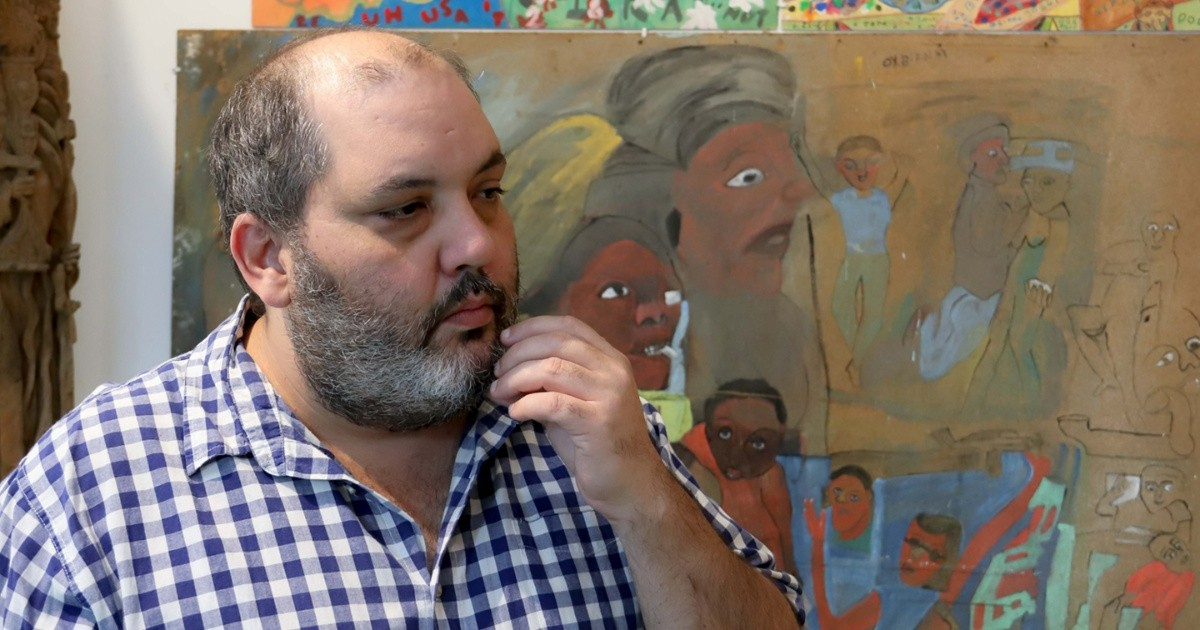
Cuban visual artist Samuel Riera shared a heart-wrenching account on Facebook over the weekend, depicting how the island's systemic crisis has shattered his creative spirit, leaving him in a mere survival mode. He described enduring power outages lasting up to three hours daily, prolonged isolation, a fire that went unanswered by firefighters, and the theft of his husband's phone while they slept with the window open during the sweltering August heat.
"Living in Cuba today, no matter your perspective, inevitably drags you into the same collective downfall," Riera wrote in his Facebook post titled "When Life in Cuba Surpasses Any Reality." Since the onset of 2026, his narrative has been a series of relentless blows.
It all started with the loss of his phone line and Nauta Hogar connection, which had been his lifeline for communicating with curators, museum directors, collectors, family, and monitoring the artists he collaborates with. Although Riera didn't specify, the disruption of phone and internet services is a common tactic the regime uses against critics and dissidents.
Struggling for Basic Connectivity
As a workaround, Riera relied on the Wi-Fi signal from the baseball park in his neighborhood: "limited, unstable, but enough to find joy in small things after losing so much," he admitted.
That option also vanished. Upon returning from a trip, Riera discovered the park's signal had dropped due to a failure the company couldn't—or wouldn't—explain. Blackouts intensified, food spoiled, and neighborhood tensions escalated into a confrontation he never sought.
Community Under Pressure
The building where Riera resides suffered an electrical collapse as neighbors tried to use all their appliances during the limited three-hour window of electricity: washing, cooking, charging lamps, running air conditioners, and recharging batteries all at once. The overheating led to a fire. Neither firefighters nor the electrical company responded. Meanwhile, two elderly residents on the upper floors remained without access to the water necessary for their hygiene and sustenance.
On the same night, with the window open due to the unbearable heat, someone broke into their apartment and stole his husband Derbis' phone. "I wish you could have seen my face at that moment," Riera wrote.
The Silence of Creativity
The culmination of these events is a stifling silence in his creative output. "My mind is solely fixated on survival, avoiding any disturbance that triggers an intense numbness that paralyzes me. I don't sleep. I find no rest. I only observe life, hoping for a change," confessed Riera, who hasn't been able to paint for months. "These days, art is neither a solution nor an escape. It doesn't hold the therapeutic value that has saved me countless times."
Riera stands as a prominent figure in independent Cuban art with international recognition: his works are part of permanent collections at New York University and the First Museum of Cuban Art in Vienna, and he has exhibited in Spain, Denmark, France, Japan, and other countries. He founded Riera Studio in 2012 and launched the Art Brut Project Cuba in 2013 alongside Derbis Campos, an initiative that has showcased Cuban creators in over twenty international exhibitions.
His testimony joins that of other artists lamenting the same decline. Musicians Carlos Alfonso and Ele Valdés from Síntesis described the blackouts as "mass psychological torture," while young creator Alexis Hugo Remón Fuentes spoke in June of power cuts lasting 30 to 50 hours, making it impossible to envision a life plan.
A study published in Social Science & Medicine revealed that among a sample of 415 Cuban adults, 55.4% experienced extremely severe depression, 66% suffered from severe anxiety, and 65.8% endured extreme stress, all directly linked to the electrical crisis. Riera sums it up with a poignant phrase concluding his testimony: "When I go out and share my reality, many look at me as if I'm speaking of a fantasy. They don't believe what I say, although it's what I live."
Understanding the Crisis in Cuba
What are the main challenges faced by artists like Samuel Riera in Cuba?
Artists in Cuba, such as Samuel Riera, grapple with systemic issues like power outages, communication breakdowns, and a lack of basic resources, all of which stifle their creativity and force them into survival mode.
How do blackouts affect the daily lives of Cubans?
Blackouts in Cuba lead to food spoilage, disruptions in daily routines, and increased tensions among communities, as people struggle to manage their needs within limited electricity windows.
What impact has the crisis had on mental health in Cuba?
The ongoing crisis has significantly affected mental health, with studies indicating high levels of severe depression, anxiety, and stress among the Cuban population, exacerbated by the constant challenges they face.