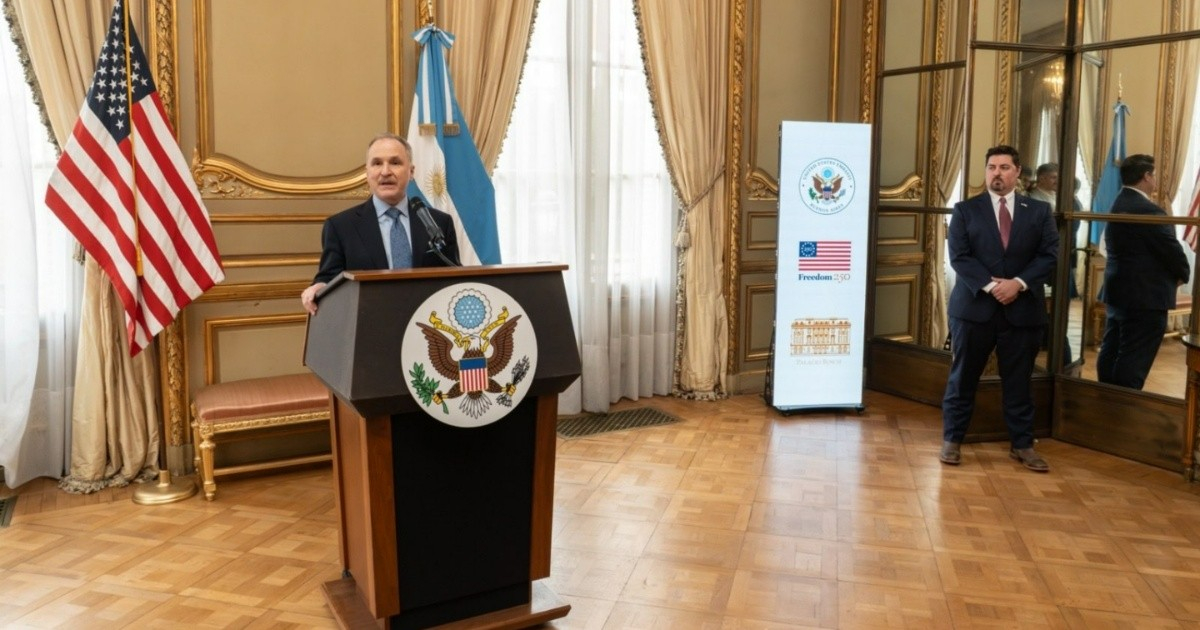
Peter Lamelas, the Cuban-American U.S. ambassador to Argentina, expressed on Saturday his belief that Cuba might undergo a political shift "by the end of the year." He made this assertion during an exclusive interview with TN from the U.S. Embassy in Buenos Aires, housed at the Palacio Bosch.
When asked for a specific timeline, the diplomat confidently responded, "If I had to bet, before the year is out."
Lamelas has voiced this prediction publicly before. Back in June, he stated, "God willing, may the Cuban people be free."
His comments add to a chorus of Cuban-American officials from the Trump administration who, throughout 2026, have voiced their anticipation of an imminent change on the island.
Mike Hammer, the head of the U.S. diplomatic mission in Havana, asserted in February that "change will come in 2026" and described the current situation as "unsustainable." Later in Madrid, he was more emphatic: "Change is not just possible; it is inevitable." On July 4th, he further declared, "May Cuba be free this year, 2026. Long live a free Cuba!"
In May, Bernie Navarro, the Cuban-American U.S. ambassador to Peru, echoed similar sentiments: "With Donald Trump, change in Cuba will happen."
Lamelas, who identifies as "Cuban by birth, American by the grace of God," was born in Cuba and arrived in Florida at the age of four aboard a Red Cross ship. Appointed by Donald Trump in December 2024, he took his post in Buenos Aires in November 2025, forging a close relationship with President Javier Milei and his cabinet.
This appointment is part of a deliberate strategy by the Trump administration to place Cuban-Americans in key foreign policy roles towards Latin America, alongside Marco Rubio as Secretary of State and Mauricio Claver-Carone overseeing Latin American affairs.
President Milei himself has made similar predictions. At the CPAC in Budapest in March, he claimed that Cuba would be free "before mid-year" under Trump's leadership, and in June, he predicted the island "will fall on its own."
During the Saturday interview, Lamelas also discussed other bilateral agenda issues: he reaffirmed Washington's neutrality on the Falkland Islands—"We maintain neutrality"—pledged to work towards Argentina's visa waiver before his term ends, questioned the use of Chinese technology in strategic sectors, and supported anti-narcotics cooperation between the two governments.
It is essential to note that none of these statements about Cuba represent official Washington policy announcements. Instead, they reflect the political expectations of officials sharing a common ideological vision for the island's future. Meanwhile, the Cuban regime has shown no signs of openness or negotiation with the Trump administration, which continues to list Cuba as a state sponsor of terrorism and upholds a policy of maximum pressure on Havana.
Anticipated Political Changes in Cuba
What is the prediction about political change in Cuba?
U.S. officials, including Ambassador Peter Lamelas, predict that Cuba might see political change by the end of the year 2026.
Who is Peter Lamelas?
Peter Lamelas is the Cuban-American U.S. ambassador to Argentina, appointed by Donald Trump, and a vocal advocate for change in Cuba.
How has the Cuban regime responded to these predictions?
The Cuban regime has not shown any signs of openness or willingness to negotiate with the Trump administration, continuing to face pressure from the U.S.