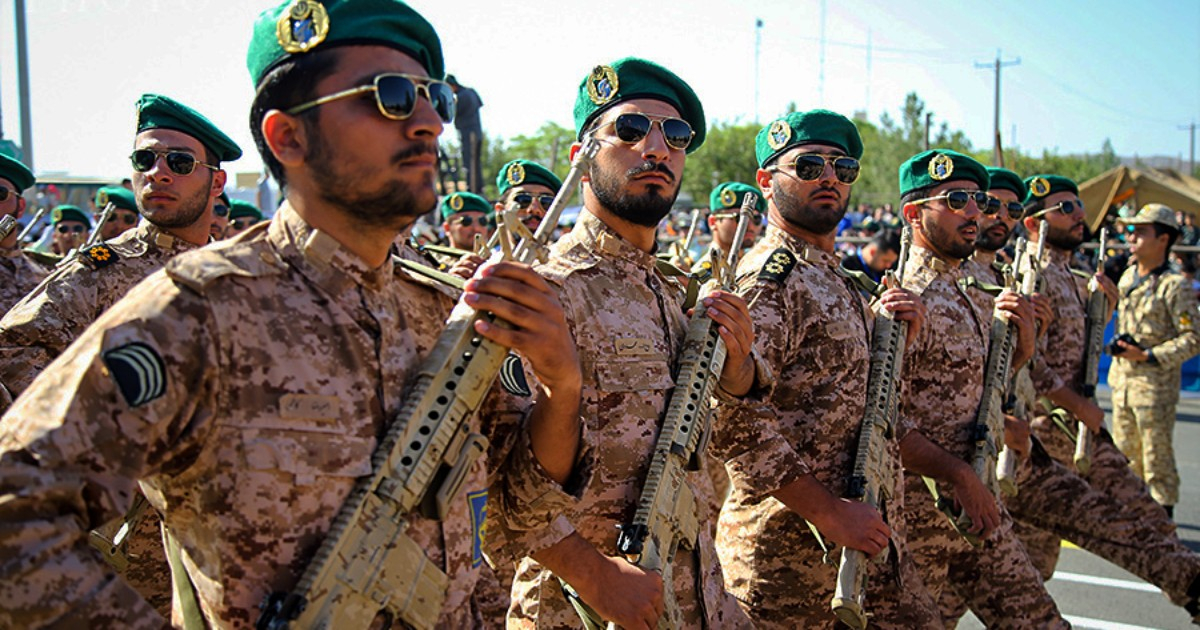
In a bold and provocative statement, Iran's top military official, Major General Amir Hatami, declared on Sunday that any Iranian citizen who captures or kills a U.S. soldier attacking Iranian soil will be rewarded with $30,000, funded by the Iranian people.
This announcement was made during a ceremony celebrating Journalist Day in Iran and was disseminated by the state-run Mehr news agency. Hatami added that the reward would be doubled to $60,000 if the act is carried out by a woman.
The timing of this announcement is crucial, as it comes just hours before the expiration of a 60-day deadline set in the memorandum of understanding between Tehran and Washington, which now seems on the brink of collapse.
Iran's Defiant Stance Against the U.S.
The Iranian military leadership accompanied Hatami's declaration with a defiant message, boasting that its forces have managed to "bring to their knees" the leaders of what they labeled "the world's most equipped army." They reiterated their commitment to not yielding to Washington until achieving total victory.
The military also emphasized its commitment to defending the demands of the Iranian people and their supreme leader, Mojtaba Khamenei, who took over after the death of his father, Ali Khamenei, in March. Mojtaba is known for his hardline stance.
Collapse of the U.S.-Iran Memorandum
Initially signed in mid-June in Switzerland by U.S. Vice President JD Vance and Iranian Foreign Minister Abbas Araqchi, with prior electronic approval from President Donald Trump, the memorandum aimed to halt hostilities, reopen the Strait of Hormuz, and set a two-month negotiation period for a definitive agreement.
However, the agreement unraveled within weeks. By early July, the United States accused Iran of attacking commercial ships in the Strait of Hormuz, responding with airstrikes on southern Iranian targets. Tehran formally suspended the memorandum on July 18, and the U.S. continued its offensive from July 8 to 24.
Unyielding Stance from Tehran
Foreign Minister Araqchi was adamant last Friday, dismissing any extension of the agreement. "There is no 60-day ceasefire to be extended," he stated, asserting that the memorandum was meant to signify the end of the war, not a ceasefire, and blaming Washington for its breach.
On August 9, Araqchi warned that Iran would not resume negotiations unless the U.S. ceased its violations of the agreement.
Background of the Conflict
The conflict between the two powers began on February 28, 2026, with joint U.S.-Israeli attacks on Iran's nuclear facilities at Fordow, Natanz, and Isfahan, in an operation dubbed "Midnight Hammer."
Earlier this month, President Trump claimed to have reached a new agreement with Iran, yet the situation remains volatile. On August 10, he emphasized economic pressure as a strategy to weaken Tehran.
Key Questions About the Iran-U.S. Tensions
What is the reward offered by Iran for capturing or killing U.S. soldiers?
Iran has offered $30,000 for capturing or killing U.S. soldiers on Iranian soil, with the amount increasing to $60,000 if performed by a woman.
Why did the U.S.-Iran memorandum of understanding collapse?
The memorandum collapsed due to mutual accusations of aggression, with the U.S. accusing Iran of attacking ships and Iran retaliating against U.S. airstrikes.
Who is the current leader of Iran?
Mojtaba Khamenei is the current supreme leader of Iran, having assumed the role after the death of his father, Ali Khamenei, in March.