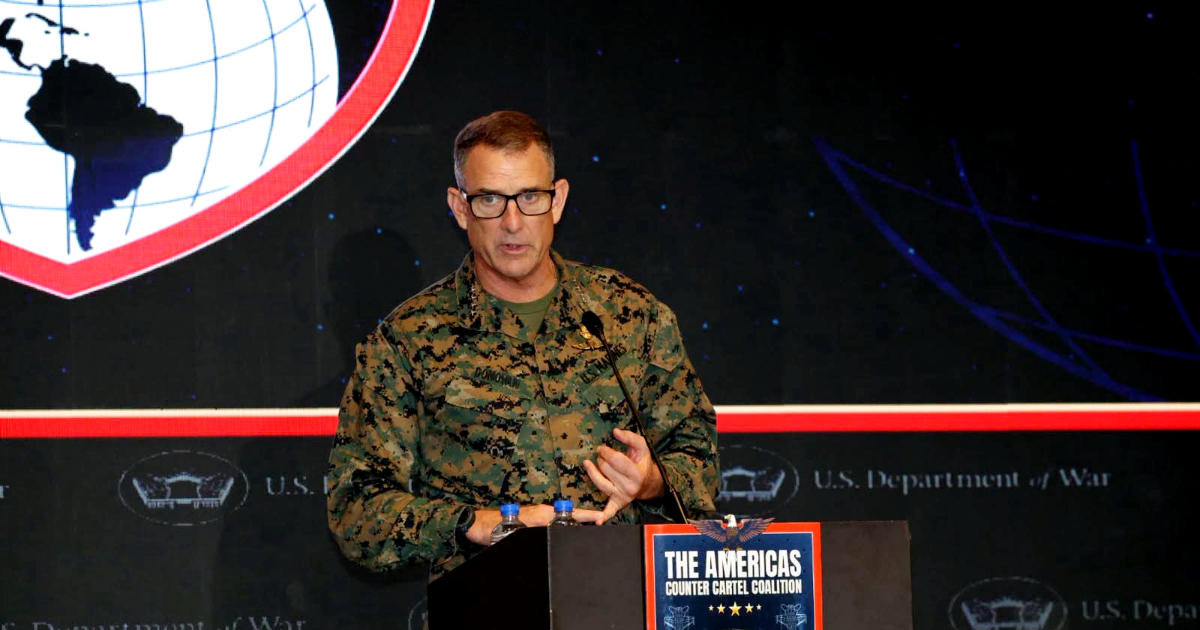
The week ending on August 15th in Panama brought more than just military exercises, speeches, and photo ops among Defense officials from across the continent.
Panama became the backdrop for a new U.S. strategy targeting cartels and organizations Washington designates as narco-terrorists. This effort coincided with the final phase of the multinational exercise PANAMAX 2026, held in the first two weeks of August, and a meeting of the Americas Counter-Cartel Coalition (A3C), an alliance initiated under Donald Trump's administration to enhance regional cooperation against drug trafficking.
Originally formed in March with 17 countries, the coalition had a clear objective: to "operationalize hard power" against cartels and terrorist organizations. Trump's presidential proclamation outlined that the United States and its allies would utilize all available legal resources and authorities to dismantle these organizations.
As the initiative continues to expand, Colombia has recently requested U.S. assistance for joint counter-narcoterrorism operations and is joining as the 19th member of the regional effort, also known as Shield of the Americas.
Warnings and Strategic Messages
In this context, two significant messages emerged from Panama. The first came from the head of the United States Southern Command (SOUTHCOM), General Francis L. Donovan.
"Are we ready to carry the fight to the enemy? I believe we are," he stated to Defense and Security officials at the forum. His conclusion was unmistakable: "We must attack these networks. We have to apply a total systemic friction on these networks."
While Donovan didn't specifically mention Cuba, the U.S. Secretary of War, Pete Hegseth, was more direct.
From Panama, Hegseth demanded "more cooperation from Cuba, whether they like it or not" and accused the regime of allowing adversarial powers to use the island for espionage against the United States.
His warning was explicit: countries like Cuba are "on notice" and Washington will not tolerate the presence and influence of adversaries in the hemisphere. Asked about potential military action against Cuba, he did not rule it out, emphasizing that all options remain open.
Historical Context and Current Implications
Hegseth's specific accusations against Cuba focused mainly on security, espionage, weaponry, and influence by adversarial nations. While it would be incorrect to say he accused the Cuban regime of being part of a narco-terrorist network, ignoring the connection to the broader hemispheric strategy discussed in Panama would be naive.
Decades before the concept of the Cartel of the Suns, U.S. investigations linked high-ranking Cuban officials to drug trafficking. In 1982, a federal grand jury indicted four Cuban officials for using Cuban territory and waters to facilitate Colombian drug operations. Subsequent intelligence reports described similar activities originating from the island.
Cuba's own acknowledgment came with Cause 1 of 1989, where top military and interior ministry officials, including Arnaldo Ochoa and Antonio de la Guardia, were implicated in negotiations with Colombian drug traffickers.
Further allegations surfaced in 1993, with U.S. prosecutors considering charges against Raúl Castro and other senior officials for cocaine trafficking, although these charges were never formally filed.
The Venezuela Connection
In March 2020, the U.S. Justice Department accused Nicolás Maduro and other Venezuelan officials of narco-terrorism, detailing how state institutions were allegedly used to protect and facilitate the drug trade.
Shortly thereafter, a senior Pentagon official told Newsweek that the U.S. intelligence community had evidence of Maduro using ships to traffic drugs between Venezuela and Cuba. While this does not conclusively prove the Cuban government's involvement, it highlights a potential alliance between Cuba, Venezuela, and drug trafficking networks.
Investigations in 2025 sought to connect these narratives further. The Center for a Free Cuba and other organizations portrayed Cuba as a precursor to the Cartel of the Suns model. Another report, The Cuban Mafia State and the Cartel of the Suns by Juan Antonio Blanco and Emilio Morales, suggested Cuba's involvement through intelligence, counterintelligence, political protection, international connections, and alleged financial structures linked to GAESA.
These findings, though not official SOUTHCOM positions, underscore a critical question: what if a narco-terrorist network extends beyond those who produce, transport, and sell drugs? What if it includes government officials, financial operators, military personnel, intelligence, political protection, or state infrastructure?
Hegseth announced in June that the A3C aims to leverage U.S. and allied capabilities to "hunt terrorist networks in our own hemisphere," likening this effort to the U.S. experiences against ISIS and Al Qaeda. Donovan's statements now echo the call to "attack these networks."
Trump's Legacy and Future Implications
Former President Trump had already introduced Cuba into this equation. In November 2025, he openly questioned whether Maduro and his narco-terrorists would take over another country, as they had with Cuba, Nicaragua, and Venezuela.
While this statement did not constitute a legal accusation against Cuba for drug trafficking, it placed the island squarely in the political discourse surrounding Maduro and the "narco-terrorists."
With Maduro's capture in January 2026, the political implications of the words spoken in Panama are inevitably altered. The Trump administration has shown how far it is willing to go when drug trafficking, terrorist organizations, state structures, and threats to U.S. security converge.
Though there is no public evidence of an impending U.S. operation against Cuba, Havana can no longer afford to assess its risks with outdated assumptions.
A Clear Warning
Cuba's typical response to U.S. accusations involves decrying slander, imperialist threats, fabricated pretexts, sovereignty violations, and victimization by Washington.
While Havana has the right to demand evidence for any new accusations, and the U.S. would be obliged to provide it, playing the role of the surprised actor oblivious to Washington's interest in Cuba is increasingly difficult.
The historical record includes 1980s investigations, Cause 1, the contemplated charges against Raúl Castro, intelligence reports from 2020 on Venezuela-Cuba trafficking, subsequent investigations into the Cartel of the Suns, and Trump's own words.
None of these elements independently or automatically prove the Cuban regime's involvement in an international drug network. However, they explain why Havana should pay attention when SOUTHCOM talks about dismantling entire networks.
This time, there's an additional factor. As Donovan declared in Panama the need to "take the fight to the enemy," Hegseth announced new actions against cartels, reiterated that all options remain on the table, and issued a direct warning to Cuba: they are on notice.
While Havana might argue that Donovan did not mention Cuba when discussing attacking narco-terrorist networks, one would have to ignore everything else that transpired this week in Panama to find comfort in that omission.
Following Venezuela's example, Havana cannot claim ignorance of the warnings this time.
Understanding U.S. Strategy Against Cartels and Cuba's Position
What is the Americas Counter-Cartel Coalition (A3C)?
The Americas Counter-Cartel Coalition (A3C) is an alliance initiated by the Trump administration to enhance regional cooperation against drug trafficking, aimed at operationalizing hard power to dismantle cartels and terrorist organizations.
How does the U.S. view Cuba's role in regional security threats?
The U.S. views Cuba as a potential facilitator for adversarial powers to conduct espionage and exert influence in the hemisphere, putting Cuba on notice for its alleged role in regional security threats.
What historical context links Cuba to drug trafficking?
Historically, the U.S. has investigated Cuban officials for drug trafficking, with notable cases in the 1980s and 1990s, as well as intelligence reports suggesting drug shipments between Venezuela and Cuba.
What are the implications of the Trump administration's stance on Cuba?
The Trump administration's stance, which included public remarks linking Cuba to narco-terrorism alongside Venezuela and Nicaragua, suggests a readiness to take decisive action if drug trafficking and state threats converge.