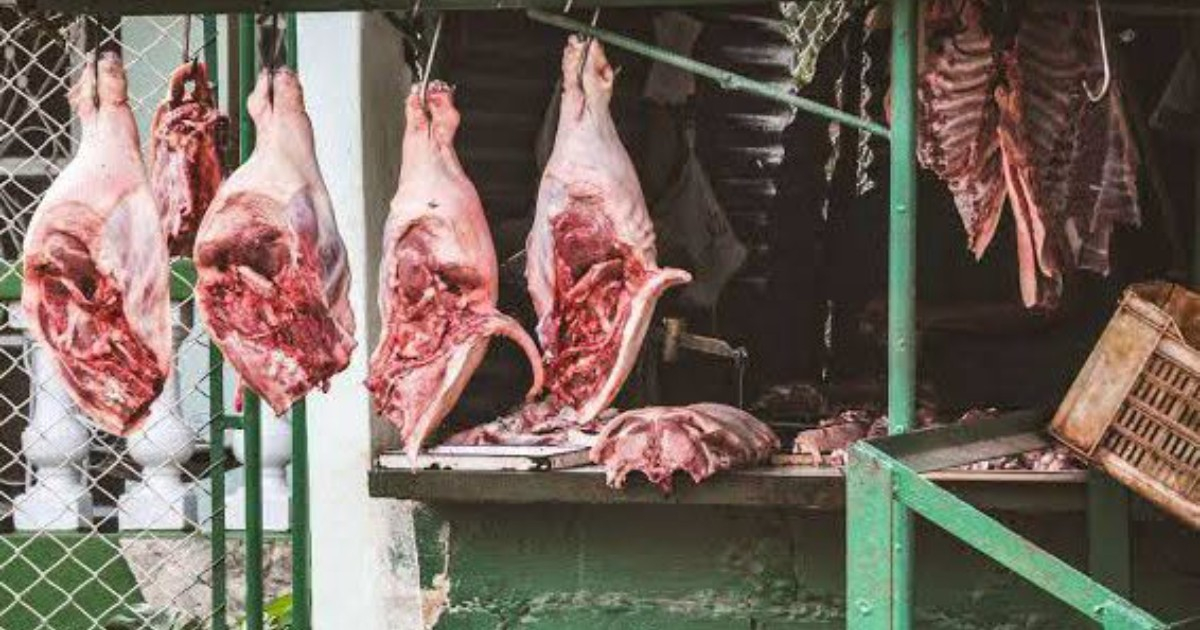
The scarcity of cooking oil in Cuba has sparked an endless cycle of shortages, leaving citizens scrambling for alternatives. Those who turned to pork fat as a traditional substitute now find themselves facing yet another shortage, forced to wake up at the crack of dawn to queue for the dwindling supply.
Cuban resident Yaudel Rodríguez Vento captured the bitter irony on Facebook, painting a picture of the daily struggle: "I got up early to get it, only to find the line for pork fat started before dawn. I thought I was early... but there were people who seemed to have been there a lifetime!"
Rodríguez Vento quickly pointed out the underlying irony: "This is unbelievable: every time there's a shortage, we somehow make it even more complicated. First, it was oil; now, you have to line up to get the pork fat to replace it."
This scenario is not just a one-off incident. A report from August 7 in Placetas documented unsuccessful attempts to find pork lard at any sales point, with the only available substitute being oil priced at 4,000 pesos per bottle.
The root of the issue lies in the collapse of vegetable oil supplies. In June, Minister of the Food Industry Alberto López Díaz admitted publicly that no oil had been distributed through the rationed family basket all year.
On June 20, the Ministry of Finance and Prices passed Resolution 150/2026, lifting retail price caps for imported edible oils, previously capped at 990 pesos per liter.
What followed was a spiraling price hike: from 1,500 pesos in April, prices soared to 2,000 in June, hitting 2,500 in Havana by late July, and in Sancti Spíritus, prices jumped from 2,000 to 3,000 pesos within 24 hours on July 24.
By August, the price ranged from 4,000 to 7,000 pesos per liter across different regions, according to reports from various provinces.
In response to this chaos, several municipalities attempted to impose local price caps: Guantánamo set a 2,200 peso limit on August 5; Holguín and Villa Clara adopted similar controls shortly after; and Pinar del Río established the lowest limit at 2,150 pesos per liter.
Pork fat—a staple derived from rendering animal fat—has historically been the go-to culinary substitute for Cubans in the absence of vegetable oil. But in 2026, even this resource has become elusive, completing the vicious cycle of interlinked shortages described by Rodríguez Vento.
"And you laugh, because otherwise, you'd cry. Behind the joke lies the harsh reality of everyday life: securing the basics has become an adventure," he wrote, concluding with a phrase that encapsulates the resilient spirit of many Cubans: "But here we are: telling stories in lines, inventing solutions, and, in the absence of oil, seeking pork fat to keep life running smoother."
Understanding Cuba's Current Food Shortages
Why is there a shortage of cooking oil in Cuba?
The shortage of cooking oil in Cuba is primarily due to a collapse in the supply chain, preventing the distribution of oil through the rationed family basket, as officially acknowledged by the Minister of the Food Industry.
What has been the impact of lifting price caps on edible oils?
The removal of price caps on imported edible oils has led to an uncontrollable surge in prices, with costs escalating from 1,500 pesos in April to between 4,000 and 7,000 pesos per liter by August.
How are municipalities responding to the price hikes?
In response to soaring prices, several municipalities have imposed local price caps to try and control the situation, with varying limits set by regions such as Guantánamo, Holguín, Villa Clara, and Pinar del Río.