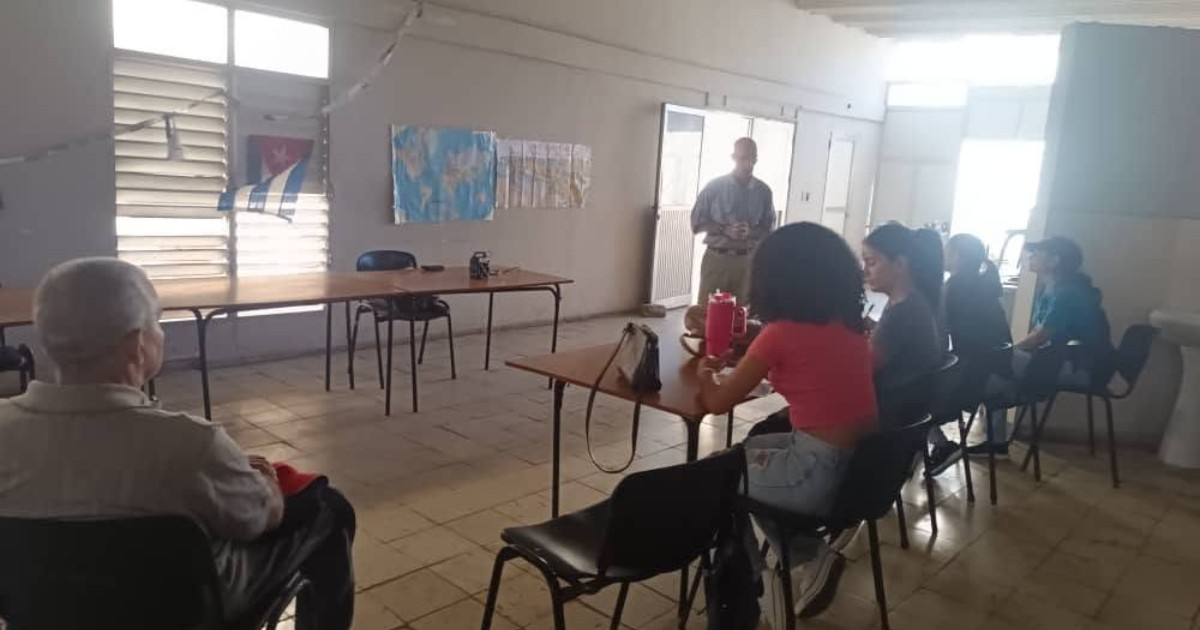
On Saturday, the University of Havana revealed via its Facebook page that 123 openings in the History program's Distance Learning mode remain unfilled for the 2026-2027 academic year. These spots were not claimed during the initial phase of the enrollment process.
According to the university's announcement, Havana's Provincial Admissions Commission will provide a second chance to fill these positions from August 31 to September 4, between 9:00 a.m. and 1:00 p.m. at their offices. Interested individuals can call 78780875 for further inquiries.
The fact that over a hundred slots are still available highlights the waning interest of Cuban youth in pursuing university degrees, particularly in the humanities. This trend occurs amid mass emigration and limited job opportunities.
Disrupted Admission Process
The current year's admission process started under unusual circumstances: the Cuban government unexpectedly canceled the entrance exams for higher education—originally scheduled for June—due to an energy crisis, replacing them with a system based on high school grade averages.
This decision was made public on May 20, just a day after the Ministry of Higher Education (MES) assured that the exams would proceed as planned.
René Sánchez Díaz, the director of Admissions and Job Placement at the MES, acknowledged the inconsistency, stating, "We still believe that entrance exams are the best way to organize access to higher education. That hasn't changed. However, we are facing a very challenging situation."
Assurances Amid Crisis
Despite the ongoing crisis, Sánchez Díaz promised that "everyone who wants a university spot will have one secured, numerically speaking," with a national offer of 96,305 slots for the 2026-2027 term.
In July, the University of Havana had already announced a specific call for the Course by Meetings and Distance Learning modalities, offering a total of 1,455 slots, with registration open from July 6 to 15 and a reoffer on July 21 and 22.
The fact that 123 slots—specifically in History—remain unfilled indicates that actual demand significantly lags behind the available supply.
Historical Context of Declining Enrollment
This pattern is not unprecedented. In 2025, only 464 students passed the entrance exams in Las Tunas, leaving 1,809 slots unallocated across various fields such as Medicine, Law, and Engineering.
In 2024, only 50.4% of applicants passed all three required exams; in 2025, this percentage slightly increased to 51.5%.
Adding to the low academic demand is the wave of migration: it is estimated that over 90% of young people remaining on the island would emigrate if they could. In 2022, the Union of Young Communists (UJC) admitted that around 800,000 Cuban youths were not engaged in study or work.
The History program's distance learning option, offering poor employment prospects and salaries in pesos that don't compete with dollar-paying alternatives, is hardly enticing for a generation focused on leaving the country or entering dollarized sectors.
The 123 vacant slots serve as a barometer of the broader crisis affecting Cuban higher education.
Challenges in Cuban Higher Education
Why are the History program slots at the University of Havana unfilled?
The unfilled slots in the History program highlight a declining interest among Cuban youth in university degrees, particularly in humanities, due to mass emigration and limited job prospects.
How did the Cuban government alter the admission process for higher education?
The government canceled the entrance exams for higher education, replacing them with a system based on high school grade averages due to an energy crisis.
What are the implications of the vacant History program slots?
The vacant slots are a reflection of the broader crisis in Cuban higher education, indicating a disconnect between available educational opportunities and the interests and needs of the youth.